Twelve years ago, Emily Penn took a quick swim in the Pacific Ocean during a voyage from the U.K. to Australia. To her amazement, a bottle top, a cigarette lighter and a toothbrush floated by her face. She was 800 miles from land.
“Somebody put them in the garbage and forgot about it,” Penn said. “It’s micro-actions that have created the problem. One tiny action from a human being they don’t remember.”
Alarmed by what she saw, Penn abandoned her architecture career to study ocean pollution. On June 8, her data-collection sea voyage hosting organization Exxpedition launched a website in partnership with SAP software that will allow users to help clean up or prevent the millions of tons of plastics in the ocean by taking small actions — from quitting glitter to inciting political action.
Shift, a mobile-optimized site (think of it like an app that you don’t have to download) based in the U.K., features more than 300 cleanup options, such as organizing a community cleanup, using a reusable water bottle and fashioning your own beeswax wrap, an eco-friendly replacement for cling wrap. Shift gives users ideas for getting involved in public policy, like drafting a petition or emailing a government representative. Users can also submit their own ideas.
Shift allows users to filter by commitment level, from learning to leading. Users can also pick a focus such as food, politics or home.
“It’s become more timely during COVID when people are reevaluating their role in the world,” Penn said. “People have been reflecting on what they want, and it’s a time when all of these issues are coming to the surface. We don’t want to go back to things the way they were before.”
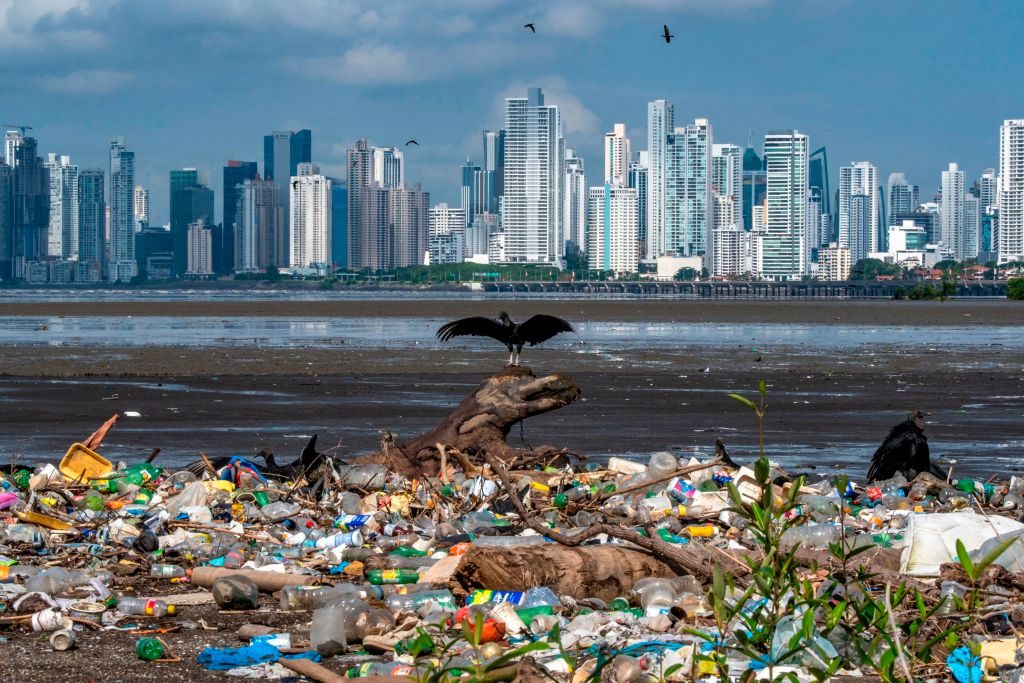
According to the European Commission, more than 14 million tons of plastic end up in the oceans globally each year. The plastic travels from land to ocean thanks to littering, poor recycling habits, and microplastics that get flushed down our drains, such as glitter, microbeads in some toothpastes or degraded contact lenses.
According to Jeff Kirschner, founder of the crowdsourced clean-up and data collection app Litterati, litter around the globe has spiked during COVID-19 in the form of personal protection equipment.
“We’re finding gloves, masks, and disposable wipes all over the place,” said Kirschner.
Despite the ongoing crisis, global production of plastics is expected to double by 2038. According to the World Bank, annual global waste is expected to increase by 70% by 2050.
Kirschneradmitted the numbers can be intimidating for an individual.
“The rate that the population is increasing is nothing compared to the rate that waste is increasing,” Kirschner said. “If you talk about something like climate change, it’s so big and so vague and so broad, you’re like, ‘OK I can be a vegan, take public transportation, but what can I do to stop the polar ice cap melting? How can I make a change and see that change?’”
Shift joins a small pantheon of crowdsourced environmental clean-up efforts, which includes Litterati and #climate.
On Shift, a “where” filter allows users to choose a stopgap in the ocean pollution process, from producing no waste to working directly in the sea. For Penn, it’s about baby steps like these.
“We need micro-actions to reverse this. It’s like voting. You think your one vote never counts. But added up, it does,” Penn said.
Correction 6/17: An earlier version of this story misidentified the founder of Litterati. His name is Jeff Kirschner.