
After being forced to delay the first crewed test flight of the Crew Dragon capsule, known as Demo-2, due to bad weather, SpaceX and NASA are now watching the weather once again to see whether they’ll be able to launch today, Saturday, May 30.
Current estimates are a 50% chance that the launch can go ahead today, and if the weather doesn’t cooperate then the launch will be pushed until tomorrow, Sunday, May 31.
All systems go for Crew Dragon’s test flight with @NASA astronauts @AstroBehnken and @Astro_Doug. Teams are keeping an eye on weather. Webcast will go live at ~11:00 a.m. EDT → https://t.co/bJFjLCilmc pic.twitter.com/AXDGNfqv0K
— SpaceX (@SpaceX) May 30, 2020
The weather in Cape Canaveral this morning is bright and sunny, but the forecast predicts rain and thunderstorms could move in later in the day. Florida’s typical humid weather continues to be a challenge, with NASA tweeting a picture of dramatic storms in the distance behind the Kennedy Space Center last night:
Distant storms provide a dramatic backdrop to the @SpaceX rocket and #CrewDragon Friday evening at @NASAKennedy as teams prepare for launch of @Astro_Doug and @AstroBehnken to the @Space_Station! #LaunchAmerica | More 📷: https://t.co/8due5jBg5Y pic.twitter.com/vBY7ivmnDe
— NASA HQ PHOTO (@nasahqphoto) May 30, 2020
In an update on Friday, NASA was positive, saying that, “weather models for Saturday show an improvement in conditions around Launch Complex 39A at NASA’s Kennedy Space Center in Florida.” The agency did state that “teams continue to monitor launch and downrange weather” and that these teams “still want more weather data to determine if they will proceed with a launch attempt or focus on the backup attempt on Sunday, May 31.”
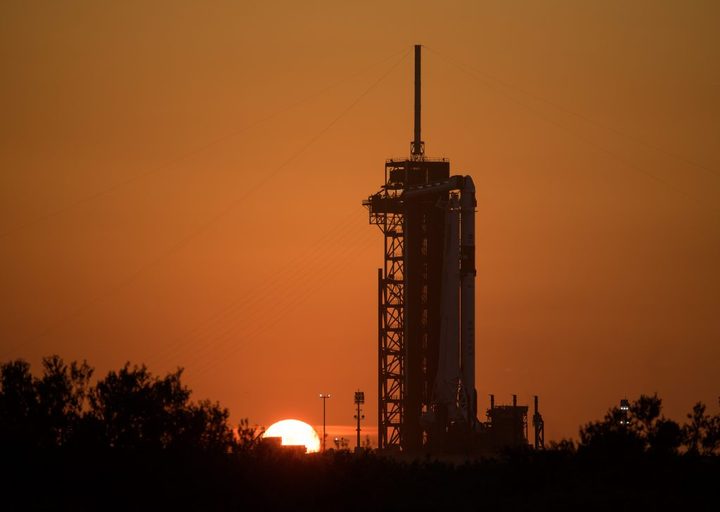
According to the U.S. Air Force’s 45th Weather Squadron, the chances of the weather allowing a launch at the scheduled time today are 50%. If the launch needs to be pushed back until tomorrow, its estimates for Sunday are for a 60% chance of good weather.
The particular weather features causing concern today are rain and clouds. Although flying through thin clouds would not be a problem for a rocket like the Falcon 9, if the clouds form into thick bands and the temperature drops low, particularly in the higher levels of the atmosphere, freezing rain can be a danger to the craft’s components.
The other concern this weekend is the possible presence of lightning. If lightning struck a rocket during its ascent it could affect the craft’s electrical systems, so the presence of thunderstorms in the launch area almost always necessitates a launch postponement. The area around the launch site is predicted to remain clear of thunderstorms this weekend, but there are nearby areas that could have lightning storms and high winds, and if these move toward the launch site that would also necessitate a postponement.
We’ll be keeping you up to date with all the latest news about Demo-2 here on Digital Trends, or check out our how to watch the launch live post for details of how to watch along at home.



