  1. Home
  2. Space
  3. News

How to watch today’s SpaceX Crew Dragon capsule launch to the ISS

Add as a preferred source on Google
Watch Live! SpaceX Demo-2 Mission To The International Space Station

The SpaceX launch of its Crew Dragon capsule on its first crewed mission is scheduled for this Saturday, May 30, carrying NASA astronauts Bob Behnken and Doug Hurley to the International Space Station (ISS).

Recommended Videos

The launch was originally scheduled for Wednesday, May 27, but was scrubbed due to poor weather. With high levels of electricity in the atmosphere, the launch itself could have triggered lightning which poses a danger to the crew and capsule.

The launch on Saturday will also be dependent on good weather conditions, with some meteorologists concerned that it could be canceled. As it stands, there’s about a 50/50 chance the mission will need to be postponed once again.

Here are all the details about why this historic mission matters so much to the space community and how you can watch it live on Saturday.

When is today’s SpaceX/NASA Crew Dragon launch?

The launch is scheduled for 12:22 p.m. PT on Saturday, May 30. Launch coverage began at 8 a.m. PT on Saturday, with a post-launch news conference with representatives from NASA and SpaceX scheduled for 3:30 p.m. PT on Saturday

How to watch Saturday’s SpaceX Crew Dragon launch

The launch, as well as prelaunch briefings and the docking of the spacecraft with the International Space Station, will all be shown live on NASA TV.

Coverage will run nonstop until the Crew Dragon has docked with the ISS and the astronauts have been welcomed on board, with the hatch opening scheduled to occur at 9:45 a.m. on Sunday, May 31.

You can watch the entire launch in the video player above.

Why this mission is such a big deal

The mission, officially called the SpaceX Demonstration Mission 2 (or Demo-2), will be the first time that American astronauts have launched from American soil since the ending of the space shuttle program in 2011.

If the test flight is successful, it will also mark the beginning of a new era in American space flight, with NASA able to send its astronauts to the ISS for the first time in nearly a decade, rather than relying on the use of Russian Soyuz rocket launches as it does now.
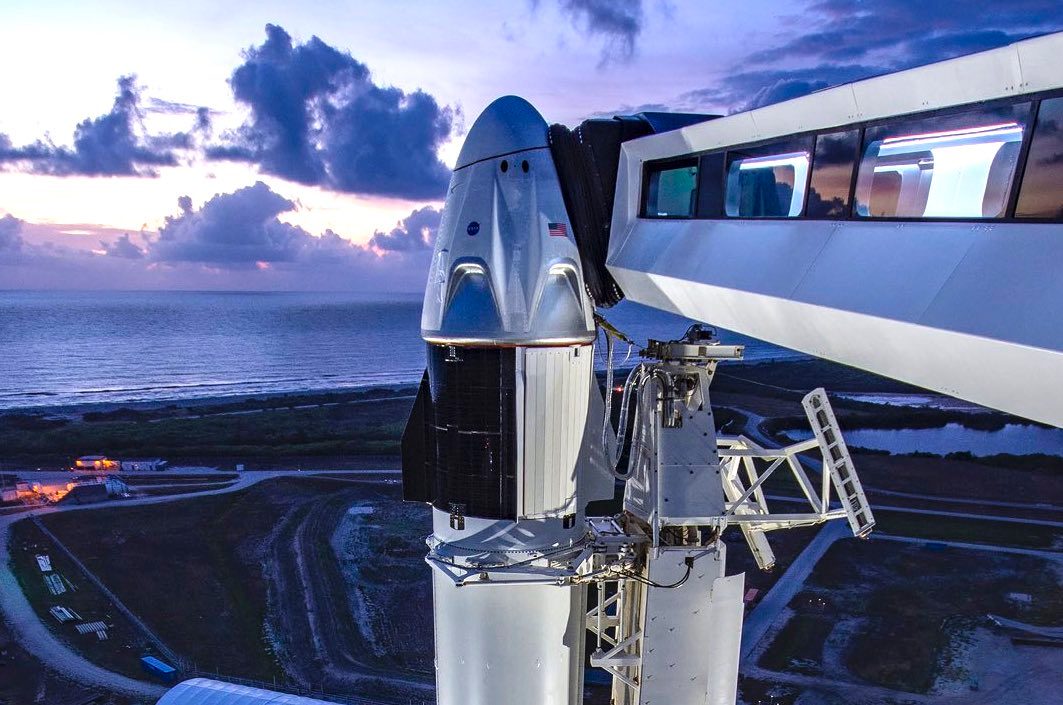
SpaceX Crew Dragon
Image used with permission by copyright holder

The mission represents a new step in the commercialization of space, with a private company designing and operating launch services for NASA as part of the agency’s Commercial Crew program. NASA has maintained its interest in becoming a customer of commercial operators in space, which it says will help it to save considerable amounts of money.

Georgina Torbet
Georgina has been the space writer at Digital Trends space writer for six years, covering human space exploration, planetary…
SpaceX Starship reaches orbit for the first time but its historic flight ends early
Starship reaches orbit for the first time and deploys 26 Starlink satellites before an early splashdown.
spacex-starship

After 13 suborbital test flights and more than $15 billion in development costs, SpaceX's Starship has finally reached orbit. The 407-foot megarocket, the most powerful ever built, lifted off from Starbase, Texas, on Monday and delivered its first real payload on it's 14th attempt. The celebration came with an asterisk, though, since SpaceX had to cut the planned 10-hour mission to roughly three hours.

https://twitter.com/SpaceX/status/2104601695711904180

Read more
Starship is finally going orbital, and SpaceX has picked September 22
Flight 14 is aiming for orbit, Starlink V3 deployment and a very long day in space.
Starship rocket.

SpaceX is finally ready to give Starship its biggest test yet. The company says the massive rocket's 14th test flight is scheduled for September 22, when it will attempt to put the upper stage into Earth orbit for the first time. The launch is currently pending regulatory approval, with a 75-minute window opening at 7:15 a.m. CT.

Starship has 26 Starlink satellites to deliver

Read more
Want a city on the Moon? Scientists say there’s not enough water
A billion tons still comes up short
Artist impression of activities in a Moon Base.

For decades, humanity has looked up at the Moon and wondered what it would be like to live on it. Think sprawling cities, factories, research centers, and permanent human settlements. Unfortunately, there is one fairly fundamental problem with that vision.

A new study published in Frontiers in Space Technologies argues that even the Moon's potentially enormous reserves of frozen water may be nowhere near enough to support city-sized populations sustainably. Researchers Martin Elvis and Jonathan McDowell estimate that the permanently shadowed regions near the lunar poles could contain roughly one billion tons of water. It sounds like an extraordinary amount until you put a million thirsty humans next to it.

Read more
