1. Home
  2. Phones
  3. Mobile
  4. News

The FCC has officially approved the merger between T-Mobile and Sprint

Add as a preferred source on Google

The Federal Communications Commission has officially approved the merger between T-Mobile and Sprint. A few weeks ago, the FCC voted to approve the deal, but now it has released its official approval order and statements on the merger.

In the statements released by the FCC, the Commission made it clear that the approval was largely in an effort to create stronger 5G networks in the U.S. T-Mobile and Sprint have long argued that a merger would speed up the rollout of 5G, and it seems like the FCC agrees. The vote was approved 3-2, with the three Republican members voting in favor and two Democrats opposed.

Recommended Videos

“As we emerge into a 5G environment, this transaction would ensure a strong third competitor with the resources necessary to develop spectrum and infrastructure assets needed for a robust nationwide 5G network,” FCC chairman Ajit Pai wrote in the statements. “So let’s be clear: A vote against this transaction is a vote against the creation of a strong 5G competitor.”

The Department of Justice approved the merger in July, as long as the carriers agreed to cede a portion of Sprint’s spectrum to Dish Network for the creation of a new fourth competitor.

While T-Mobile and Sprint have cleared many of the hurdles required for the merger to go through, they still face other challenges. Namely, the two companies have been sued by a coalition of states’ attorneys who are attempting to block the deal. T-Mobile and Sprint had said that the merger won’t close until that lawsuit is resolved. Recently, Mississippi Attorney General Jim Hood left the state coalition, but 17 states still remain.

Of course, not all FCC members were in favor of approving the merger. Democratic commissioner Jessica Rosenworcel wrote an op-ed in the Atlantic a few weeks ago, noting her disapproval.

“A condensed pharmaceutical industry has led to a handful of drug companies raising the prices of lifesaving medications, taking advantage of those struggling with illness,” she said in the article. “There’s no reason to think the mobile phone industry will be different. Shrinking the number of national providers from four to three will hurt consumers, harm competition, and eliminate thousands of jobs.”

We’ll have to wait and see exactly how long the merger takes, but with FCC and DOJ approval, the companies are closer than ever.

Christian de Looper
Christian de Looper is a long-time freelance writer who has covered every facet of the consumer tech and electric vehicle…
Android 17’s new video standard fixes one of HDR’s biggest problems
Your HDR videos are about to look right, no matter what screen you use.
Electronics, Mobile Phone, Phone

Android 17 is packed with new features, but one small addition might end up mattering more than the flashy ones. It's called Eclipsa Video, and its whole purpose boils down to this: your HDR videos should finally look the way they're supposed to, regardless of which screen you're staring at.

Why does HDR look different on every screen?

Read more
Your free mobile VPN is a privacy disaster. Go figure
Android's free VPNs are somehow worse than you expected
VPN

The free VPN app you downloaded for your Android phone might be doing more harm than good. A recent large-scale audit of free Android VPN apps has shared some worrisome findings that justify some healthy suspicion. Researchers found these apps leaking traffic, sending identifying information to third parties, and basically the opposite of what a VPN is supposed to do.

The study comes from researchers at the University of Michigan, the University of New Mexico and IIT Delhi. Their findings were presented at the Network and Distributed System Security Symposium 2026 alongside MVPNalyzer, a framework designed to audit mobile VPN apps automatically and at scale.

Read more
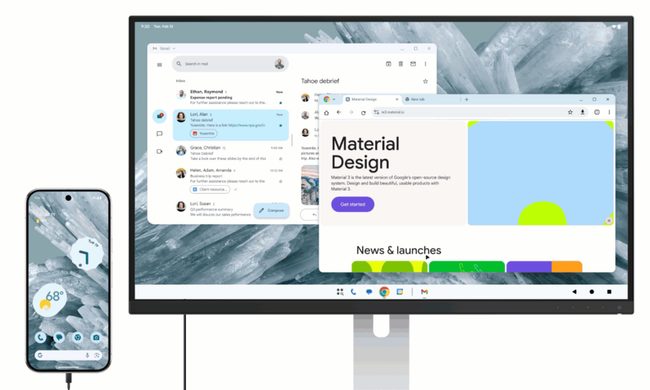
A broken Galaxy Fold 5 just became the Pixel desktop future I want Google to steal
A broken Galaxy Fold 5 became a tiny PC because Samsung already built the desktop mode Google keeps treating like a side quest.
Desktop mode within Android 16.

A broken Galaxy Fold 5 should be a sad little monument to modern gadget math. One busted outer display, one repair bill nobody wants to inspect too closely, and suddenly a powerful foldable starts heading toward a drawer. Instead, a Redditor turned one into a glowing acrylic DeX box with spare parts, fans, a USB hub, and the kind of LED lighting that makes every homebrew computer look mildly illegal.

https://www.reddit.com/r/SamsungDex/comments/1upica7/fold_5_dexbox/

Read more