1. Home
  2. Phones
  3. Android
  4. Mobile
  5. News

Want to build an Android app? Google and Udacity launch Android Basics Nanodegree

Add as a preferred source on Google

Wish you could create Android apps for yourself? Google and Udacity have partnered up to introduce a new course that will teach you the basics of coding for Android.

The course is called the Android Basics Nanodegree, and is targeted specifically at those who have little or no programming know-how. Points covered include Java, web APIs, SQLite databases, and so on. Of course, apart from that the course will lay the groundwork for building an actual app.

Recommended Videos

Unfortunately for the bedroom programmers out there the course isn’t free. To the contrary, it costs a cool $200 per month, however it does feature courses from “Google experts” who will also take part in mentoring and coaching participants in the program.

Specifically, the course will cover things like app layouts, multi-screen apps, object-oriented programming, app internet connectivity, and so on. The course in total requires 165 hours of time, or around 5.5 hours per day for a month. Of course, you don’t have to do it in a month’s time — you could do an hour per day for 165 days if you want, however it will obviously end up costing more.

Udacity was founded back in 2011, and is one of a number of companies offering large-scale online courses open to an unlimited number of people. It’s a substantial business, and one that has raised over $160 million in venture-capital funding.

This isn’t the first time that Udacity has partnered with Google either. For a few years now it has offered courses in cloud basics, web performance, and related subjects. The two companies also offered a tech entrepreneur nanodegree and a deep learning nanodegree. To encourage people to sign up, Google has promised to give the first 50 graduates of the Android Basics Nanodegree scholarships to the next step up — the Android Developer Nanodegree.

Christian de Looper
Christian de Looper is a long-time freelance writer who has covered every facet of the consumer tech and electric vehicle…
Your backpack needs one of these power banks before classes start
I picked 4 power banks that can survive your longest day on campus
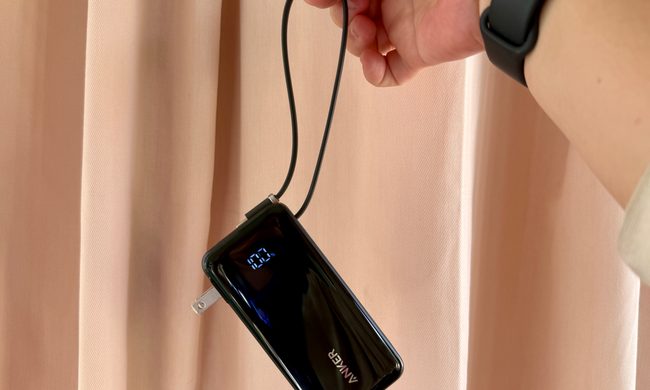
Anker Nano 3-in-1 10,000mAh portable power bank for iPhone.

Finding an empty outlet on campus can require more patience than registering for a popular class. Common spaces like libraries or lecture halls rarely have sockets in the right places. So a good power bank gives you far more freedom. It gives you the option to choose the quiet corner of the library, work outside between classes, or even finish an assignment without worrying about your laptop's battery.

The right model depends on what you carry, since a phone needs far less power than a MacBook or gaming laptop. I picked four Anker power banks that cover everything from everyday phone charging to running several demanding devices at once.

Read more
The Minimal Phone 2 looks dramatically better than the original, and I’m genuinely here for it
Plastic is out, metal is in, and Minimal Phone 2's renders suggest the digital detox phone concept finally has the hardware to match its ambition.
Electronics, Mobile Phone, Phone

I've been following the Minimal Phone since its initial crowdfunding days. The first iteration had the right idea trapped inside the wrong body, I’d say. Plastic build, no 5G, an underwhelming camera, and e-paper ghosting that frustrated early adopters; all these issues kept the phone from reaching a wider audience. 

Now, founder Armen Youssefian has posted what appears to be a 360-degree render of the Minimal Phone 2 on X, and from what I can see, the team has done its homework.

Read more
The EU says TikTok still isn’t doing enough to protect kids
Regulators say the platform's privacy settings don't go far enough under the Digital Services Act.
TikTok Creative Featured

The European Commission has accused TikTok of falling short on protecting minors, saying the platform's current account settings don't meet the child safety standards required under the Digital Services Act (DSA). The findings are preliminary, but if upheld, TikTok could face a fine of up to 6% of its global annual revenue.

Why the EU thinks TikTok isn't doing enough

Read more