Boasting the first triple-lens camera in a smartphone, alongside cutting-edge specs, the Huawei P20 Pro has been attracting a lot of attention. It’s an impressive Android smartphone from a Chinese manufacturer that has shown a flair for high-end devices. Can it compete with Apple’s stylish flagship? Which is better: The P20 Pro or the iPhone X? That’s what we’re here to find out.
Specs
| Huawei P20 Pro | Apple iPhone X | |
| Size | 155 x 73.9 x 7.8 mm (6.1 x 2.9 x 0.3 inches) | 143.6 x 70.9 x 7.7 mm (5.65 x 2.79 x 0.30 inches) |
| Weight | 174 grams (6.14 ounces) | 174 grams (6.14 ounces) |
| Screen size | 6.1-inch OLED display | 5.8-inch Super Retina AMOLED display |
| Screen resolution | 2,240 x 1,080 pixels (408 pixels-per-inch) | 2,436 x 1,125 pixels (458 ppi) |
| Operating system | Emotion UI 8.1 (over Android 8.1 Oreo) | iOS 11 |
| Storage space | 128GB | 64GB, 256GB |
| MicroSD card slot | No | No |
| Tap-to-pay services | Google Pay | Apple Pay |
| Processor | Kirin 970 | A11 Bionic |
| RAM | 6GB | 3GB |
| Camera | Triple-lens 40MP, 20MP, and 8MP rear, 24MP front | Dual 12MP rear, 7MP FaceTime HD front |
| Video | 2160p at 30 frames per second, 1080p at 30 fps, 720p at 960 fps | 2160p at 60 fps, 1080p at 240 fps |
| Bluetoothversion | Bluetooth 4.2 | Bluetooth 5 |
| Ports | USB-C | Lightning |
| Fingerprint sensor | Yes | No |
| Water resistance | IP67 | IP67 |
| Battery | 4,000mAh | 2,716mAh |
| App marketplace | Google Play Store | Apple App Store |
| Network support | T-Mobile, AT&T | AT&T, Verizon, T-Mobile, Sprint |
| Colors | Black, Blue, Pink Gold, Twilight | Space Gray, Silver |
| Price | 899 euros (around $1,100) | $1,000 |
| Where to buy it | Huawei | AT&T, Verizon, T-Mobile, Apple |
| Review score | 4.5 out of 5 stars | 4.5 out of 5 stars |
Performance, battery life, and charging

The P20 Pro has Huawei’s Kirin 970 processor inside. It also boasts a Neural Processing Unit (NPU), which deals with artificial intelligence (A.I.) tasks so the processor can get on with whatever it’s doing. This is backed up by 6GB of RAM. Apple’s iPhone X has its A11 Bionic chip inside, backed by just 3GB of RAM. In most benchmarks, and in real-world use, the iPhone X is faster. You can argue about how much RAM a smartphone needs, but Android and iOS handle memory management differently, so directly comparing them here doesn’t tell us anything.
The Huawei P20 Pro offers 128GB of storage, and there’s no MicroSD card slot for expansion. The iPhone X comes in 64GB or 256GB varieties, and once again, there’s no room for a MicroSD card.
Dipping into battery life, the P20 Pro has a 4,000mAh battery, while the battery in the iPhone X is only rated at 2,716mAh. The P20 Pro has more stamina than the iPhone X. Unfortunately, there’s no wireless charging support for the P20 Pro, though it does offer Huawei’s SuperCharge fast charging via a cable. The iPhone X does support wireless charging and it can charge quickly, but you’ll need to buy a charger and cable capable of fast charging, whereas you get one in the box with your P20 Pro.
This is tight, but the iPhone X edges the win with wireless charging and slightly better performance.
Winner: Apple iPhone X
Design and durability

We love the curved glass design of the P20 Pro, particularly the twilight finish, with its mix of green, blue, and purple. Huawei has chosen to put the fingerprint sensors on the front, in the old traditional spot beneath the screen, but the thing you immediately notice about the front is the notch. We’re not sold on the notch trend right now — it’s not the only viable design, especially if you have space for a fingerprint sensor at the bottom. It will inevitably invite comparison, but the notch in the P20 Pro is much smaller than the iPhone X’s notch.
In the iPhone X the screen extends all the way to the bottom and is only broken by the notch at the top, which houses the Face ID cameras. There’s no fingerprint sensor at all. The back is also finished in glass, though the colors are less adventurous than the P20 Pro. The camera modules are pretty similar. Interestingly, both phones weigh exactly the same, but the iPhone X is significantly smaller in hand.
There’s nothing to divide these phones on the durability front, as they both score an IP67 rating. That means they can be submerged in up to a meter of water for up to half an hour.
Overall we prefer the look of the iPhone X, particularly from the front, but the P20 Pro is definitely the sort of phone that will draw admiring glances.
Winner: Apple iPhone X
Display

The Huawei P20 Pro boasts a 6.1-inch OLED screen with a 2,240 x 1,080-pixel screen resolution. The Apple iPhone X has a 5.8-inch AMOLED with a resolution of 2,436 x 1,125 pixels. They’re both great screens, employing essentially the same tech. Apple’s iPhone X screen is sharper at 458 pixels per inch (ppi), compared to 408ppi in the P20 Pro, but the P20 Pro has a slightly larger screen. We’re giving a narrow win to the iPhone X here.
Winner: Apple iPhone X
Camera
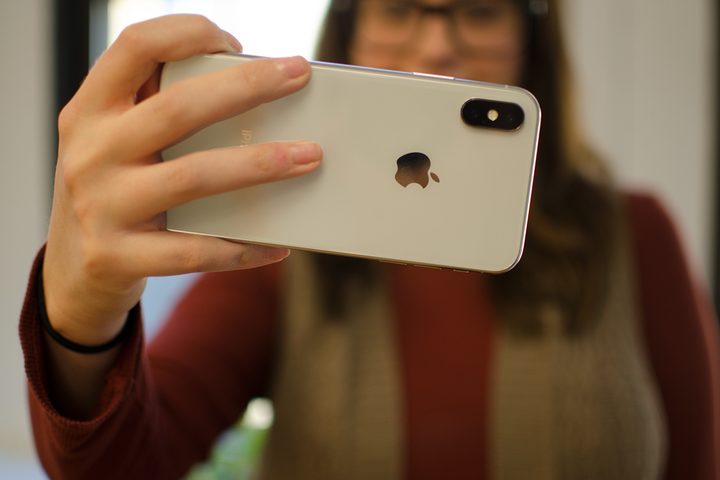
Smartphone cameras have improved by leaps and bounds in recent years. Huawei is trying to take things to the next level with the P20 Pro by packing in three lenses: There’s a 40-megapixel main lens, an 8-megapixel telephoto lens, and a 20-megapixel monochrome lens. This is a seriously versatile shooter that performs amazingly well in low-light conditions. It’s also capable of stunning portraits with blurred backgrounds, and can capture an incredible level of detail.
By contrast, the iPhone X combines two 12-megapixel lenses. We know it gets good results, particularly in the optical zoom and bokeh department. As cameras continue to improve, it’s getting harder to objectively pick the best, but the iPhone X stands up well in direct comparisons with phones like the Galaxy S9 Plus and Pixel 2 XL.
The P20 Pro has a front-facing camera rated at 24-megapixels, while the iPhone X makes do with a 7-megapixel selfie camera.
While the iPhone X camera is excellent, the sheer versatility of the Huawei P20 Pro carries the day in this category.
Winner: Huawei P20 Pro
Software and updates

You’ll find Android 8.1 Oreo on the P20 Pro, with Huawei’s EMUI 8.1 user interface on top. Stock Android fans and minimalists might not like it, but there are a few handy extras in there. Unfortunately, the presence of EMUI means that Android updates will not roll out to the P20 Pro as soon as they’re released. The schedule for updates will depend on Huawei, so we’re not sure when the phone will receive the latest Android 9.0 Pie.
Apple’s iPhone X runs iOS 11 out of the box, which is slick and accessible. It will continue to be updated to the latest version as soon as it rolls out. We’re not getting into Android vs iOS, but because it will benefit from the latest security and feature updates immediately, we’re giving the iPhone the win.
Winner: Apple iPhone X
Special features
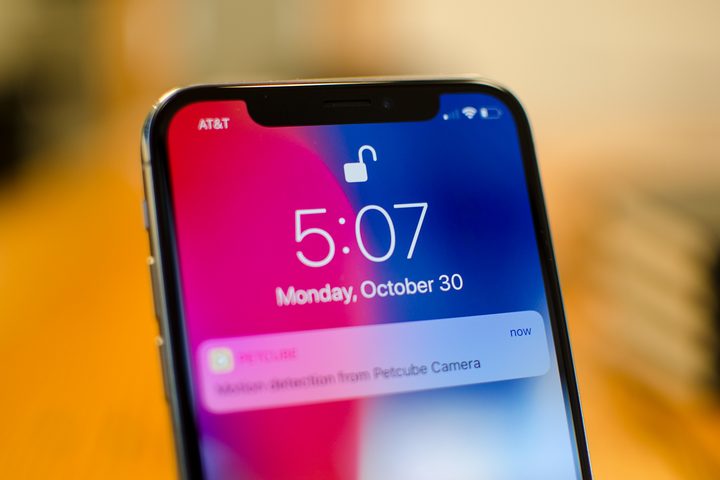
The standout feature of the P20 Pro is clearly that triple-lens camera, but we’ve already covered that. The iPhone X has Face ID and animojis to take full advantage of that front-facing camera array. Both work extremely well. There is a face unlock option on the P20 Pro that uses 2D mapping to authenticate users in only half a second, but it’s not as secure as the iPhone X’s Face ID, so you can’t use it for payments. Neither phone offers any other unique special features that the other doesn’t possess, so we’re calling this round a tie.
Winner: Tie
Price
There was definitely a bit of uproar about the price of Apple’s iPhone X when it first landed. There’s no doubt that $1,000 is a lot to spend on a phone. The Huawei P20 Pro, however, costs 900 euros (around $1,100).
The phones are available globally now, but sadly the P20 Pro will not be released through carriers in the U.S. after they were pressured to drop Huawei phones by Republican politicians with security concerns about the Chinese manufacturer. The iPhone X is available from all the major carriers.
Overall winner: Apple iPhone X
The Huawei P20 Pro is definitely something special. It has that impressive triple-lens camera and a bigger battery, but we prefer the design, display, and performance of the iPhone X. Truth be told, these are both excellent phones — they should be at these prices. If you’re used to Android and the camera is your main focus, then the P20 Pro is the better choice for you, but everyone else should probably pick the iPhone X.