1. Home
  2. Phones
  3. Apple
  4. Business
  5. Emerging Tech
  6. Mobile
  7. News

Maker of iPhone breathalyzer issues full refunds to customers over false claims

Add as a preferred source on Google

If you were one of the thousands of people who bought Breathometer’s breathalyzer accessory for the iPhone, you can now request a full refund for your purchase, following a finding that the company was guilty of false advertising.

Breathometer might have been founded in 2012, but its story truly began in 2013 when the company launched its Indiegogo campaign for its self-titled breathalyzer accessory. Advertised as the world’s first smartphone breathalyzer, the Breathometer, in concert with its companion app, promised to provide an accurate blood alcohol concentration (BAC) measurement and track your past results for you to better judge how much time needs to pass before you can drive.

Recommended Videos

Enough people believed in the idea that, by the time the Breathometer’s crowdfunding efforts ran out of time, the device had garnered $138,437 from 3,816 backers. Breathometer even released the Breeze, a $100 second-generation device that connected to your iPhone over Bluetooth. By comparison, the $50 first-generation device connected to your iPhone through its headphone jack.

As with most accessories that track some sort of metric, making sure the Breathometer was accurate was essential to its functionality, particularly since people might depend on it to see whether or not they should get behind the wheel after a few drinks. Breathometer addressed this in the campaign’s page, where it stated that whatever arrives at backers’ doorsteps met the company’s “high expectations of what consumers want and need.”

According to the Federal Trade Commission, however, Breathometer overinflated its accuracy claims that both its breathalyzer accessories passed “government-lab grade testing” and that the Breeze was a “law enforcement-grade product.” Even worse, the FTC alleged that Breathometer knew that the Breeze reported lower BAC levels than they might actually be and did not say anything to customers.

“People relied on the defendant’s products to decide whether it was safe to get behind the wheel,” said FTC Bureau of Consumer Protection director Jessica Rich. “Overstating the accuracy of the devices was deceptive — and dangerous.”

As a result, Breathometer agreed to issue full refunds for its first- and second-generation breathalyzers to those who make such a request. Sales of both accessories reportedly totaled $5.1 million, so that is quite a chunk of change to return — assuming consumers ask for it.

Breathometer is also disallowed from making similar accuracy claims with future breathalyzers, unless they undergo rigorous testing. This one should be easy enough, since the company no longer sells or manufactures breathalyzers.

If you picked up either the first-generation or Breeze breathalyzer, a request form will be available through Breathometer’s website to claim your refund.

Williams Pelegrin
Williams is an avid New York Yankees fan, speaks Spanish, resides in Colorado, and has an affinity for Frosted Flakes. Send…
Samsung finally switched to silicon-carbon battery on Galaxy Z Fold 8. What’s so special about it?
One of Galaxy Z Fold 8’s biggest upgrade is hiding inside
Galaxy Z Fold 8 Ultra with Fold 8

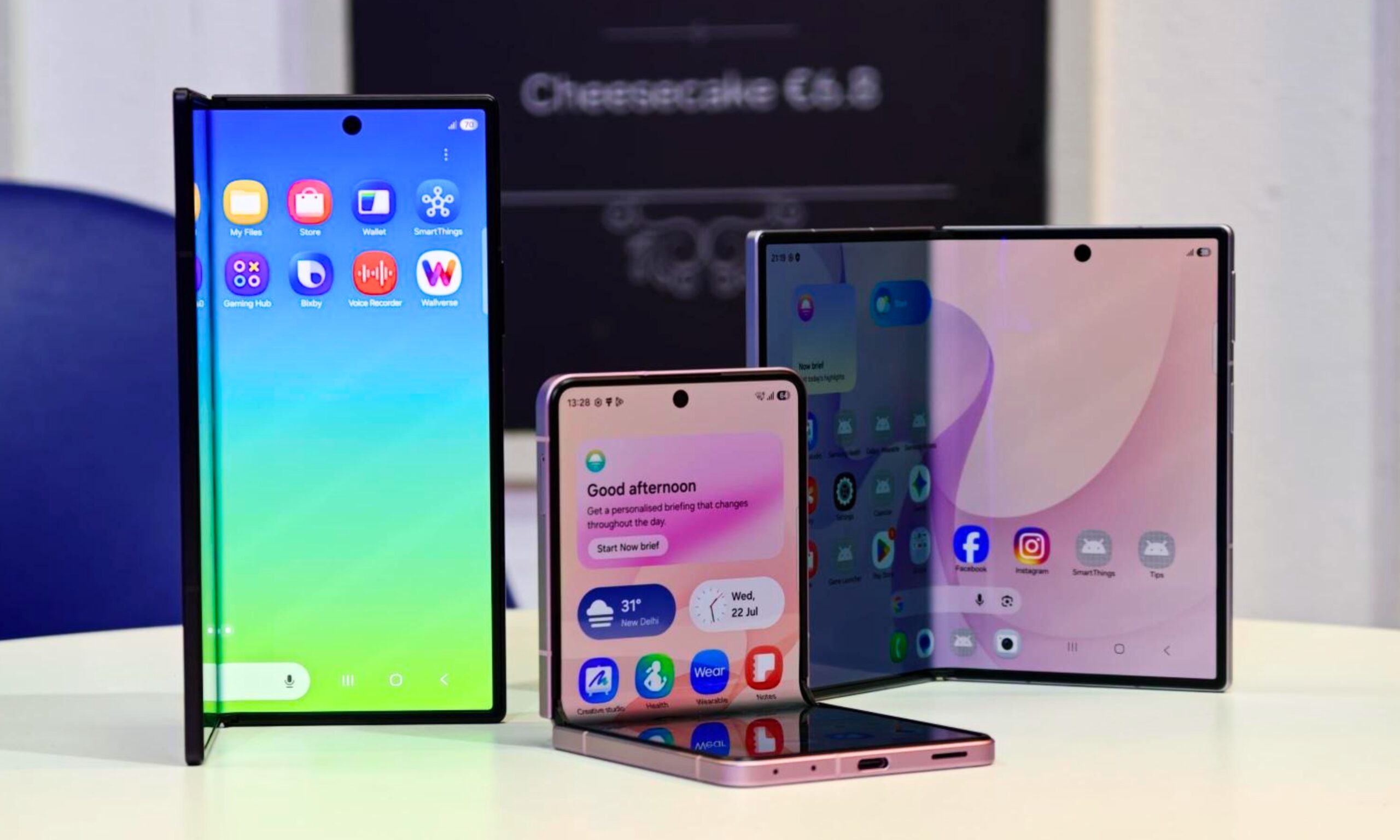
Samsung has finally joined the silicon-carbon battery race with its latest batch of premium foldables packing the new battery tech. But details for this change were rather hard to spot on the spec sheets. The company has confirmed during media briefings that the Galaxy Z Fold 8 Ultra, Galaxy Z Fold 8, and Galaxy Z Flip 8 all use silicon-carbon batteries.

Even then, the resulting capacities are hardly record-breaking. The Fold 8 Ultra carries a 5,000mAh battery, the regular Fold 8 gets 4,800mAh, and the Flip 8 has 4,300mAh. Rivals from Honor and Motorola have already crossed the 6,000mAh mark. But the figures only tell part of the story.

Read more
I’ve used foldable phones for years. Here’s how to pick the right one between the Galaxy Z Fold 8 and Flip 8
Samsung’s three new foldables solve very different problems
Galaxy foldables with its screen visible

After years of reviewing foldable smartphones, I have learned that choosing one involves much more than what looks pretty or how large you want. Book-style foldables are usually sold as productivity machines, while flip phones cater to people who value portability. Samsung’s latest lineup complicates that choice by introducing two very different book-style models alongside its familiar clamshell.

Most of their shared specifications fade into the background once you start using them. Their shapes and screens have a much greater impact on daily life. So here's how I'd make a decision when choosing between the new Galaxy Z Fold 8 Ultra, Galaxy Z Fold 8, and Galaxy Z Flip 8.

Read more
How to set up selfie video sign-in for your Google account
Your face can now serve as a way to get back into your Google account. Here's how to set it up.
Google account selfie sign in tutorial featured

Losing access to a Google account is rarely a quick fix, but Google has been actively working to make things easier. Last year, the company introduced a feature called Recovery Contacts that lets you designate a trusted friend or family member to verify your identity if you ever get locked out. Now, Google has introduced a new option, one that uses your face to get you back in instead of a phone call to a friend.

Like Recovery Contacts, the new selfie video authentication feature requires some setup before you can use your face to sign into your Google account. This involves recording the reference video that Google will use to verify your identity whenever you attempt to log in this way. Here's how to set up selfie video sign-in for your Google account.

Read more