1. Home
  2. Phones
  3. Business
  4. Mobile
  5. News

Could this be the cheapest 4G data plan in the world? Jio thinks so

Add as a preferred source on Google

The world’s second-largest smartphone market just got the world’s cheapest 4G data plan. A new carrier known as Jio has emerged from Reliance, one of India’s largest companies, and it’s slated to drastically change the mobile market in the country. The 4G LTE network promises transfer speeds of up to 135 Mbps, free voice calls and roaming throughout India, and apparently, cheaper data rates than anyone else.

Announced Thursday after rather extensive delays and testing, Reliance Jio promises to be “future proof,” as it’s already planning to support upcoming 5G and 6G networks. Currently, its 4G coverage is accessible in 18,000 Indian cities, and more than 200,000 remote areas. The hope is that 90 percent of India’s population will be fully covered by 2017.

Recommended Videos

Mukesh Ambani, Reliance’s chairman and the richest man in India, noted, “India and Indians cannot afford to be left behind,” Ambani said. “The era of paying for voice calls is ending.” Jio’s move, while likely lauded by India’s citizenry, could pose a problem for India’s other carriers, which include Airtel, Vodafone, and Idea, and which all derive most of their revenues from voice calls. Now that Jio will be giving free voice calls, these guys may be in trouble.

Jio will also be offering 4G-compatible handsets starting at the low price of $45, and wireless routers starting at $30. The new carrier also plans on implementing student discounts and avoiding extra charges on major holidays (which again, will differentiate Jio from competitors).

“While all the existing players were hoping to improve revenue-wise from increased adoption and usage of data services,” Faisal Kawoosa, Senior Analyst with CyberMedia Research India told Mashable India, “[Jio] comes into the picture with latest of technology which is a real converged service platform based on IMS (IP Multimedia Subsystem) technology allowing them to definitely operate at a lower OPEX as you are not managing multiple platforms for each of the service for consumers.”

So get ready, India. The mobile game may finally be changing.

Lulu Chang
Fascinated by the effects of technology on human interaction, Lulu believes that if her parents can use your new app…
TSMC might set up a price hike that could come straight for your next phone, laptop, or tablet
Here's what TSMC's rumored 10% chip price increase actually means in dollar terms, and why your next phone or laptop could end up costing more.
TSMC Fab

My wallet flinched the second I saw the words "TSMC" and "price increase" in the same headline, and honestly, yours should too.

Turns out the company behind the silicon powering basically every flagship device out there, including Apple’s A-series and Qualcomm’s Snapdragon processors, is reportedly about to make all of it a little pricier.

Read more
Samsung’s free storage doubling for preorders is gone in Austria, and the replacement isn’t as sweet
Samsung's free storage doubling deal might just be history.
The back of the Galaxy Z Fold 7

If you've pre-ordered a Samsung foldable purely for the free storage bump, tomorrow's Unpacked event might sting a little.

For years, pre-ordering a new Galaxy meant automatically getting double the storage at no additional charge. Buy the 128GB model, walk away with 256GB for the same price. The same applied to the 256GB and 512GB models. However, that might change at the upcoming Galaxy Unpacked event. 

Read more
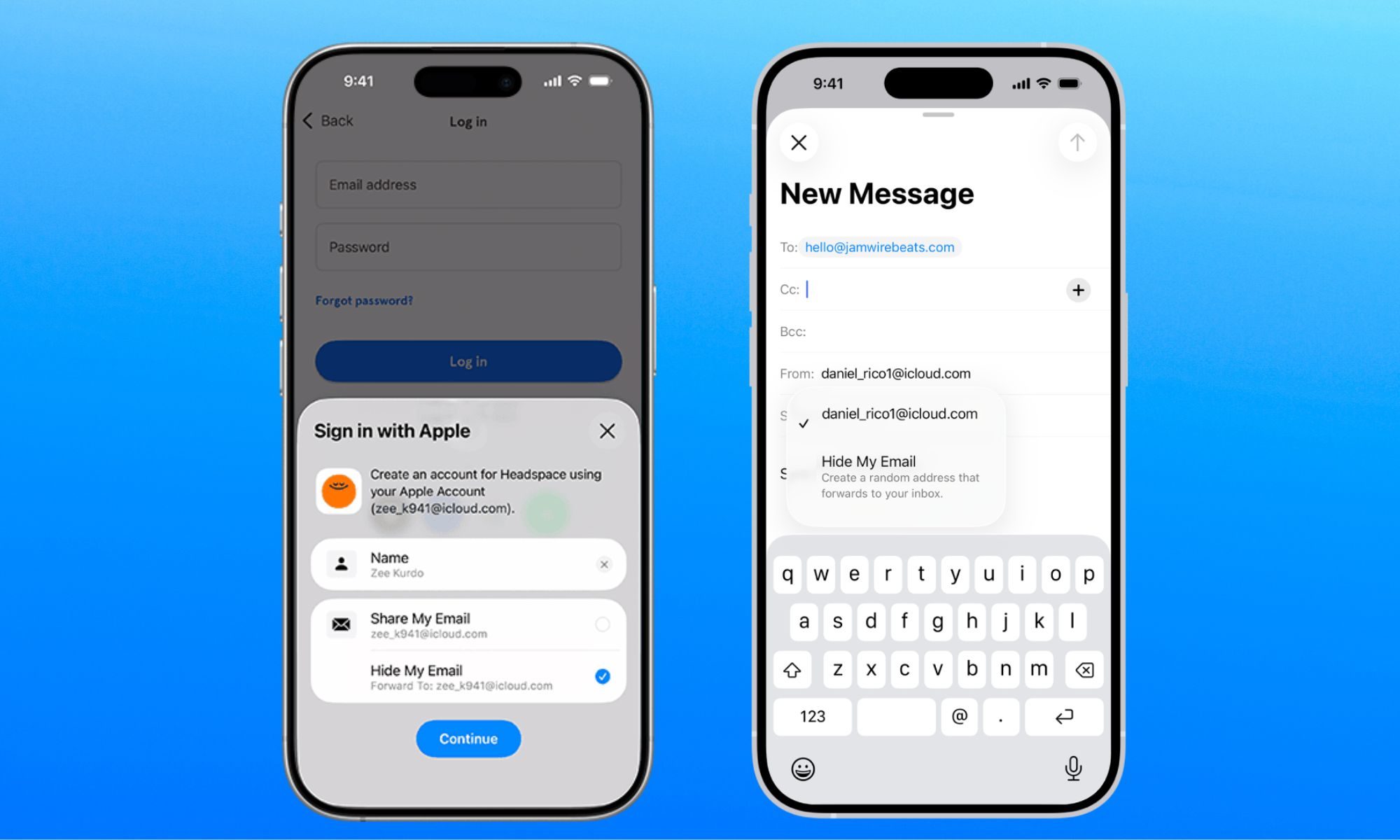
Apple fixes Hide My Email bug that exposed users’ real email addresses
Here's how Apple's Hide My Email flaw leaked real addresses for over a year, and why it only got fixed once the story went public.
apple-merging-sign-in-with-apple-hide-my-email-icloud+

Turns out the "Hide" part of Hide My Email wasn't doing its job quite as advertised, something that I covered early in July. Security researcher Tyler Murphy reported the flaw in June 2025, but despite Apple claiming it was resolved in March 2026, independent tests confirmed it remained exploitable, at least until July 3, 2026.

So how did this bug actually work?

Read more