
With the launch of the Google Pixel 6 and Google Pixel 6 Pro, Google announced that its phones would be getting up to five years of security updates. While that was initially leaked as four years of major software updates, Google has clarified that its newest Pixels would have at least three years of operating system updates — so Android 13, 14, and 15. Google also clarified that it provide will five years of security patches for Pixel devices, as opposed to the three years which it currently guarantees.
Google shifting over to its newly minted Tensor chip was seen as the company taking a path toward Apple-esque support timelines, allowing it to support the Pixel with software updates without being limited by support from the chipset maker. Obviously, this is not going to be the case, but it’s also not without precedent. Google has promised to speed up updates by removing the barriers both for Android as a whole and its Pixel devices in particular.
It has done this primarily through Project Treble for its Android partners, and by cutting carriers, phone makers, and chipset manufacturers out of the loop for Pixels. The end result has left Google with minimally better support timelines than its manufacturing partners, but barely so. Yes, Google’s updates are timelier and more reliable than say, Nokia, but you won’t be able to hold onto your phone for that much longer while keeping it up to date.
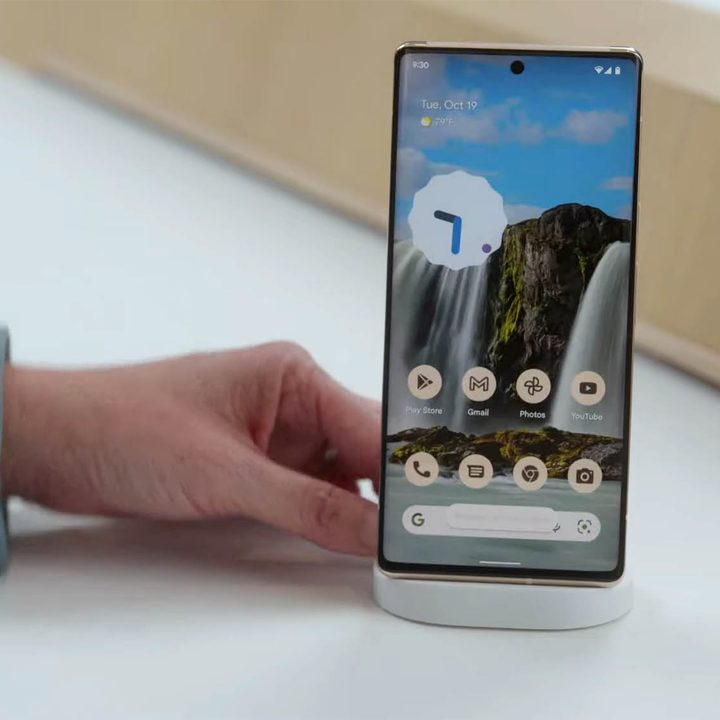
It’s worth noting here that Google’s use of the word “at least” does provide a bit of a hedging tool while allowing Google to do more if it became necessary. In a revealing but controversial quote, a Motorola spokesperson revealed the real metric driving update policies, saying: “Each device has its own merit in terms of where it needs to be updated and how many updates it does get. We do commit on the one OS update, and obviously we continue to review that. If we do find that the device has a longer life cycle in the market, we’ll obviously review to see whether it needs more OS upgrades.”
While Motorola had to walk back that comment following backlash, it strikes as a perfectly reasonable stance from a business perspective. If the Pixel 6 and Pixel 6 Pro do end up selling like gangbusters, then Google will “obviously” extend the life cycle of the phone by a year or even more. If the sales are more in line with previous phones, then Google will likely leave it at three years and call it a day.
It is also worth noting that a lot of features that typically come in iOS updates would be features delivered over the year to Pixel phones by Play Store updates. Software updates therefore wouldn’t be strictly necessary for the vast majority of scenarios, barring a large change, as we saw with the recent Android 12 release. So while Apple has normalized and popularized long support update life cycles for its phones, it doesn’t necessarily make business sense for rival companies.
While it remains disappointing that the Pixel 6 is only promised three years of support, Google has previously extended support for older Pixel devices past its limits, and it could do so again for the Pixel 6 if it sells enough units.


