
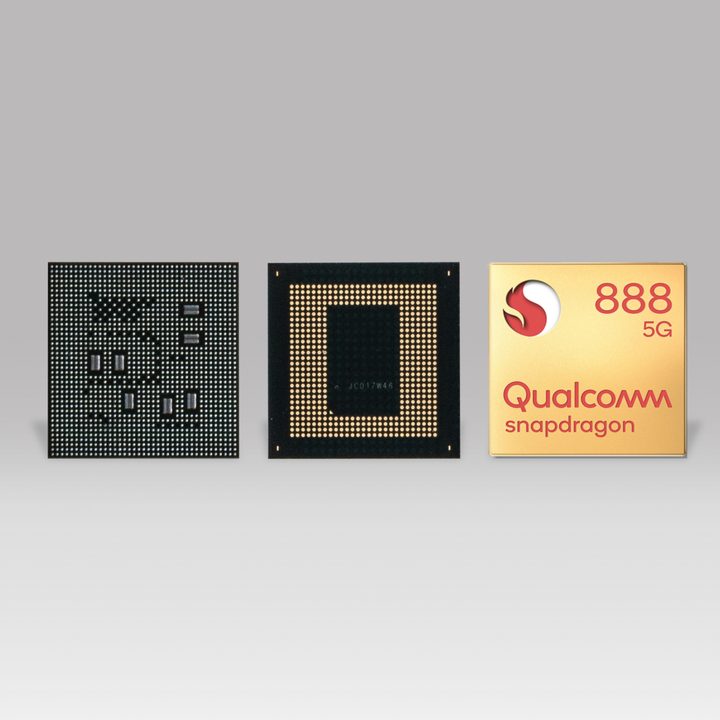
Qualcomm has finally launched its next-generation mobile chipset: The Snapdragon 888. It’s a leap in naming — skipping over the expected “875” for something oddly higher. But regardless of the name, the new chipset will power the next generation of flagship Android phones — and it brings a lot to the table.
Even at first glance, the Snapdragon 888 is a big step up from last year’s Snapdragon 865. It is Qualcomm’s first chipset to be built on a 5nm process, following Apple’s launch of the 5nm A14 Bionic in the iPad Air and iPhone 12. The Snapdragon 888 also has an integrated 5G modem (unlike the separate 5G modem on last year’s Snapdragon 865) and boasts improvements in artificial intelligence and image processing.
Still not convinced? Here are five reasons to be excited about the new Qualcomm Snapdragon 888, or more importantly, the phones that will use it.
Faster performance
At a bare minimum, the Snapdragon 888 offers better performance than the Snapdragon 865. Essentially, that means that it’s equipped to handle all modern apps, can run mobile games faster than ever, and is prepared for the future.
The root of the Snapdragon 888’s performance gains comes from the new Kryo 680 core, which is manufactured on a 5nm process, and Qualcomm says will make for a 25% improvement in overall performance. The processor is based on the ARM Cortex-X1 and Qualcomm says it offers a clock speed of up to 2.84GHz.
Faster graphics performance
The performance gains don’t end at basic CPU performance. The Snapdragon 888 offers an improved GPU too, in the form of the new Adreno 660. The Adreno 660 offers even larger performance gains than the Kryo 680 on the CPU side, boasting a 35% performance boost over the Snapdragon 865’s GPU.
The result of the better graphics performance is that the Snapdragon 888 should be able to handle more graphic-intense mobile games, cut down on game load times, and lean even further into Qualcomm’s courting of mobile gamers.
Better image processing
The Snapdragon 888 seriously steps things up in image processing tech. You can read a deep dive on that here, but the gist of things is that the new Spectra 580 ISP is actually a triple image signal processor. That means that it can process streams from three cameras, at the same time.
What might you actually use that for? Well, you could record three streams of video at once, and switch between them in an edit later. Or, you could see three streams in the viewfinder at once, allowing you to pick the sensor that works best for your needs in the moment. This all happens thanks to a dedicated ISP, rather than trying to offload the work to the CPU — which is more efficient.
5G is … still here
As you might expect, the Snapdragon 888 supports 5G. But the way it supports 5G is a little different than last year, and that could have an impact on other things.
The Snapdragon 888 has Qualcomm’s Snapdragon X60 5G modem, and it’s integrated into the chipset, unlike the X55 that could be used in conjunction with the Snapdragon 865. That means that it could make the Snapdragon 888 a little cheaper for phone makers, but more importantly for you, it should cut down on the space necessary for the combined chipset inside the phone, which could be used for a larger battery or other components. It also has theoretical improvements in battery usage when actively transmitting data over 5G, which is always welcomed.
The actual 5G specs are improved, but you probably won’t be able to take advantage of them considering the state of 5G networks. In case you’re reading this in 2022, the X60 can deliver download speeds of up to 7.5Gbps. The X60 also supports Wi-Fi 6 and 6E, so it should be able to connect to the latest Wi-Fi networks.
A.I. across all areas
Qualcomm continues to lean into artificial intelligence (A.I.), and that could have an impact on your overall phone usage. The Snapdragon 888 offers Qualcomm’s Hexagon 780 A.I. processor, which will impact all kinds of artificial intelligence situations.
Qualcomm is quick to point to demos of what the tech can do, whether it actually translates into real-world use-cases or not. For example, it says that it could erase a character from a video scene and insert you instead — all in realtime. On the more practical side, faster A.I. processing means better natural language processing, translation, and more. Even better is that it’ll cut down on battery usage — according to Qualcomm, the Hexagon 780’s performance-per-watt is three times higher than the Snapdragon 865.
Last year, the company also launched the Qualcomm Sensing Hub, and now on its second generation, it offers a low-power A.I. processor. A.I. is expected to continue to play a larger role in our digital lives. From image processing to voice assistants, the Snapdragon 888 should be able to do the same things faster, and make for new use-cases too.


