I’ve been reviewing the Samsung Galaxy Z Flip 7 for nearly a week now, and, being honest, I’ve struggled with the adaptation.
This is the first time I’ve ever used a clamshell foldable phone, and even though I like the form factor, it just feels too… squat.
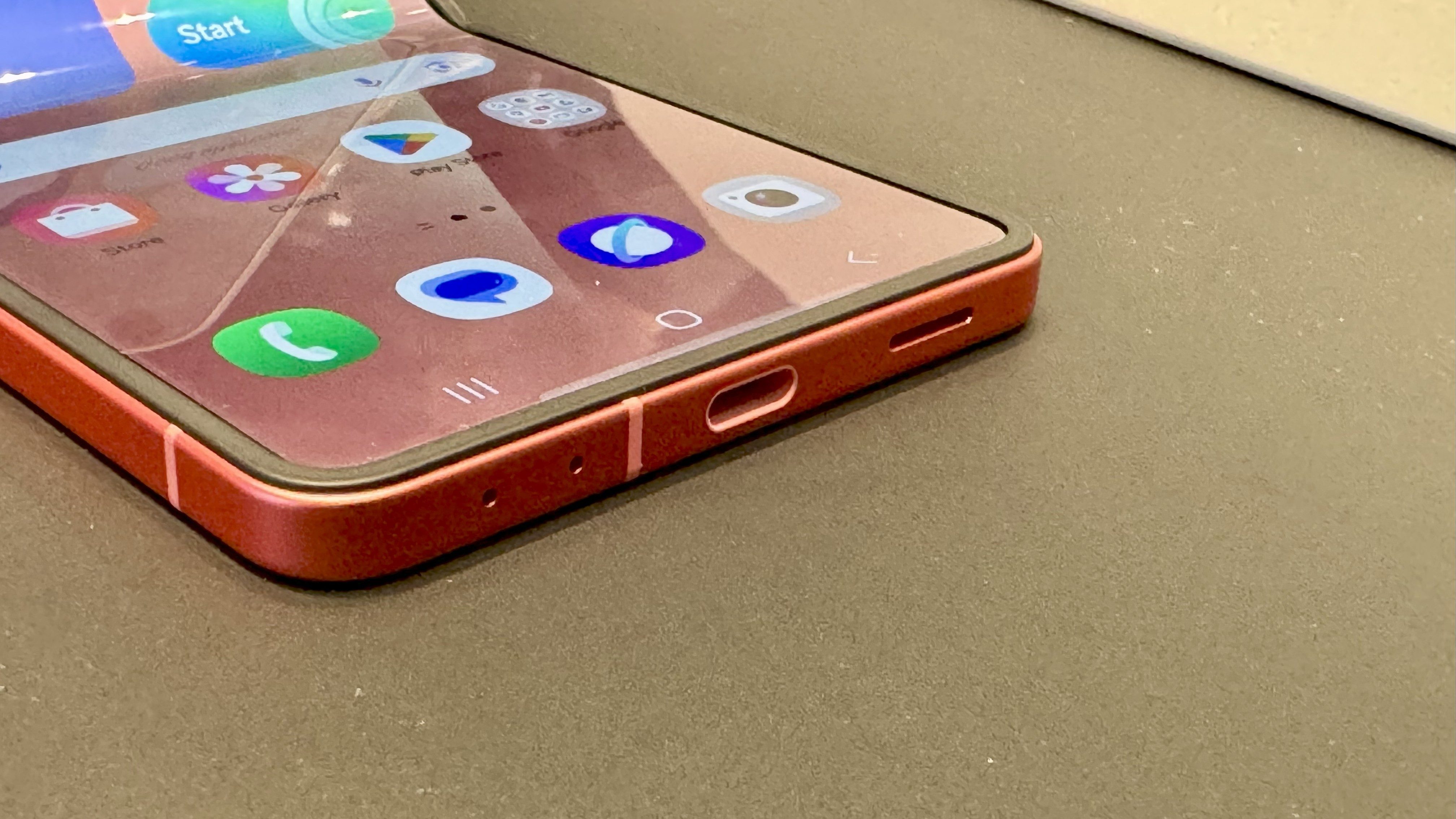
A thickness of 13.7mm is a lot to slot in the pocket, even if I do quite like the ability to hold the phone in a palm when it’s folded down. The compromise for thickness hasn’t quite paid off for pocket-friendliness.
Something else that’s surprised me is that I’ve not really enjoyed the length of the phone – the 6.9-inch display comes with a 21:9 ratio for the Super AMOLED display.
I thought I’d enjoy the longer space for scrolling and running through apps, but the persistent ‘weird’ feeling of something not being quite right lingers.
It’s definitely something that one would get used to, but I was a bit bummed out that I didn’t like the longer display.
That is, until today.
The thickness conundrum
While the Galaxy Z Flip 7 is thinner than its predecessor (the Z Flip 6 was 14.9mm) it’s still bulkier than non-foldable phones like the Galaxy S25 (and certainly more than the S25 Edge (which is only 6.4mm).
Yes, it’s more durable – the new Armor Flexhinge (a new design that makes the phone stronger for folding and unfolding) is an improvement, and the IP48 rating means this thing is more protected than ever.
(Although I still have reservations over this thing when it comes to dust resistance, the long-time achilles heel of foldable phones).
Overall though, the form factor has merely intrigued me, and it’s a long way from feeling like I’m a flip phone convert in any way.
But today I used it to watch the new IronHeart series on Disney+, which is filmed in a 21:9 aspect ratio. I was annoyed that it displayed in 16:9 format, meaning it had black bars above, below and around the screen.
So I zoomed in, and it was a cinematic revelation – it fitted the display of the Z Flip 7 perfectly.
It was one of the few moments in recent years when a phone has properly impressed me – this is partly to do with me never having reviewed a flip-style foldable phone before, so this screen-filling wonder really drew me in.
But it’s also because the Flip 7 is a real step forward in terms of design – the Z Flip 6 has a noticeable bezel around the outside, and while the screen edge on the Flip 7 is hardly invisible, it’s a lot thinner.
A retro-futuristic moment
When I started watching, I was transported back to 2009, the year I reviewed the nonsensical LG BL40 Chocolate, a device that was one of the first to have a 21:9 ratio screen.
That’s probably a little bit harsh. This was a time when smartphone designs were very… fluid, as brands didn’t really know what was going to stick. (Actually it wasn’t even a smartphone – it ran LG’s proprietary platform).
Back then, the 4.01-inch screen looked absolutely gargantuan, and it was such a novelty. Of course it was – it was very hard to get 21:9 video onto the device as there wasn’t even an app portal on it, much less a video player.
But I still loved watching widescreen videos on the thing, mostly because it just felt… right.
Compare that phone from a decade and a half ago (wait, how long…?) with the Flip 7’s AMOLED display, with the 2K (1080 x 2520) resolution (and 2,600 nits peak brightness) and it’s easy to understand why I was so taken.
It made me feel bad for ignoring the 21:9 screen format as a sideshow – I’ve not reviewed any of the new Sony Xperia phones that come in this screen ratio, such as the Xperia 1 VI or the 10 VI.
The move by Sony to embrace this screen style for its smartphones seemed like it was just to be different – the Xperia 1 VI ($1,399, around $300 more than the Flip 7) comes with high-end screen tech and ‘proper’ cameras, positioning it more like a device for film-makers rather than the everyday user.
Given Sony’s screen tech and film background, this made sense. But now I see I’ve been missing out, and I find myself constantly reaching for the Flip 7 to watch a little bit of widescreen content, even if my lovely OLED TV is there as well.
One little flaw
There is one thing that still irks me with this screen size though – and it’s something Samsung definitely needs to fix.
When I started watching Ironheart, I was constantly checking to see if it was still in the 21:9 format – some content is partly filmed in this way, and I was worried that, when the scene changed, that I was suddenly zoomed in and missing some of the action.
(I know this is the case when parts of a movie are shot for iMax, for instance).
It would be great if Samsung could automatically recognise this and move the phone in and out of the necessary screen size so I know that I’ve never missed anything. Maybe it’s already doing that, and I’ve just not used the right video to check.
And maybe this issue should be laid at Disney’s door – if you’re watching 21:9 content on Netflix, for instance, it’s automatically zoomed in to fill the screen, and it won’t display the black bars all around, unlike on Disney+.
But I don’t feel confident that it’s always the case, and it would be great to feel secure that I’m always watching videos in the most immersive way possible.
This aside, the cinematic experience that the 21:9 ratio screen is not something to be sniffed at. The flip-style smartphone might not be to everyone’s taste’s, but if you like watching videos on the go and have invested in the higher-end streaming services, you’ll find a lot to like here.