
Thursday’s Facebook News Feed announcement may have taken the spotlight off of all other Facebook-related news, but we have you covered. Here are five stories about Facebook that you might have missed this week.
Facebook ‘likes’ could help you survive a hospital stay
What’s one quick way to judge a hospital by its cover? A study published in The American Journal ofMedical Quality has found an interesting connection between hospital quality and Facebook ‘likes.’ The study investigated customer satisfaction surveys from 40 hospitals in New York City, and found a correlation between online popularity (Facebook likes) with patients’ propensity to recommend these 40 hospitals. The study found an even stronger relationship between Facebook likes and mortality rate, which was used as a (morbid) indication of overall hospital quality. Researchers found a 1 percent point decrease in the 30-day mortality rate for ever 93 new Facebook likes.
Facebook Messenger’s Android app gets free calling in Canada
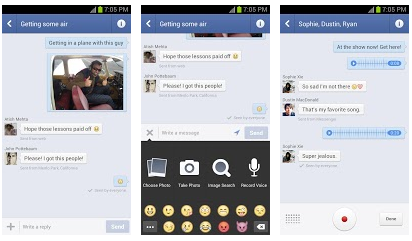
Messaging is a challenge for Facebook. Compared to competing apps, Facebook Messenger didn’t really offer users anything they can’t find elsewhere. Then the social network announced that it was rolling out a VoIP calling feature to Messenger to U.S. and Canadian users. The feature was first released to iOS users in Canada back in January. As of this week, Facebook’s VoIP feature is rolling out to Canadian Android users. Note that VoIP calling has long been available in many other messaging apps like LINE, WeChat, Nimbuzz, and others. Of course, none of these apps are Facebook – and that’s kind of a big deal.
Facebook yet again fending off an irate shareholder

Another week, another Facebook lawsuit. On base is a Facebook shareholder by the name of Gaye Jones. According to Reuters, Jones alleges that, in preparation for its IPO, Facebook’s upper management failed to disclose sub par revenue forecasts of its mobile offerings to protect the financial interests of the underwriters. Problem is, Jones owned Facebook shares before the IPO finalized, which experts say puts a damper on his case. With four other similar lawsuits against Facebook having fizzled when the courts decided to dismiss them, all we have to say to Jones is, good luck.
Marketers complain of decreased post reach, Facebook fires back
Marketers are not happy with Facebook, these days. Last October, Facebook launched Promoted Posts for users, which set off alarm bells for many who believe Facebook was running a scheme to get users to spend money for a wider reach. At the crux of their anger is that Facebook allegedly fixed its algorithm to decrease the number of friends that would see your posts. Facebook, however, has fired back with a study, titled “Quantifying the Invisible Audience in Social Networks,” that indicates, based on a sampling of 222,000 Facebook users, that users will, on average, reach 61 percent of their friends per month through their posts and status updates – more than critics expected. Still, we’ll have to see how things change however once the new News Feed rolls out to all users.
Facebook introduces new Lifestyle Open Graph Actions
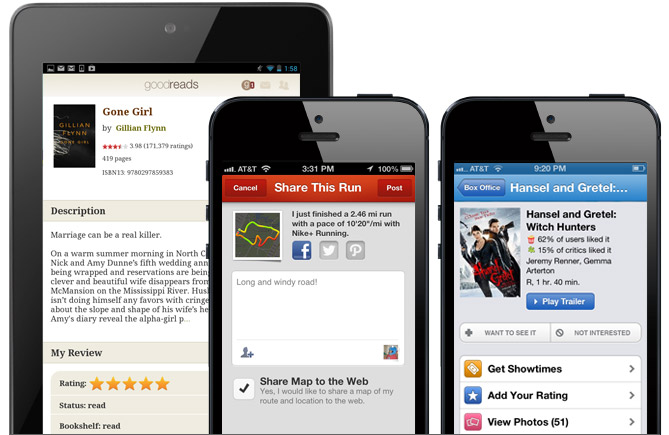
Lifestyle is quickly becoming a popular category for Facebook app developers. Recognizing this, Facebook has introduced new Open Graph actions for lifestyle app developers. “This improves developers’ ability to publish the types of activities that people want to share,” Facebook engineer Dan Giambalvo wrote in the Facebook blog post. According to Facebook, preliminary testing with these Open Graph actions have doubled the average likes per story.
The new Open Graph actions include “run,” “walk,” and “bike” for the Fitness category; “read, “rate,” “quote” and “want to read” for Boooks; and “rate,” “want to watch” for Movies and TV.
Editors' Recommendations
- What does a check mark mean on Facebook Messenger?
- You can now use the Add Yours sticker on Reels for Facebook and Instagram
- Meta’s new AI research may boost translations on Facebook, Instagram
- Facebook’s massive outage saw millions sign up for rival apps
- This is how much Facebook’s outage is thought to have cost it


