1. Home
  2. Space
  3. News

New NASA mission captures a gorgeous cosmic rainbow

Add as a preferred source on Google
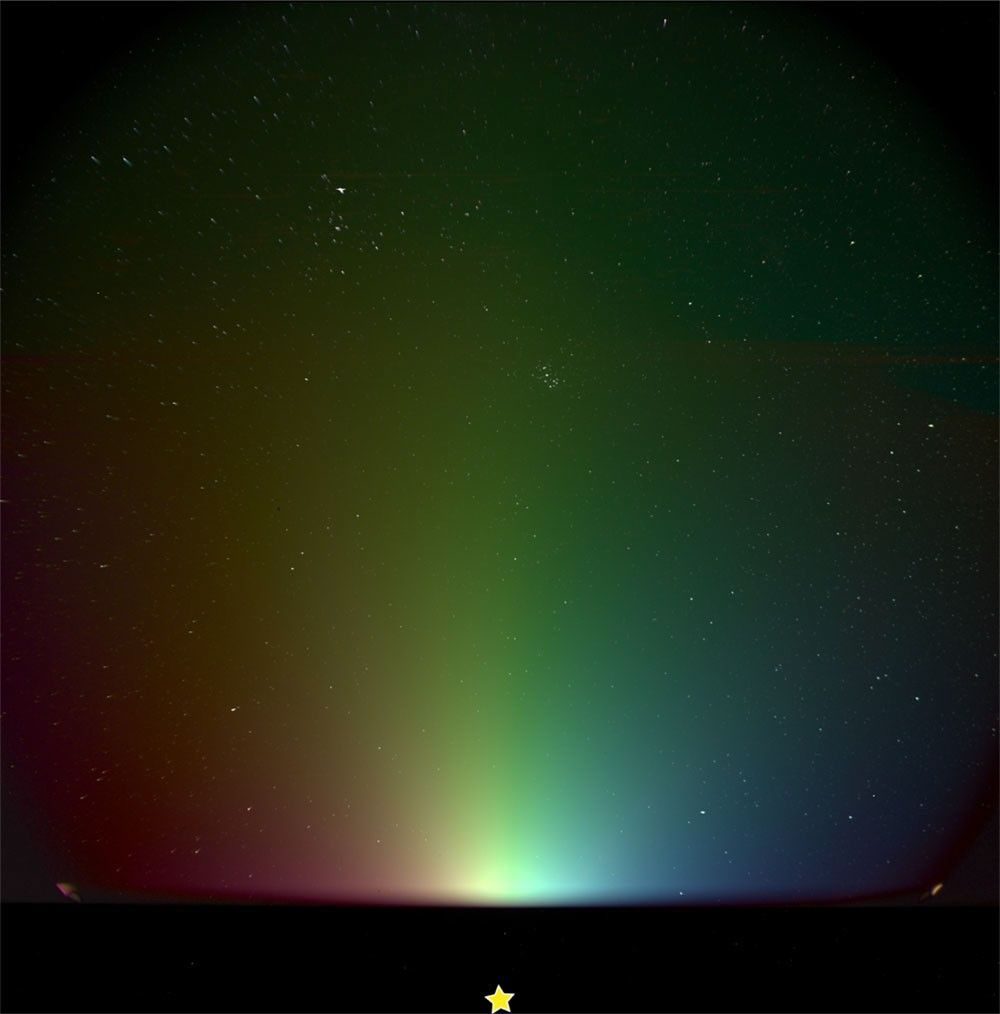
On April 18, 2025, the WFI-2 instrument (which captured its first light on April 14) took images through all three of its polarizers in succession for the first time to create this view. The image is colorized to show the polarization (or angle) of the zodiacal light, a faint glow from dust orbiting the Sun.
On April 18, 2025, the WFI-2 instrument (which captured its first light on April 14) took images through all three of its polarizers in succession for the first time to create this view. The image is colorized to show the polarization (or angle) of the zodiacal light, a faint glow from dust orbiting the Sun. NASA/SwRI

A new NASA mission is already collecting data and producing striking images of the solar system. Launched in March, the PUNCH (Polarimeter to Unify the Corona and Heliosphere) mission aims to study the sun’s corona and how the sun interacts with the wider environment of the solar system. Made up of four small suitcase-sized satellites, the mission is able to capture a continuous view of the entire inner solar system thanks to a camera placed on each satellite.

Before PUNCH can start doing science though, its instruments need to be brought online. As part of that process, PUNCH’s Wide Field Imager 2 captured an image of the zodiacal light coming from the sun. This faint glow, often seen before sunrise and known as false dawn, is a result of sunlight being scattered by the dust which floats through the solar system.

Recommended Videos

In the full image below, you can see a rainbow of zodiacal light, with the position of the sun marked by a star. The image uses color to represent features of the light: the hue of the light represents its direction, and the amount of saturation represents the degree of polarization. This data also shows background stars in white, like the Pleiades star cluster above the center of the image and the Hyades star cluster, a V-shaped cluster located toward the upper left.
Other instruments on board PUNCH also collected early data, including one which captured a striking view of the moon. This image was taken by the Narrow Field Imager (NFI), which is a type of instrument called a coronagraph that has a dark disk that is used to block out light from the sun. That allows less bright objects to be seen — in this case, the moon.
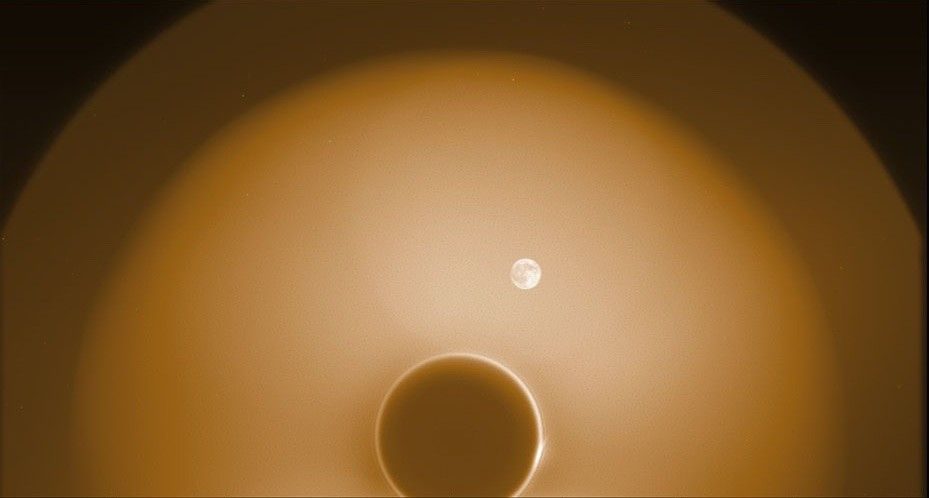
The NFI will be used to study the sun’s corona, so the purpose of this image was to check whether the moon would obscure the view — and the good news is that the moon won’t interfere with the science data, as it isn’t too bright compared to the background light being studied.

PUNCH will now continue collecting data, with two more instruments to be commissioned within the next few weeks before full science operations begin in June.

Georgina Torbet
Georgina has been the space writer at Digital Trends space writer for six years, covering human space exploration, planetary…
China’s answer to SpaceX’s reusable rockets literally catches boosters in a net
SpaceX catches boosters on legs. China just used a net.
Ammunition, Missile, Weapon

SpaceX's playbook for recovering a rocket booster generally involves legs, a precisely controlled vertical landing, and either a concrete pad or a drone ship. 

China just managed to pull off something similar, but in a slightly different way, and on July 10, it tested the method as well.

Read more
Dimming the sun sounds unhinged, but this new study on El Niño makes a surprisingly good case for it
A natural test case, Australia's worst-ever wildfire season, suggests the idea deserves serious consideration.
Nature, Outdoors, Sky

When I first saw "scientists propose dimming the sun," I rolled my eyes. It sounds like a science fiction movie cooked up after watching many climate documentaries. But a new study, published on July 8, 2026, in the journal Science Advances, seems to have a genuinely compelling argument.

A Super El Niño is currently forming in the Pacific, feared to be the most intense in decades. It could escalate floods, wildfires, and extreme heat events worldwide. However, Researchers at UC San Diego's Scripps Institution of Oceanography, led by climate scientists Kate Ricke and Jessica Wan, are now proposing one of the most interesting solutions I’ve come across.

Read more
You can now walk through space and gaze into a black hole at this VR exhibit
Smithsonian Starstruck lets you drift past dying stars and see the origin point of the universe for as little as $18 a person.
Smithsonian Starstruck featured

Most planetarium shows ask you to sit still and look up. The Smithsonian's new VR exhibit takes a different approach, letting visitors walk through the vast expanse of the universe, drifting past stars, planets, and a black hole to get a physical sense of its true scale.

A $29 ticket to the edge of the galaxy

Read more