1. Home
  2. Space
  3. News

How to watch the uncrewed Starliner depart the space station and land in the desert

Add as a preferred source on Google

The troubled Boeing Starliner will depart from the International Space Station (ISS) tonight, traveling back to Earth without its crew and bringing an end to its first crewed test flight. After an issue with its thrusters was discovered during the outward journey, several months of testing have not given NASA complete confidence that the spacecraft is safe to carry crew members through the rigors of re-entry into the Earth’s atmosphere, so the astronauts it carried will stay on the space station while the spacecraft returns home.

NASA is live-streaming the departure of the Starliner from the ISS and its landing in New Mexico, and you can watch both events through the evening and into the night.

NASA’s Boeing Crew Flight Test Undocking

Before the Starliner undocked, the ground control team at Starliner mission control in Houston spoke with astronauts Suni Williams and Butch Wilmore who remain on the space station. They will travel back to Earth on a SpaceX Crew Dragon in February next year instead. “We have your backs, and you’ve got this,” Williams told flight control. “Bring her back to Earth.”

Recommended Videos

Once it is cleared for undocking, the Starliner will be released from the hooks on the ISS docking system, and springs on the spacecraft will push it away from station. Once it is around 5 meters’ distance from the station, the Starliner will fire its thrusters to back directly away for around 200 meters, then it will move above the station.

These maneuvers will use Starliner’s forward-facing reaction control thrusters, which have been working as expected and do not include the five rear-facing reaction control thrusters that have been causing all the problems during the test flight. The thruster firing sequence will take about five minutes, and it will move the spacecraft away from the station, from where it can enter a path to carry it back to Earth.

The Starliner will come in to land at the White Sands Space Harbor in New Mexico, with touchdown scheduled for for 12:03 a.m. ET. The weather is looking good at the landing site, and you can watch a live stream of the touchdown below with coverage scheduled to begin at 10:50 p.m. ET.

NASA's Boeing Crew Flight Test Re-entry and Landing
Georgina Torbet
Georgina has been the space writer at Digital Trends space writer for six years, covering human space exploration, planetary…
NASA’s new telescope can see 100 times more sky than Hubble in a single shot
NASA just launched a $4 billion telescope to map billions of galaxies
NASA Roman Telescope Launch Featured

The Hubble telescope has an almost legendary status. Over the last three decades, Hubble gave us some of the most spectacular close-ups of the universe ever captured, and now, NASA’s newest space telescope wants to see the bigger picture. The Nancy Grace Roman Space Telescope successfully launched aboard a SpaceX Falcon Heavy from Kennedy Space Center in Florida at 7:26 a.m. EDT on August 30. Roman is now beginning a roughly three-month journey toward the Sun-Earth L2 point, nearly a million miles away, where it will spend its primary five-year mission surveying huge portions of the cosmos.

Roman carries a 2.4-meter primary mirror, the same diameter as Hubble’s, but its Wide Field Instrument can capture a field of view at least 100 times larger than Hubble’s. NASA expects it to use that combination of sharpness and scale to map billions of galaxies, study dark matter and dark energy, and discover enormous numbers of previously unknown worlds.

Read more
NASA built the Roman Space Telescope to study dark matter, but it can also help protect Earth from killer asteroids
The Nancy Grace Roman Space Telescope wasn't built to hunt asteroids, but it turns out to be great at it.
Nancy Grace Roman space telescope.

NASA is about to launch a telescope built to unlock some of the universe's biggest mysteries, and it turns out that same design could help protect Earth along the way.

The Nancy Grace Roman Space Telescope is set to launch from Kennedy Space Center on August 30, 2026, with a primary mission focused on studying dark matter and dark energy - the invisible forces shaping galaxies and cosmic expansion. Researchers now say its unique design also makes it unexpectedly effective at spotting dangerous asteroids headed our way (via MIT Technology Review).

Read more
Space is becoming Bezos and Musk’s next data center site, and we have every reason to worry
The AI boom is coming for the night sky
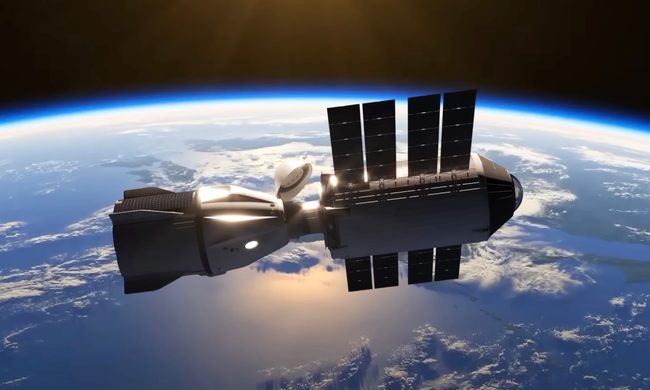
How Vast's space station will look in orbit.

AI data centers already consume vast amounts of electricity and water on Earth, so Silicon Valley has begun looking somewhere considerably more spacious... literally.

Elon Musk's SpaceX and Jeff Bezos' Blue Origin, along with several other companies, have proposed enormous constellations of satellites designed to operate as orbital data centers. However, environmental groups and former space officials are now warning that putting them into orbit at the proposed scale could have severe consequences for Earth's atmosphere and the night sky.

Read more