Do you remember a tablet called the Notion Ink Adam? If you do, you’re likely a huge gadget geek (and there’s nothing wrong with that) who spent time following news about and likely lusting over non-iPad tablets long before they became trendy and Google certified. The Adam was a promising tablet just a couple of years ago. It had a Tegra 2 processor, a Pixel Qi display that used far less energy than a traditional LCD and was easily readable in sunlight, and a very attractive design. Sadly, the Adam didn’t live up to that promise and eventually fizzled out after months-long drama. That drama is about to rev up again because Notion Ink is not dead, and the Adam 2 is a reality. At least, there are pictures of it and the Indian government’s Department of Science & Technology instituted Technology Business Incubators is … incubating it.
The reveal came during India’s National Technology Awards and details are pretty scarce. What we can glean from the handout given to the awards attendees and a small mention at the end of a long press release is that the Adam 2 sports a 10.1-inch IPS display at 1280 x 800 pixel resolution (16:10 aspect ratio), a secondary E Ink display on the edge for notifications and other short info, 1.5GHz dual-core processor, 1GB of RAM, Wi-Fi, Bluetooth, two cameras (both 2-megapixel), microSD, HDMI, OTG micro USB port, and it will run Android 4.2.2 Jelly Bean. The rumored price of around 12,000 rupees converts to $217, but who knows if it would sell in the U.S. for that price or if it will even come to our shores at all?

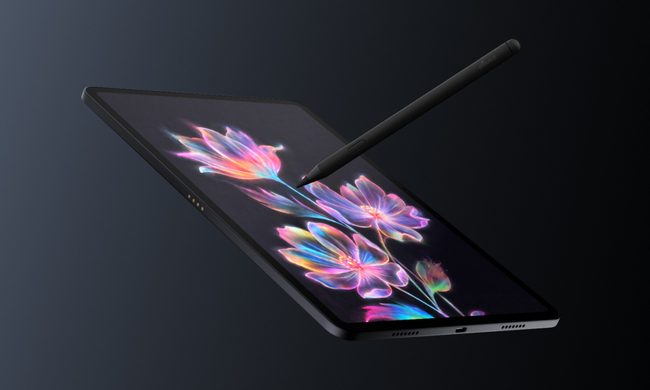
The images in the brochure aren’t much to go by, but it’s notable that the Adam 2 doesn’t contain many of the nice design touches that the original did. Gone is the swivel camera, the 3 degrees of elevation, and cylindrical edge; the Adam 2 looks like an ordinary Android tablet. Except for the edge with the E Ink display. It is nice to see a tablet maker using E Ink in a useful way. Displaying contextual notifications is novel, how useful it will be is debatable.
Another big difference from the first generation is that there’s no extensive user interface skin on top of Android. It looks like stock Jelly Bean. Notion Ink had developed the Eden interface the first time around, but perhaps dropped it because it’s no longer necessary. Back when the Adam first entered development Google was still insisting that Android was a phone OS and why was everyone putting it on tablets? God, you guise! Eden was supposed to be more tablety; it ended up being kind of a pain, overall.
In that regard, the Notion Ink team may have learned their lesson. The original Adam got a lot right but so many things wrong. It launched to a community of dedicated fans who were fanatically devoted and eager to like it. In the end, even most of them had to admit that the reviewers who gave the tablet lukewarm reviews had a point. Before the Adam’s launch, the Notion Ink team updated their blog and forums regularly, gaining feedback, expounding on minute details of design, and revving the fanbase up. After launch, when things didn’t go so well, the company petered off into silence. And, up until very recently, no one there has had anything to say about the second generation. We may not hear much until it actually launches.

This time around, Notion Ink won’t have to build everything itself from scratch. Just looking at the old blog posts shows how hard it tried to create a workable UI over Android 2.3 Gingerbread, pull together a nice suite of pre-loaded, compatible apps, and get all the hardware working with the software. It’s a big job for a small company. Larger companies have tried and failed, as well. Since the Adam 2 looks to be a Google certified device with Google Play, all Notion needs to do is ensure the software works and looks great. Those specs aren’t entirely inspiring, but if it can sell this tablet for $250 or less, then it won’t matter.
Is it foolish to get hopes up about yet another Adam tablet from Notion Ink? Possibly. Even if this generation doesn’t set the world on fire, the team could get the boost of confidence and cash to make an Adam 3 that realizes all the potential of the original. Bring me that sunlight-readable, battery-sipping display, golden ratio-inspired design, and side-firing speakers!