1. Home
  2. Wearables
  3. Mobile
  4. News

Google Pixel Watch now gives you scam protection right on your wrist

Add as a preferred source on Google
A person sitting down and wearing the Google Pixel Watch 2.
Joe Maring / Digital Trends

The Google Pixel Watch 2 and 3 are already among the best smartwatches, but now, Google decked them out with another handy feature. Google is adding Scam Detection to its watches, enhancing security without making you pull your phone out of your pocket.

We all deal with scam calls on a regular basis, and Google’s Scam Detection is just one way tech companies try to combat the nuisance (and safety hazard) of these calls. This tool listens to calls and uses AI to detect conversation patterns that scammers have been known to use. If something sounds shady, Scam Detection will send you a notification accompanied by a sound and vibration.

Recommended Videos

This feature was previously limited to Pixel Phones, but now, Google is bringing it to the Pixel Watch 2 and 3. This means that you’ll be able to safely answer the call on your watch and still benefit from Scam Protection in real time, during the conversation. Of course, the feature isn’t entirely accurate and scammer tactics evolve every single day, but it’s definitely better than nothing.

Of course, the feature isn’t available to every single user. You’ll need a Pixel 9 phone or later, and it needs to be paired with the Google Pixel Watch 2 or 3, and this will only work if the two devices are paired via Bluetooth. Moreover, Scam Detection is only available in the U.S. during conversations in English.

As explained by TechRadar, you can turn on Scam Detection on your Pixel Phone and Watch by heading to the Settings — it’s tucked away under Scam Detection. You’ll know the feature is enabled because it’ll beep right at the start of the call and every now and then during the conversation.

For many, this feature might not be too meaningful, but it saves you having to take your phone out of your pocket when you’re not sure about a particular number. Scam Detection or not, it’s always important to stay vigilant, as new scams are detected every single week.

Monica J. White
Monica is a computing writer at Digital Trends, focusing on PC hardware. Since joining the team in 2021, Monica has written…
This smart ring makes a blood pressure promise Apple and Oura still won’t
The $399 Signal Ring provides actual systolic and diastolic readings, but it’s launching as a wellness device without FDA clearance
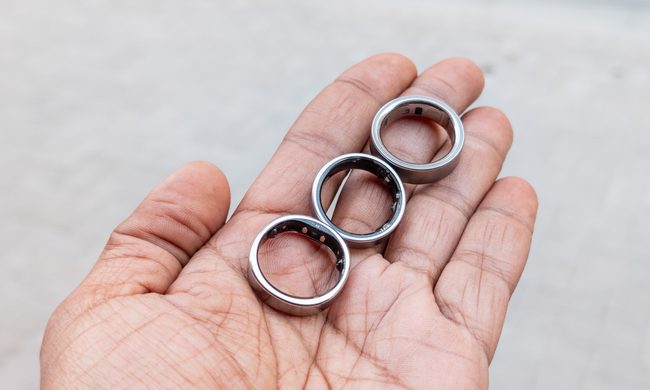
Oura Ring 4, Galaxy Ring and RingConn Gen 2 in the palm of a hand

Vital Signals has unveiled a $399 smart ring that goes further than Apple and Oura currently dare. The Signal Ring displays numerical blood pressure readings without requiring an arm cuff for initial or recurring calibration.

Bloomberg reports that preorders open July 16, with shipping scheduled to begin in October. The ring can collect readings during the day and overnight, then display the results through an iOS or Android app.

Read more
HTC’s smart glasses are apparently coming to the US, but HTC hasn’t said so
Amazon briefly listed the VIVE Eagle for a September 1 launch, while HTC still says the $499 glasses are only available in Taiwan
A woman wearing the HTC Vive Eagle smart glasses

HTC’s VIVE Eagle smart glasses could finally be heading to the US. Apparently, Amazon got the memo before HTC was ready to share it.

Notebookcheck spotted six versions available for preorder at $499, each carrying a September 1 release date. Amazon has since pulled the pages, so new orders are closed and anyone who already placed one is left wondering whether it still counts.

Read more
Don’t expect smartwatches and fitness bands with replaceable batteries anytime soon
Turns out even the EU thinks your smartwatch is too small for a battery swap.
Wristwatch, Arm, Body Part

The EU has a habit of pushing tech companies to adopt meaningful changes in their product. It's the reason your iPhone finally has a USB-C port, and it's also why companies now have to offer spare parts and repair support for electronics for several years after launch. So naturally, many of us assumed wearables were next in line for mandatory swappable batteries. Turns out, the EU just went the other way.

So what did the EU announce?

Read more