1. Home
  2. Wearables
  3. Computing
  4. Emerging Tech
  5. Mobile
  6. News

These unique smart glasses skirt hype and solve a real medical problem

Add as a preferred source on Google
Front view of the SolidddVision smartglasses.
Soliddd
CES 2026
Read and watch our complete CES coverage here

Smart glasses are increasingly being pushed as the future of personal computing. But so far, an overwhelming majority have focused on aspects like social media sharing, pulling up AI agents, or media consumption. Soliddd wants to push smart glasses into a challenging niche of medical science.

At CES 2025, the New York City-based company introduced SolidddVision smart glasses. Soliddd claims these are “the first true vision correction for people living with vision loss due to macular degeneration.” Notably, these glasses won’t require any FDA clearance and will enter the market later this year.

Recommended Videos

Macular degeneration is an age-related condition that prevents people from seeing what’s directly in their line of sight, blocking their central vision due to degeneration of the macular region of the retina.
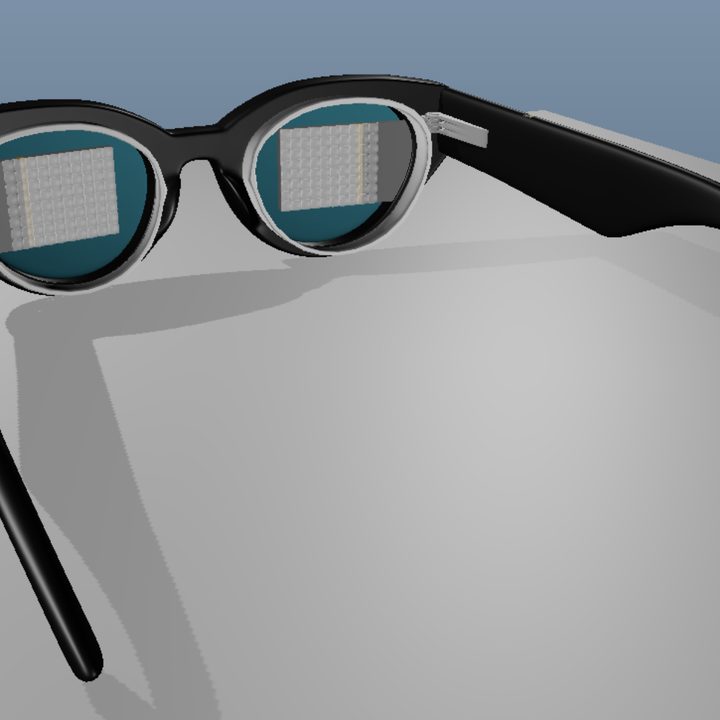
Interior view of the SolidddVision smartglasses.
Soliddd

Millions of people across the world suffer from dry and wet macular degeneration. Unfortunately, there’s no cure for it, though, there are some drugs that can sometimes improve the vision, or simply arrest the damage.

“We can provide sight in areas of the visual field where patients otherwise see nothing,” Neal Weinstock, founding chief of Soliddd, said in the announcement. Results from a clinical study involving the SolidddVision glasses have also yielded a positive outlook.
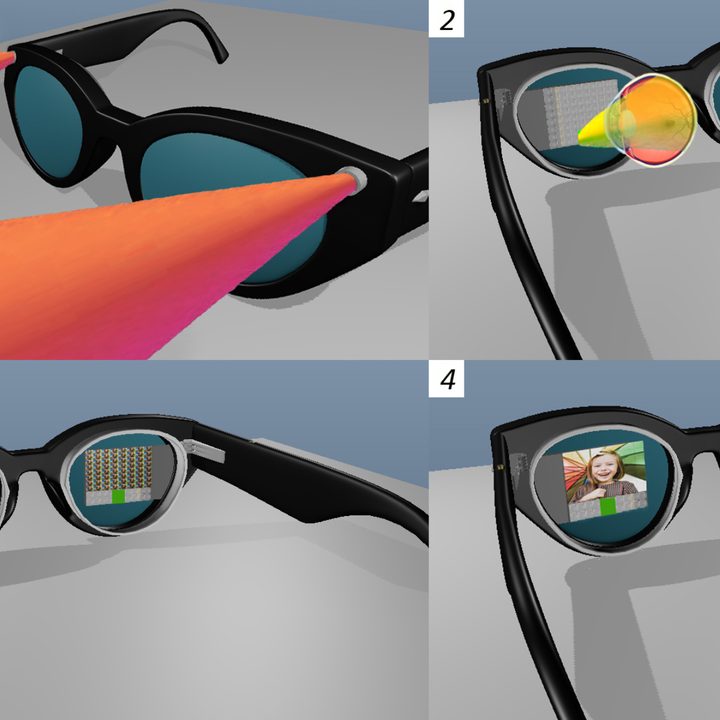
Working design of the SolidddVision smartglasses.
Soliddd

The SolidddVision smart glasses take a leaf out of the VR playbook to allow sight restoration for people living with macular degeneration. Inspired by a fly’s eye, these smart glasses employ a proprietary lens array that pushes multiple images to the retinal zone that is still healthy.

The trick here is to let the brain construct “a single full-field image with good acuity that feels like normal, in-focus sight.” The whole system is a combined effort of patented optical design and software, beaming in-focus views courtesy of a parallel-ray light field.
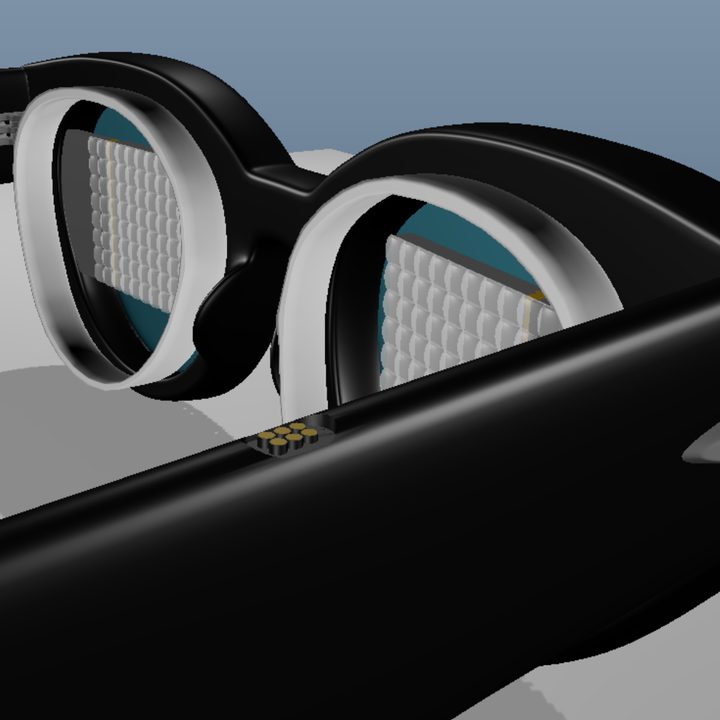
Interior display unit of the SolidddVision smartglasses.
Soliddd

There are two front-facing cameras to capture the world outside, and an equal number of inward-facing cameras for mapping the eyes and gaze tracking. The software combines the input video with eye mapping data, performs spatial adjustments, employs the necessary color correction, and beams the final view to the internal display units.

The SolidddVision glasses are currently in the beta-testing phase, but the company is eying a market launch in 2025. So far, the SolidddVision glasses appear to be the most practically rewarding implementation of this wearable form factor, and it would be interesting to see where the technology leads.

Nadeem Sarwar
Nadeem is the Managing Editor at Digital Trends.
Garmin’s new Fitbit Air rival has 80 workout modes and avoids the frustrating subscription trap
Garmin CIRQA entered the screenless fitness band fight with 10-day battery and no monthly fee
Garmin CIRQA featured image

The screenless fitness-band revival has gained another serious contender, and Garmin is arriving with a refreshing approach. The new Garmin CIRQA Smart Band just debuted for $199.99 and offers up to 10 days of battery life while also featuring continuous health monitoring and support for more than 80 activities. It has no display, leaving Garmin Connect to handle every chart, score, and workout summary. Garmin ensures that a subscription is not required to access its features.

Garmin packed its fitness ecosystem into a silent wristband

Read more
The Galaxy Watch Ultra 2 is finally ready to dive, and the Watch 9 40mm gets a bigger battery
Galaxy Watch Ultra 2 may finally close the diving gap with the Apple Watch Ultra 3
The Samsung Galaxy Watch Ultra's case and screen.

Samsung’s upcoming smartwatches may have another couple of meaningful upgrades hiding up their sleeves. Newly leaked promotional images suggest the smaller Galaxy Watch 9 will receive a much larger battery than previously reported, while the Galaxy Watch Ultra 2 could finally be certified for recreational diving.

The images were shared by an X account using the @evleaks handle, although the prominent leaker Evan Blass has previously said the account does not belong to him. They appear to be official Samsung marketing materials and reveal a few details that were missing from earlier specification leaks.

Read more
Bose’s next QuietComfort headphones could steal the Ultra’s best features
Bose QuietComfort deal

For the last few years, Bose has been in a slightly awkward position. Its standard QuietComfort headphones have remained an easy recommendation, but they've also felt a little... forgotten. While the Ultra lineup grabbed the spotlight with new features and a refreshed design, the regular QuietComfort stayed the same. That may finally be about to change.

A new leak suggests Bose is preparing a QuietComfort (2nd Gen) model, and if it's accurate, this looks like Bose bringing its mainstream headphones much closer to its premium offering.

Read more