1. Home
  2. Emerging Tech
  3. News

Sweden has just made it a whole lot harder to fly camera drones

Add as a preferred source on Google

With new drones hitting the market all the time – among them ultra-portable offerings such as DJI’s Mavic and GoPro’s Karma – you can bet we’re going to see an uptick in sales of the remotely controlled flying machine in the run up to Christmas.

But depending on where you live, getting the thing off the ground isn’t always as straightforward as you might think. While the authorities in some countries discourage owners from launching their machines in urban areas or over crowded places for safety reasons, the Swedish powers-that-be appear to be focusing more on another issue that we don’t tend to hear so much about when it comes to quadcopters: privacy.

Recommended Videos

On Friday, the country’s highest court made it a whole lot harder for drone enthusiasts to fly their copters in public places after it ruled that they are no different to security cameras. It means owners with cameras on their copters now need to acquire a permit before they can fly their machine.

The ruling by the Scandinavian country’s Supreme Administrative Court overturns a decision last year made by a lower district court that said camera-equipped unmanned aerial vehicles (UAVs) should not be classified as surveillance devices.

In case you’re wondering where that places cars’ dash cams and cyclists’ helmet cams, well, they’re in the clear because those devices are operated in the immediate proximity of the user.

So now, whether you’re a UAV-owning Swedish citizen, or visiting the land of the midnight sun hoping to grab some dramatic shots with your quadcopter, you’ll now need to spend a few bucks on applying to county administrators for a surveillance camera permit. Though even then, there’s no guarantee they’ll grant it.

Initial reaction to the ruling from drone enthusiasts on a DJI forum was, understandably, one of disbelief and disappointment. One said it had “robbed” them of their hobby, while someone else suggested the government had “a serious hang-up about surveillance cameras.”

Another, however, seemed less concerned, questioning how the law could be effectively enforced.

One Swedish-based poster on the forum said simply that the ruling “makes no sense,” adding that “the people on the court must have been drunk or something.”

Trevor Mogg
Contributing Editor
Not so many moons ago, Trevor moved from one tea-loving island nation that drives on the left (Britain) to another (Japan)…
A new AI model wants self-driving cars to think before they swerve
Forget guessing games, this self-driving AI actually shows its work.
Self driving car

Self-driving cars have gotten pretty good at driving. The harder problem is teaching them to drive safely in situations nobody planned for. We have heard horror stories of self-driving cars, behaving erratically in emergency situations, often times delaying first responders from reaching the scene.

A team at Seoul National University, led by professor Jun Won Choi from the Department of Electrical and Computer Engineering, thinks they have cracked part of that puzzle with a new AI model called SafeDrive. The research was recently selected as a highlight paper at CVPR 2026, a distinction that goes only to roughly 3% of all submissions.

Read more
An AirPods-sized mini lab could help catch disease markers in minutes
Meet VPodDuo, an AirPods-sized molecular testing gadget
VPodDuo Mini Medical Device

Home testing could eventually become a lot more convenient. Researchs at the at the University of Illinois Urbana-Champaign has developed the VPodDuo, a pocket-sized fluorescence reader designed to measure sensitive molecular tests outside a conventional laboratory.

Its housing is roughly comparable in size and shape to an AirPods charging case, while Bluetooth connectivity sends results directly to a smartphone. Meaning, you might not have to wait in line anymore.

Read more
Your future AR glasses might finally stop making the real world look weird
Researchers have developed a new display technique that keeps virtual objects realistic without dimming the real world.
Samsung AR Glasses

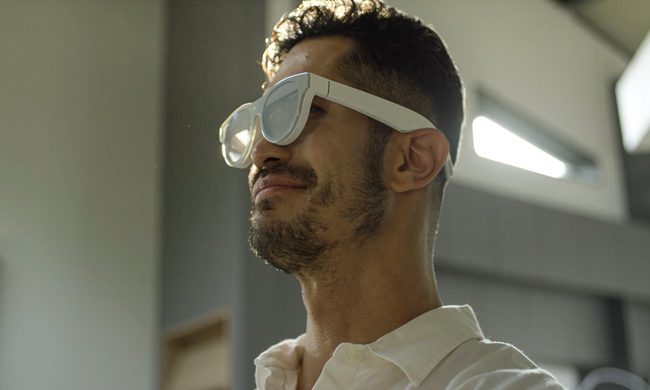
One of the biggest promises of augmented reality is blending digital objects seamlessly into the real world. Ironically, today's AR glasses often make the real world harder to see. Researchers at the Shibaura Institute of Technology (SIT) in Japan, led by Assistant Professor Xiaodan Hu in collaboration with Dr. Yan Zhang and Professor Xubo Yang from Shanghai Jiao Tong University in China, and Professor Kiyoshi Kiyokawa from Japan's Nara Institute of Science and Technology, have developed a new AR display technique that aims to make virtual objects look realistic without reducing visibility of the real world. The study was published in IEEE Transactions on Visualization and Computer Graphics.

The biggest AR problem isn't virtual objects; it's everything around them

Read more