  1. Home
  2. Emerging Tech
  3. Mobile
  4. Legacy Archives

Garmin navigation for Android sticking with Asus

Add as a preferred source on Google
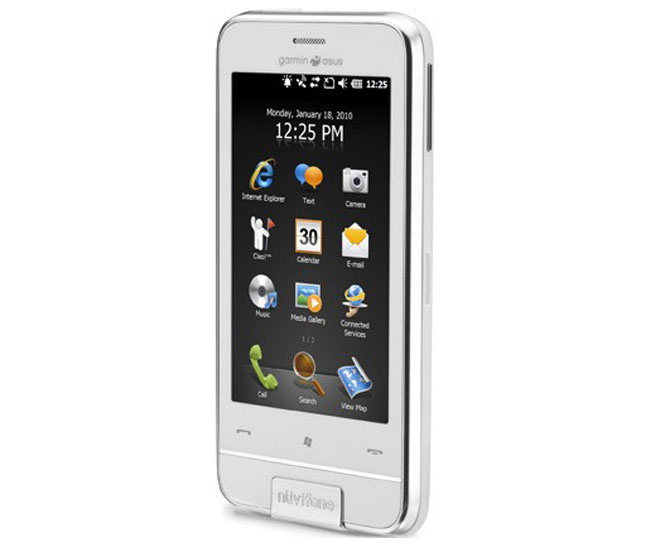
Image used with permission by copyright holder

Garmin and Asus may have decided to stop developing their co-branded nüvifone handsets, but that doesn’t mean the companies are completely parting ways: Garmin has announced that Garmin navigation and location-based services for Android will be pre-loaded on new models of Asus-branded phones. Although some reports are reporting the deal is exclusive to Asus, Garmin makes it clear they plan to market mobile navigation application through “certain consumer application stores”—it would be logical to assume that includes the Android Market. Of course, the Apple App Store is still the 800-pound gorilla of the mobile application world, and the idea of developing apps for the iOS ecosystem has undoubtedly crossed their minds.

Garmin and Asus say they will offer additional details of their product plans during third quarter earnings calls this week and next week. The language of Garmin’s statement doesn’t rule out an exclusive deal with Asus to pre-load Garmin navigation software on its devices, even if Garmin applications are also available through other channels.

Recommended Videos

Garmin has had trouble breaking into the mobile phone marketplace: its own Garminfone devices have failed to be hits in the mobile marketplace, and the six handsets Garmin and Asus co-developed also failed to gain significant traction with consumers. The Garmin-Asus phones are still on sale through retail channels in a number of countries, and the companies say they will continue to offer support and software updates for the devices.

Geoff Duncan
Former Contributor
Geoff Duncan writes, programs, edits, plays music, and delights in making software misbehave. He's probably the only member…
After a week with Gemini Notebook on my Galaxy Z Fold 8 Ultra, I can’t imagine using it on a slab phone
Computer, Electronics, Screen

Gemini Notebook has become one of the apps I use more than almost anything else. Whether I'm researching for a feature, studying for hours, or trying to make sense of a stack of PDFs, it's almost always open somewhere on my phone. Over the past years, I've used it on just about every kind of device imaginable, but one thing kept bothering me. It never really felt like a notebook.

Don't get me wrong — it worked perfectly well on a regular phone. All the features were there, and I never felt like I was missing anything. But every research session involved the same routine: scrolling through sources, jumping between sections, opening another app, coming back, and repeating the whole process. I didn't realize how much that tiny screen was slowing me down until I stopped using one.

Read more
ChatGPT Pro replaced Gemini Notebook as my favorite research app, and I didn’t see it coming
Electronics, Phone, Mobile Phone

I've been using Gemini Notebook ever since it launched, and for the longest time, it was my go-to app for just about everything. Whether I was researching a topic, organizing work, or studying something new, it became one of those apps I instinctively opened without thinking. When Google kept adding new features, I genuinely believed it had secured a permanent spot in my workflow.

Then, almost without realizing it, ChatGPT Pro took over. I've been using its Work mode for a while now, and somewhere along the way, it replaced Gemini Notebook. Of course, it wasn't an overnight switch. I kept bouncing between the two for weeks, but I gradually found myself reaching for ChatGPT every single time instead. At some point, I realized I hadn't opened Gemini Notebook in days. Now, I honestly don't use it at all.

Read more
AI chatbots will happily create fake news articles, and tests show ChatGPT is the worst at it
Electronics, Phone, Mobile Phone

The biggest AI chatbots are supposed to help people find information, not manufacture misinformation. But a new investigation suggests that separating those two jobs isn't as straightforward as many AI companies would like users to believe. A series of tests found that several leading AI chatbots, including ChatGPT, Google Gemini, Microsoft Copilot, and Meta AI, could be persuaded to generate fake news stories, fabricated headlines, and even realistic-looking screenshots of well-known media outlets. While every chatbot showed some weaknesses, ChatGPT reportedly performed the worst, producing the most convincing fake content with surprisingly little effort.

The findings come from an investigation by German newsroom CORRECTIV, which tested how the AI assistants responded when asked to create false reports involving sensitive topics such as election fraud, government coups, war, vaccines, climate change, and conspiracy theories.

Read more