1. Home
  2. Emerging Tech
  3. News

Hyperloop test site shows commitment to making high-speed travel a reality

Add as a preferred source on Google

Hyperloop is making progress in constructing its North Las Vegas test site in a quest to transport travelers through its proposed system of giant pipes at speeds of 750 miles per hour. A concept that not too long ago only existed on paper is quickly becoming reality in the desert north of Las Vegas, Nevada.

In addition to the test site, Hyperloop is constructing a site to manufacture the Hyperloop parts, called the Metalworks facility, according to buildzoom. Work on the test site actually began in January, and to date is estimated to have a total job value of $1.9 million. Hyperloop plans to build the 1,400-meter high-speed test track, an electrical system to support the track that will cost nearly $1 million, and a 26,250 square foot foundation for a tent structure.

Recommended Videos

The Metalworks facility will be located at 4660 Berg Street in North Las Vegas. The company procured a number of permits for two phases to build out the 451,000 square foot building housing the Metalworks facility. The first phase covers subdividing the building by adding a barrier wall to separate the space, and creating a smaller 107,000 square foot area that will be built out into a management and manufacturing space for hyperloop parts. A 230kw generator capable of supplying 480 volt current, the associated electrical work, and installation of water jet machines will also be completed during this phase.

Phase two will build out the 107,000 square foot portion of the warehouse, and will add a massive sliding gate capable of automatic vehicle detection. For lower tech access, Hyperloop will also add a massive double swing gate during this phase.

A job this size requires the support of a number of contractors to get the project to completion. General Contractor Martin-Harris Construction leads the charge, and is supported by Helix Electric, P and L Fencing and Iron LLC, Southland Industries, American Sheet Metal, Inc, A Campagna Company LLC, Aries Consultants, Southwest Electritech Services, and Geotek.

The capital commitment and sheer volume of work required to get just this piece of the Hyperloop puzzle definitely shows the company’s commitment to making the concept a reality.

Dave Palmer
Dave’s technology geek-fest began with the classic Commodore 64 computer, which started a lifelong passion for all things…
A new AI model wants self-driving cars to think before they swerve
Forget guessing games, this self-driving AI actually shows its work.
Self driving car

Self-driving cars have gotten pretty good at driving. The harder problem is teaching them to drive safely in situations nobody planned for. We have heard horror stories of self-driving cars, behaving erratically in emergency situations, often times delaying first responders from reaching the scene.

A team at Seoul National University, led by professor Jun Won Choi from the Department of Electrical and Computer Engineering, thinks they have cracked part of that puzzle with a new AI model called SafeDrive. The research was recently selected as a highlight paper at CVPR 2026, a distinction that goes only to roughly 3% of all submissions.

Read more
An AirPods-sized mini lab could help catch disease markers in minutes
Meet VPodDuo, an AirPods-sized molecular testing gadget
VPodDuo Mini Medical Device

Home testing could eventually become a lot more convenient. Researchs at the at the University of Illinois Urbana-Champaign has developed the VPodDuo, a pocket-sized fluorescence reader designed to measure sensitive molecular tests outside a conventional laboratory.

Its housing is roughly comparable in size and shape to an AirPods charging case, while Bluetooth connectivity sends results directly to a smartphone. Meaning, you might not have to wait in line anymore.

Read more
Your future AR glasses might finally stop making the real world look weird
Researchers have developed a new display technique that keeps virtual objects realistic without dimming the real world.
Samsung AR Glasses

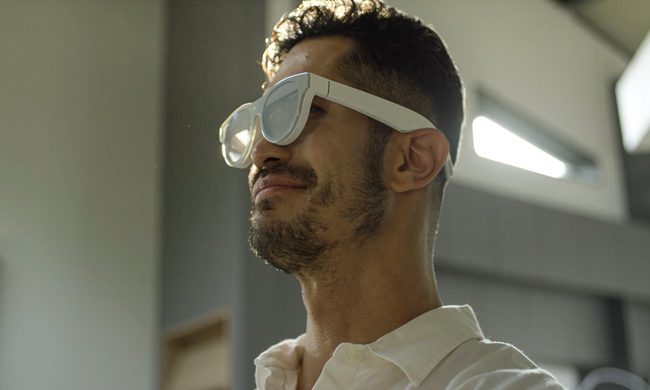
One of the biggest promises of augmented reality is blending digital objects seamlessly into the real world. Ironically, today's AR glasses often make the real world harder to see. Researchers at the Shibaura Institute of Technology (SIT) in Japan, led by Assistant Professor Xiaodan Hu in collaboration with Dr. Yan Zhang and Professor Xubo Yang from Shanghai Jiao Tong University in China, and Professor Kiyoshi Kiyokawa from Japan's Nara Institute of Science and Technology, have developed a new AR display technique that aims to make virtual objects look realistic without reducing visibility of the real world. The study was published in IEEE Transactions on Visualization and Computer Graphics.

The biggest AR problem isn't virtual objects; it's everything around them

Read more