1. Home
  2. Emerging Tech
  3. News

Check out this batteryless drone prototype that relies entirely on wireless charging

Add as a preferred source on Google

To get drones to fly longer and farther, manufacturers have been building ever bigger batteries. But at least one researcher is working on a drone that requires no battery at all.

Imperial College of London research associate Dr. Samer Aldhaher has found a way to power a small drone through wireless charging. The drone itself gets all the power it needs from a wireless charging unit directly beneath it. While it certainly won’t be able to fly anywhere, it at least works.

Recommended Videos

Right now Aldhaher only has been able to get the drone to fly about five inches above the wireless charging base. It also can’t move very much, mainly due to the lack of an onboard battery. If it flies too far away from the charging power, it shuts off.

Here’s the technical explanation on how this works. Aldhaher told Hackaday that the transmitter is etched into a PCB coil, which sends power wirelessly to a copper foil tape at a frequency of 13.56 MHz. This is much higher than the frequency used for most power transfer projects of this type, mainly because it allows the parts to be smaller and lighter, a necessity here.

Don’t try this at home though: these high frequencies are pushing some of the onboard transistors to the limit. The ones used in Aldhaher’s drone were created specifically for this project, and are capable of withstanding the stresses placed on them.

If you’re curious, Dr. Aldhaher has made his research paper on his work publicly available by clicking here. It’s a complicated read, but worth it if you’re interested. As a general matter, however, even though this is quite rough around the edges and limited in capabilities at present, it’s an exciting look into what could be in our future thanks to wireless charging.

Ed Oswald
For fifteen years, Ed has written about the latest and greatest in gadgets and technology trends. At Digital Trends, he's…
Samsung’s humanoid robot ambitions are real, but factories come first
Samsung’s new robotics division has humanoids in its sights, although its immediate business is far more practical factory automation
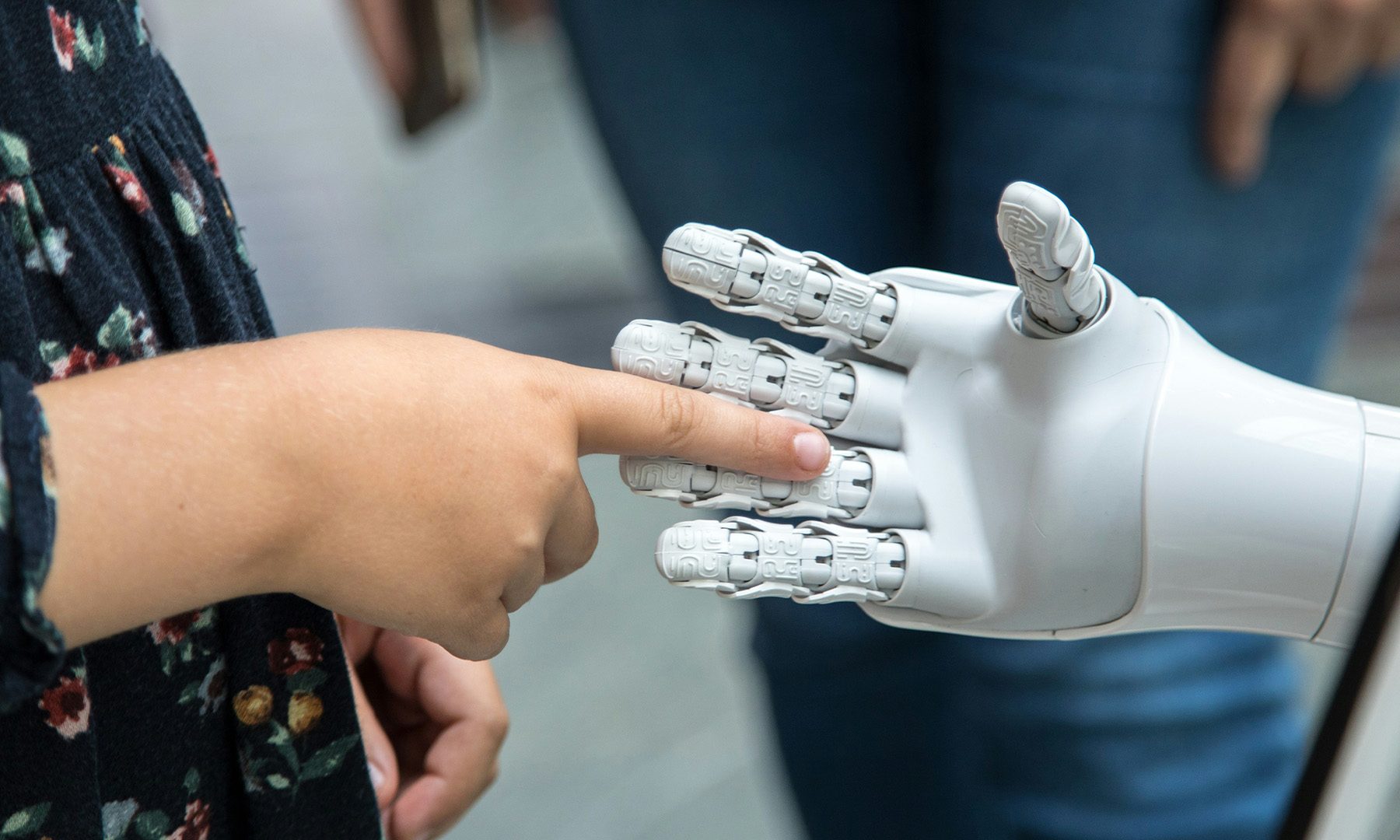
Robot Touch Human Finger

Samsung wants a place in the humanoid race, but its new robotics push begins with machines built for factories rather than homes.

The CEO-led RX robotics division will initially focus on manufacturing robots. Samsung has separately identified humanoids as a priority, although it hasn’t announced a commercial model or explained where one fits into the division’s immediate plans.

Read more
The future of AI may depend on this one behind-the-scenes change
Running Claude on Android.

Whenever a new AI model arrives, it's easy to get caught up in the bells and whistles. We talk about how much smarter it is, how quickly it answers questions, or how realistic its images have become. But here's the thing: none of that matters much if the AI can't reliably work with the apps and services people use every day.

That's why an upcoming update to the Model Context Protocol (MCP) caught my attention. It isn't a new chatbot or a fancy AI model. In fact, most people will never even know it's happening. But it could quietly make the AI ecosystem a lot healthier. If you've never heard of MCP before, don't worry. Think of it as a shared language that lets AI assistants safely talk to apps like Gmail, Slack, calendars, databases, and countless other services. Instead of every company inventing its own way to make those connections, MCP gives everyone a common rulebook.

Read more
The AI game-dev boom has a dark side: fewer jobs for the people starting out
Solo creators are thriving with tools like Claude Code and Copilot, but entry-level game roles are disappearing.
Man playing a video game on a desktop with glowing red and blue lights

AI is making it easier than ever for a single person to build a game. That sounds like a win for creativity, and in many ways, it absolutely is. But there is a catch. As generative AI tools help solo developers and small studios do more with fewer people, the same shift is making life tougher for writers, artists, concept creators, and junior programmers trying to break into the gaming industry.

AI is giving solo developers superpowers

Read more