1. Home
  2. Computing
  3. Web
  4. News

These researchers are modifying CPUs to detect security threats

Add as a preferred source on Google

A group of researchers has won a grant to research and develop a modified CPU that can help detect malware and other security anomalies.

The two collaborating teams, at Binghamton University and the University of California-Riverside, believe that a hardware solution is necessary to help mitigate security threats instead of relying entirely on software. The project has been dubbed the “Practical Hardware-Assisted Always-On Malware Detection” and the three-year grant of $275,000 was awarded by the National Science Foundation.

Recommended Videos

Typically we rely on anti-virus or anti-malware software to scan and detect threats on our computers. The researchers say that they will investigate ways of modifying a computer’s central processing unit that will involve adding “logic” to spot anomalies while running programs. They envision the hardware solution as a “lookout,” which will complement the work of software.

“This project holds the promise of significantly impacting an area of critical national need to help secure systems against the expanding threats of malware,” explained Dmitry Ponomarev, professor of computer science at Binghamton University, the project’s principal investigator.

“The modified microprocessor will have the ability to detect malware as programs execute by analyzing the execution statistics over a window of execution,” he added. The researchers admit that no solution they develop will work 100 percent of the time but it is rather intended as an extra layer of defense.

When the hardware component, which will be powered by machine learning, triggers a threat it will alert a “heavyweight software detector” to carry out further analysis and take action.

“The hardware guides the operation of the software; without the hardware the software will be too slow to work on all programs all the time,” said Ponomarev.

“The hardware detector’s role is to find suspicious behavior and better direct the efforts of the software.”

Recently the researchers publicly disclosed a serious hardware security vulnerability that allowed them to disable the Address Space Layout Randomization (ASLR) component of an operating system. ASLR randomizes where data is stored on a computer. By disabling this function, a hacker could gain root access to a system and take full control of the computer.

The research was carried out on a Linux system with Intel processors but they claimed that the attack is possible on Windows, Android, and virtualization systems like KVM as well.

Jonathan Keane
Jonathan is a freelance technology journalist living in Dublin, Ireland. He's previously written for publications and sites…
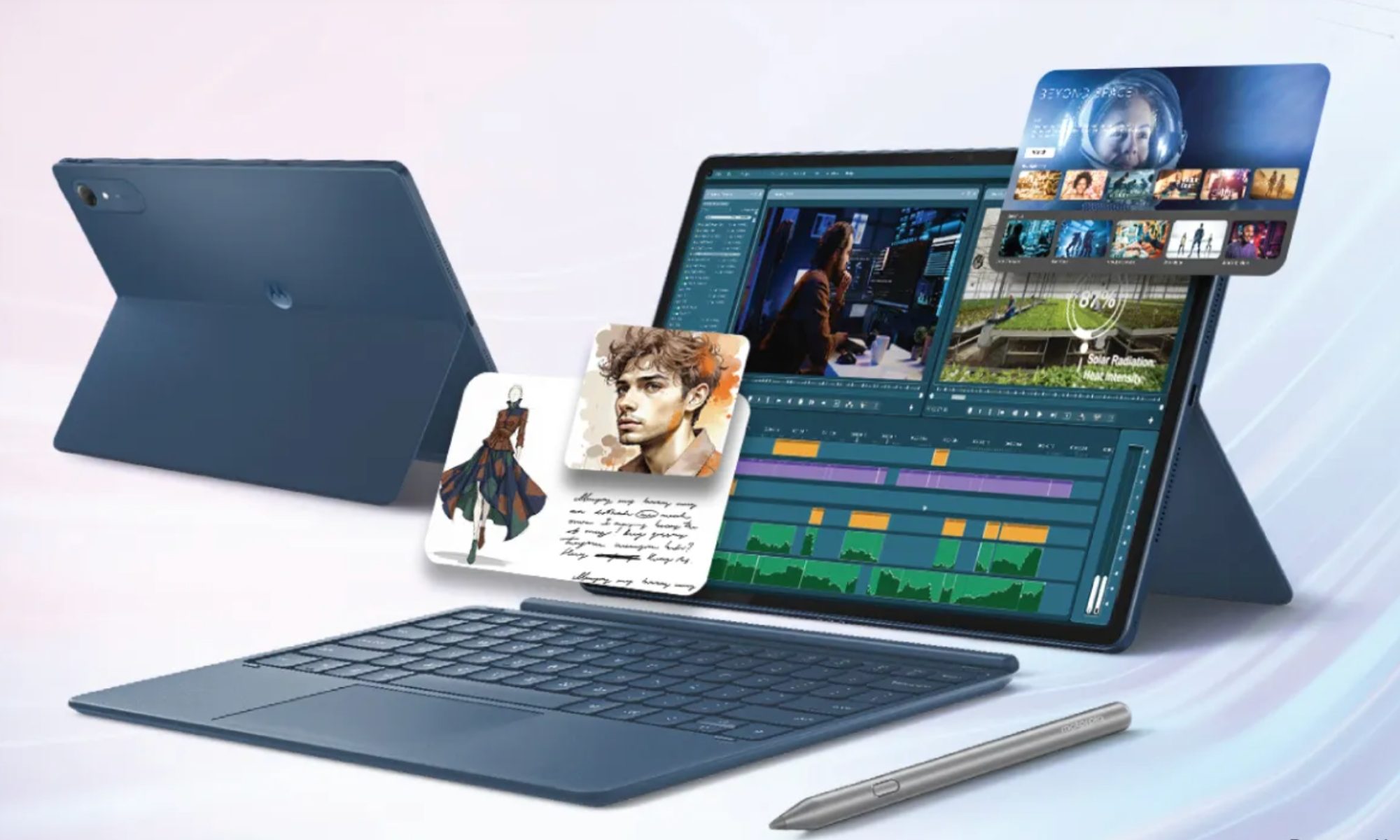
As iPads get pricier, Motorola’s Pad 70 Pro arrives as a solid option… just not for US buyers yet
Great specs, a stylus in the box, and no US launch date: the Moto Pad 70 Pro sounds both impressive and disappointing.
Computer, Electronics, Laptop

If you don’t know about Apple’s recent price hike, which affected all the products in its lineup except the iPhone and Apple Watch (for now), you’ve got to be living under some sort of a rock. The revision made all the iPads much more expensive. 

Motorola, however, has just launched a 13-inch tablet that actually sounds good on paper. It’s called the Moto Pad 70 Pro, and it costs around $440 for the baseline model. The catch, however, is that the device isn’t available in the US yet. 

Read more
The refurbished MacBook Neo may be your best way around Apple’s price hike
MacBook Neo has hit Apple’s refurbished store after its price increase
Student using MacBook Neo in classroom.

The MacBook Neo launched in March as Apple’s most affordable notebook, but it has already been caught in the company’s recent price hike. The base model with 8GB of RAM and 256GB of storage now costs $699, while the 512GB version with Touch ID is priced at $799.

Just days later, Apple has already listed refurbished MacBook Neo models on its online store, giving buyers a cheaper official option, though the savings are not as generous as you might expect.

Read more
This cross-device clipboard app solves the copy-paste problem I keep running into on my Mac
ClipboardAI keeps a searchable history of everything you copy
Text, Electronics, Mobile Phone

I have lost count of how many times I have copied something important, copied another thing before pasting it, and then realized the first item was gone. It is a small frustration, but it happens often enough to become annoying. I recently came across ClipboardAI, which caught my attention because it goes beyond Apple’s built-in clipboard by saving copied items into a searchable history.

Instead of replacing the last thing you copied every time, ClipboardAI keeps a searchable record of copied text, links, codes, email addresses, phone numbers, addresses, and images across iPhone, iPad, and Mac. That means an older clip does not disappear just because you copied something new.

Read more