1. Home
  2. Emerging Tech
  3. Outdoors
  4. News

Self-flying firefighting choppers could keep humans out of harm's way

Add as a preferred source on Google

People are concerned, with good reason, about the impact artificial intelligence and robotics are likely to have on employment over the coming years. One application of technology that no one can seriously argue against, however, is its use in carrying out jobs in which humans would otherwise be put at risk.

This latter point is an area of exploration for the folks at Lockheed Martin, who last week carried out a demonstration showing how multiple autonomous flying vehicles can work together to help fight wildfires — an extremely dangerous task which last year cost the lives of six firefighters.

Recommended Videos

“We were trying to show how unmanned technologies can really change the game,” Jon McMillen, business development lead of Lockheed Martin’s K-MAX project, told Digital Trends. “A lot of work has been done with drones, but we wanted to [demonstrate] that not only can they be used for public benefit, but also linking multiple systems together. What we did was to take four different UAVs — two small and two large — and show how they could be used in both firefighting and search-and-rescue missions.”

At its impressive demo, a Lockheed Martin quadcopter drone called Indago first used infrared and visible light cameras to spot a fire. It then passed the information on to autonomous cargo chopper K-MAX, which used a hanging bucket of water to help contain the fire.

In a related demo, a surveillance drone was used to spot a person potentially trapped by a forest fire. It then conveyed the information to an unmanned helicopter called SARA, which was able to locate the individual, find a landing spot, and touch down for the rescue mission.

As McMillen explained, the use of such autonomous technologies can have a big impact — not just in keeping human firefighters safe in dangerous conditions, but also by extending the ability to operate to 24 hours per day.

“Today whenever manned aviation assets are fighting wildfires, they are unable to fly in smoky conditions, and can fly only in visible light conditions,” he said. “That limits the actual flying time they can be deployed to eight hours per day during these fires. If you’re able to extend that into the night, or in smoky conditions, you get a three-times multiplier in terms of benefits.”

Humans are not going to be cast aside completely, though. Far from it. “What we’re transitioning to is [humans playing] more of a supervisory role,” McMillen said. “You let the computer carry out the flying part of the operation and then allow a person on the ground to monitor the system’s progress.”

Luke Dormehl
I'm a UK-based tech writer covering Cool Tech at Digital Trends. I've also written for Fast Company, Wired, the Guardian…
Yet another study says AI is bad for elections, and the rabbit hole gets worse
AI may be an election bomb waiting for someone to light the fuse
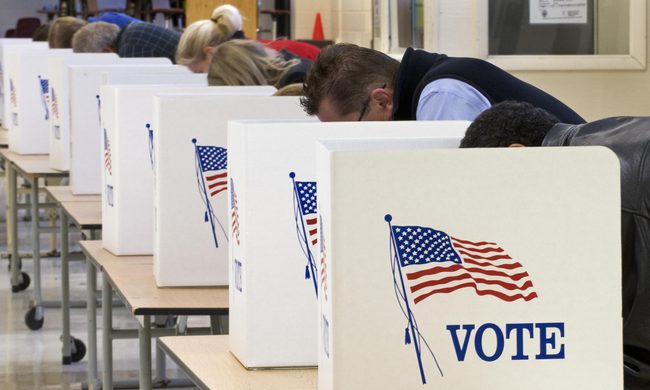
Voters cast their ballots on Election Day

Another election, another study has concluded that asking an AI chatbot for political guidance is a spectacularly bad idea. Research conducted during Hungary’s 2026 parliamentary election found that ChatGPT and Google Gemini offered not just inaccurate but also inconsistent and unreliable voting advice. The chatbots misclassified voter profiles, overlooked relevant parties, recommended parties absent from the ballot, and sometimes produced materially different answers when given the same information repeatedly.

AI keeps failing the voter test

Read more
Samsung’s humanoid robot ambitions are real, but factories come first
Samsung’s new robotics division has humanoids in its sights, although its immediate business is far more practical factory automation
Robot Touch Human Finger

Samsung wants a place in the humanoid race, but its new robotics push begins with machines built for factories rather than homes.

The CEO-led RX robotics division will initially focus on manufacturing robots. Samsung has separately identified humanoids as a priority, although it hasn’t announced a commercial model or explained where one fits into the division’s immediate plans.

Read more
The future of AI may depend on this one behind-the-scenes change
Running Claude on Android.

Whenever a new AI model arrives, it's easy to get caught up in the bells and whistles. We talk about how much smarter it is, how quickly it answers questions, or how realistic its images have become. But here's the thing: none of that matters much if the AI can't reliably work with the apps and services people use every day.

That's why an upcoming update to the Model Context Protocol (MCP) caught my attention. It isn't a new chatbot or a fancy AI model. In fact, most people will never even know it's happening. But it could quietly make the AI ecosystem a lot healthier. If you've never heard of MCP before, don't worry. Think of it as a shared language that lets AI assistants safely talk to apps like Gmail, Slack, calendars, databases, and countless other services. Instead of every company inventing its own way to make those connections, MCP gives everyone a common rulebook.

Read more