Sony has quite the 2017 lineup of smartphones. So far, we’ve seen the Sony Xperia XZs, XZ Premium, XA1, and XA1 Ultra. And at IFA 2017, we got our first look at the Sony Xperia XZ1, XZ1 Compact, and XA1 Plus.
The naming scheme can be confusing, so we’ll break it down for you. Here’s everything you need to know about Sony’s upcoming devices, as well as pricing and availability information.
Sony Xperia XZ1 and XZ1 Compact


The Xperia XZ1 and XZ1 Compact have been rumored for some time now, but we now finally have official information about the phones — and they’re pretty nice indeed. They replace last year’s Xperia XZ and X Compact.
Price and release date
So how much will the new devices set you back? The Xperia XZ1 will cost $700 and will be available starting on September 19, while the Xperia XZ1 Compact is priced at $600, and is available for pre-order on Buy Now ahead of general availability on October 4. That’s a lot of money — but not necessarily much more than other flagship devices.
Both phones are available in the U.S. through Amazon, Best Buy, Fry’s, and other participating retailers.
Display, design, and camera
The standard Xperia XZ1 is Sony’s fall flagship phone, but the XZ1 Compact is just as uncompromising.
The new XZ1 and XZ1 Compact look very similar to Sony phones from the past few years, which is to say a bit dated. The edges around the screen, or bezels, are still chunky — a stark contrast with what most manufacturers are doing on their 2017 “bezel-less” phones. Still, we do like the minimal back of these devices. The XZ1 has a metal body, but you’ll find glass fiber and plastic on the XZ1 Compact. In true Sony fashion, you won’t find a fingerprint sensor on either U.S. model for “business reasons.”
Both phones also feature Gorilla Glass 5 glass and are rated IP68 for water and dust resistance. And both boast the super-powerful Qualcomm Snapdragon 835 chip — the same processor in the likes of the LG V30 and the Samsung Galaxy S8 — along with a hefty 4GB of RAM. In the XZ1, you’ll get up to 64GB of storage, while the XZ1 Compact will offer 32GB; both have a MicroSD card slot so you can expand it whenever you want.

Julian Chokkattu/Digital Trends
The camera sits in at 19 megapixels for the rear-facing example on both phones, with 4K video recording and the ability to capture super slow-motion footage at 960 frames per second. It’s the same Motion Eye technology available on the Xperia XZ Premium, which can capture burst continuous burst-motion shots at 10 frames per second while remaining in focus. The XZ1 has a 13-megapixel selfie camera, while the Compact model has a super-wide-angle 8-megapixel with a 120-degree field of view.
In true Sony fashion, you won’t find a fingerprint sensor on both U.S. models for ‘business reasons.’
The main point of difference between the two phones is their display size. The XZ1 has a 5.2-inch display with a Full HD resolution, and the XZ1 Compact’s display sits in at 4.6-inches and features a 720p resolution. They also both offer Bluetooth 5.0, which is the newest version of Bluetooth that offers increased range and data transfer speeds.
You would think that another big point of difference would be the battery, but both phones offer a 2,700mAh capacity. It’s on the smaller size, but should still get you through a day of use.
Perhaps the most interesting feature about the phones is how they’re among the first to ship with Android 8.0 Oreo, which is the latest and greatest version of Android. Oreo offers a ton of great new features, including scheduling notifications, picture-in-picture mode, improved background restrictions, and more.
Interestingly, the XZ1 has a 3D-scanning feature, through which you can take photos of an object and the phone will stitch up a 3D image. The idea is that you’ll be able to send this image to a 3D printer or share it on social media. The company told Digital Trends it has plans to use this feature in games, such as scanning a player’s head and placing it onto an avatar, but it has yet to confirm partners.
Sony Xperia XA1 Plus
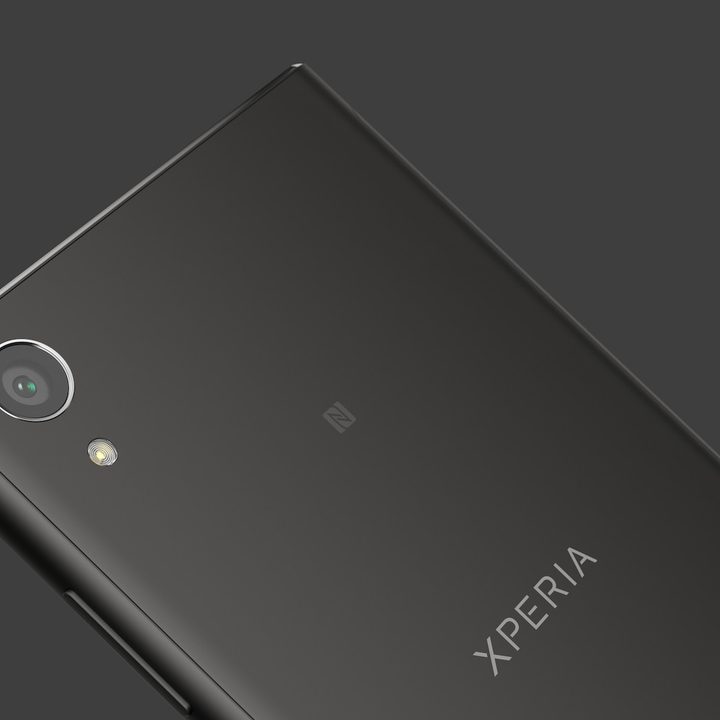
the Xperia XA1 Plus, which debuted at IFA 2017, is a high-end alternative to the XZ1.
Instead of a Qualcomm chip, the phone features a MediaTek Helio P20 processor, coupled with a nice 3GB of RAM and up to 32GB of storage. The device also features 23-megapixel rear-facing camera, and an 8-megapixel front-facing camera.
The display is 5.5-inches, with a 1,920 x 1,080-pixel resolution. And the battery is 3,430mAh, which should offer plenty of juice to get you through the day.
The XA1 Plus isn’t all that expensive, coming in at just $380. It will be available on October 20.
The rest of the 2017 lineup
Sony Xperia XZ Premium

Sony launched the Xperia XZ in September but soon launched a follow-up at MWC in the form of the Xperia XZ Premium. The new device has quite a lot to offer in the specs department, and could come at a decent price for a flagship, too.
When it comes to the display, the phone has a 5.46-inch screen with a resolution of a massive 3,840 x 2,160 and a 807 pixels-per-inch. Under the hood, it features a Qualcomm Snapdragon 835 system-on-chip, 4GB of RAM, and 64GB of storage (which can be upgraded with the MicroSD card by up to 256GB(. The rear-facing camera sits in at 19-megapixels with an f/2.0 aperture, and the front-facing camera comes in at 13-megapixels, also with an f/2.0 aperture.
The Xperia XZ Premium is available now for $800. You’ll can get the phone through all the usual channels, including Best Buy and Amazon.
Sony Xperia XA1 Ultra
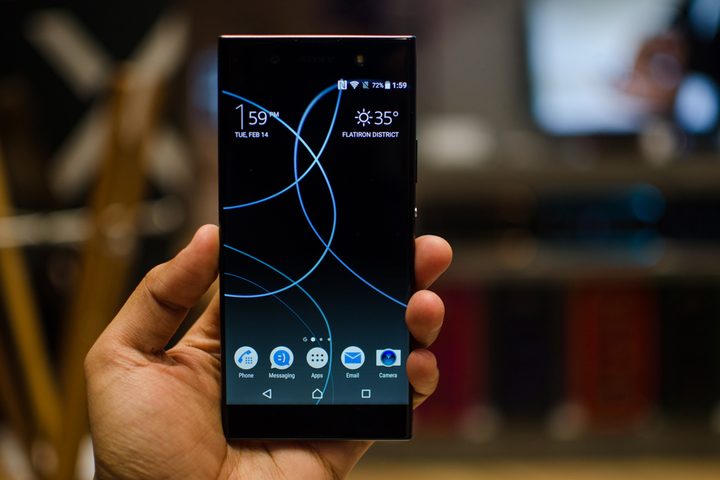
The Sony Xperia XA1 Ultra is a slightly higher-powered version of the standard XA1, but the two phones share many of the same specs. For example, it features an identical MediaTek Helio P20 processor, along with 4GB of RAM and 32GB of internal storage (you can add as much as 256GB of storage with a microSD card). When it comes to the cameras, the Xperia XA1 has a 23-megapixel sensor, and the front-facing shooter has been upgraded to a 16-megapixel shooter.
The Xperia XA1 launched earlier this year in India for 29,990 rupees ($460), but was recently discounted to 27,990 rupees ($430). Sony hasn’t announced U.S. availability or pricing yet.
Here’s what we thought of the Xperia XA1 Ultra when we got our hands on it.
Sony Xperia XA1
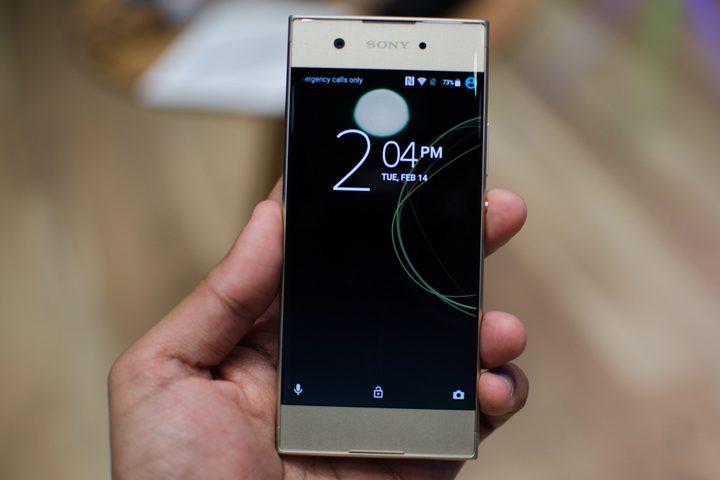
While the Xperia XZ series is Sony’s flagship lineup, the Xperia XA is decidedly more mid-range. The Xperia XA1 has a 5.0-inch display with a 720 x 1,280 resolution, and under the hood is a MediaTek Helio P20 processor coupled with 3GB of RAM. When it comes to storage, the phone features 32GB, and has microSD slot for adding more if you choose.
In terms of cameras, the XZ has a rear-facing has a 23-megapixel rear sensor with an f/2.0 aperture, and an 8-megapixel front camera.
The Xperia XA1 costs $300 unlocked, which is quite pricey for its features — especially when you consider cheaper competitors like the new Moto G5. It’s available from Amazon, Best, Buy, Fry’s, and B&H in the U.S.
You can read our first take hands-on review of the Xperia XA1 here.
Sony Xperia XZs
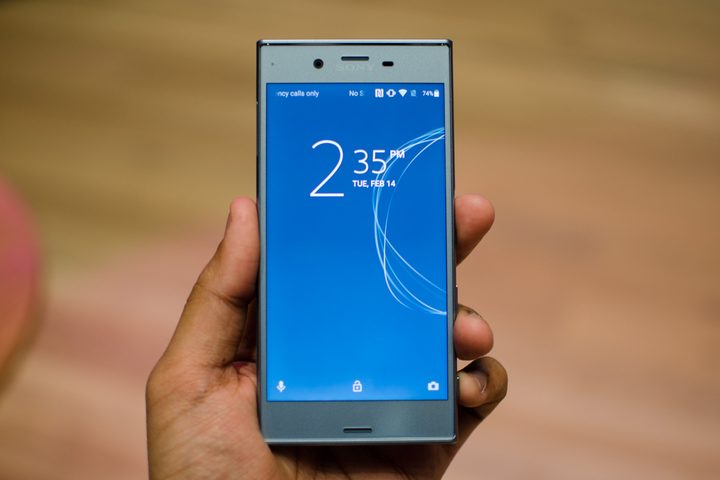
The Xperia XZs may not be as high-powered as the Xperia XZ Premium, but it still has quite a lot to offer. For example, the phone features the Qualcomm Snapdragon 820. Sony has coupled that chip with 4GB of RAM and either 32GB or 64GB of storage.
The rear-facing camera on the Xperia XZs is the same 19-megapixel shooter as the XZ Premium, while the front-facing camera comes in at 13-megapixels. The display on the phone may not be as important as the XZ Premium, but it’s still relatively nice with its 1,080 x 1,920 5.2-inch display.
The phone is available now, and costs $700. Check out our hands-on review of the Xperia XZs here
Updated: Added availability information for the XZ1 Compact.