1. Home
  2. Emerging Tech
  3. News

Microchipped bumblebees show that worker bees act a lot like humans

Add as a preferred source on Google

Bumblebees fitted with microchip backpacks have offered researchers a unique glimpse into the hidden world of colonies. As it turns out, when it comes to dividing up the workload, bees behave a lot like human beings.

“[Microchips have] been used in a few other studies,” Avery Russell, an Arizona State University graduate student who lead the study, told Digital Trends, “Our novel contribution was to figure out how to track pollen and nectar foraging trips, and to link behavior to morphology of the bees.”

Recommended Videos

Using superglue, the researchers attached small RFID chips to the bees’ backs. Each chips weighed between two and three percent of the bee itself so as to not interfere with the bee’s flight.

“The transponders allow us to identify each bee as an individual and, when they communicate with the tag readers,” Russell said. “They give us the information on what the bee was foraging for, when, for how long, and how often.”

Russell and his team discovered a handful of worker bee characteristics that seem to resemble those found in humans.

For one, individually bees carried the weight of their group tasks differently — some were slackers while other made forty times as many foraging trips in a given day. Bees also proved to be “short-term specialists” and “long-term generalists,” according to Russell, preferring to forage primarily for nectar or pollen over the course of the day, but balancing out during their brief lifetime. The bees’ patterns of specialization (the way they behaved) were also not related to their morphology (the way they looked).

Although America’s bumblebees don’t suffer from the colony collapse disorder that’s devastating honey bee populations, our native bees are still at risk.

“Bumblebees (like the buff tailed bumblebee on the endangered species list) are declining drastically in numbers,” Russell said. “Bumblebees are very important pollinators for fruits and vegetables. Many of our crops are pollinated mainly by these native bees and not by honey bees (for instance, eggplant, tomato, blueberry, cranberry, chili pepper). Our work helps us understand how these animals forage for diverse floral nutrients and why animals specialize on a given foraging task.”

A paper detailing their study was published this month in the journal Scientific Reports.

Dyllan Furness
Former Contributor
Dyllan Furness is a freelance writer from Florida. He covers strange science and emerging tech for Digital Trends, focusing…
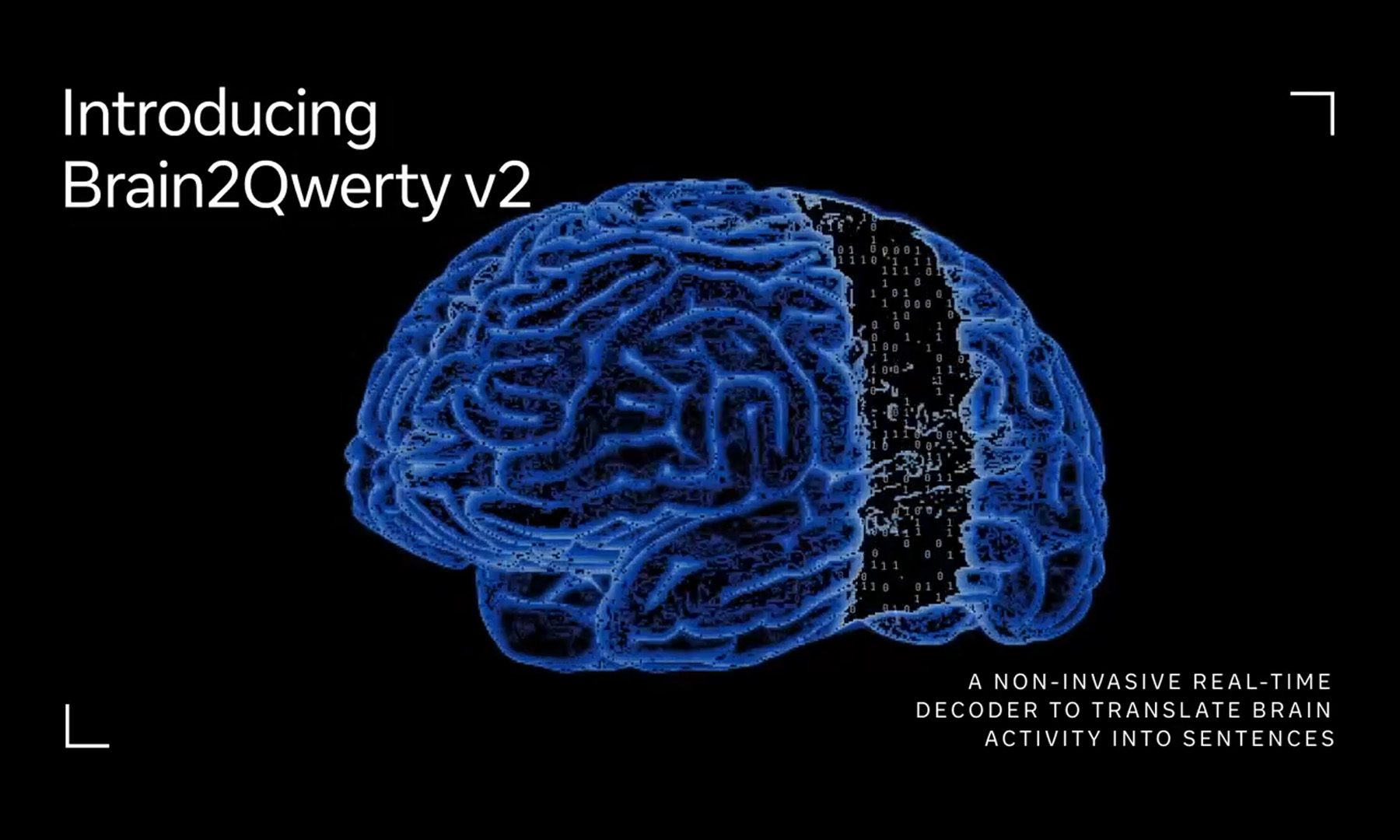
Meta’s Brain2Qwerty v2 turns thoughts into text, and it doesn’t need brain implants
The latest AI model decodes brain signals into coherent sentences using external scanners.
Meta Brain2Qwerty v2 Featured

Artificial intelligence is getting surprisingly good at understanding humans. Now, Meta wants it to understand our brains too. The company has unveiled Brain2Qwerty v2, an upgraded AI system that can translate brain activity into full sentences, all without requiring brain implants or surgery. The goal isn't mind reading for the masses. Instead, it's to help people who have lost the ability to speak communicate again.

How a Brain-powered keyboard works

Read more
AI chatbots can often feed into your delusions. Researchers say you should look for three signs
Experts warn that chatbot design choices can reinforce unhealthy beliefs in vulnerable users.
ChatGPT on a smartphone

Artificial intelligence chatbots have become incredibly good at sounding human. But a new review paper by psychiatrist Marc Augustin and fellow researchers Thomas A. Pollak and Helen Morrin, published in NPP—Digital Psychiatry and Neuroscience, argues that existing AI research points to an overlooked psychological risk. The paper, highlighted by The Wall Street Journal, reviews previous studies and proposes a framework explaining how three common chatbot behaviors can combine to reinforce delusional thinking in vulnerable users, creating what the authors call an "amplification spiral."

Researchers say these are the three warning signs

Read more
Lost access to your crypto wallet? Don’t Google your way out of it
Security researchers warn that fake recovery tools are becoming the latest trap for crypto owners.
Bitcoin crypto wallet featured

Forgetting the recovery phrase to a crypto wallet can be stressful enough. Unfortunately, that's exactly the moment scammers are waiting for. A new warning highlights a growing scam in which cybercriminals disguise malware as cryptocurrency recovery software, tricking desperate users into handing over far more than just access to their wallets.

The fake recovery tool that's actually malware

Read more