1. Home
  2. Phones
  3. Android
  4. Mobile
  5. News

Mysterious Google Carrier Services app lands on Google Play, but what does it do?

Add as a preferred source on Google

It looks like our Android phones may have yet another preinstalled app in the near future. In many cases device manufacturers opt to have preinstalled apps available on the Google Play Store, so that they can update individual apps rather than pushing an entire system update. Another one of those apps, called “Carrier Services,” has appeared on the Google Play Store.

According to the app description, the app “helps carriers provide mobile services using the latest networking capabilities,,” including support for the Android Messages app.

Recommended Videos

So what exactly does Carrier Services do? Well, right now, nothing. Android Police has gone over the app’s code to find that it only contains a dummy service, which simply means that it doesn’t do anything. In other words, the app is up on the Google Play Store, but it won’t actually do anything until Google updates it.

We could speculate as to what the new app is all about. Some reports hint that it could have something to do with RCS, or Rich Communication Services — which is an advanced communications style that supports high-resolution phones, read receipts, a better chat group support, and more. It’s essentially a futuristic version of SMS.

So what is the appropriate response to an app like this appearing on the Google Play Store? Apparently, it’s leaving funny reviews. One review reads “Google had once again achieved what no other country on this earth can. After updating this cellular services app I can tap into any network of the world.”

Another reads that “after a bit of experimenting,” you can “Wave Charge” your phone by putting it in the microwave. Pro tip: Under no circumstances should you put your phone in the microwave unless you want a fire hazard and a fried phone on your hands.

Christian de Looper
Christian de Looper is a long-time freelance writer who has covered every facet of the consumer tech and electric vehicle…
OnePlus is gone, and Android phones just became more boring in the US
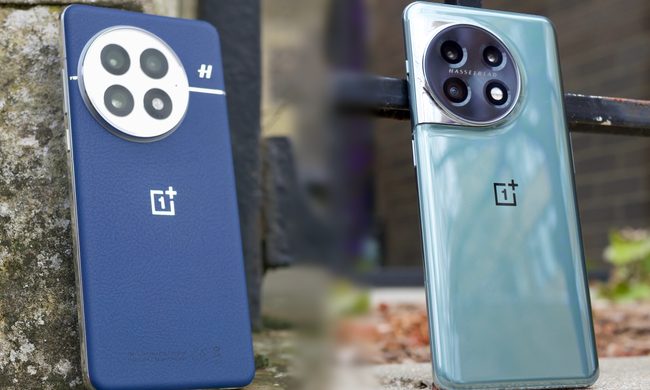
OnePlus 13 vs OnePlus 11.

I wasn't expecting a smartphone brand's exit to hit me this hard, but OnePlus leaving the US and Europe genuinely did. The company has already confirmed that it will no longer launch new products in either market, although existing customers will continue receiving software updates and after-sales support. So while OnePlus isn’t disappearing altogether, it is walking away from two of the biggest smartphone markets in the world.

To be honest, the Android market in the US already feels limited. If you’re shopping for a flagship, your realistic choices almost always begin with Samsung and end with Google. OnePlus was one of the very few brands sitting in between, offering something that didn’t quite look or feel like everything else. And that’s exactly what I’m going to miss.

Read more
A niche iPhone browser quietly fixes my biggest problem with Google Search
Quiche Browser open on iPhone

If there's a new browser, email app, or note-taking app to try, chances are I've already installed it. Like every other productivity nerd, I'm always chasing the perfect setup. That's how I stumbled upon Quiche Browser. It was already close to replacing the Arc Search for me on the iPhone, but its latest update finally pushed it over the edge, earning it a spot as my default browser.

What makes Quiche so good

Read more
Google has to play fair with AI rivals on Android, and that could be good news for your wallet
A new ruling strips Gemini of its exclusive access to deep Android integration, opening the door for cheaper AI models to offer similar functionality for less.
A person using Google Gemini on the Google Pixel 9a.

After forcing Google to open up Android to third-party app stores, the EU is back with a new target, and this time it's Gemini's home-field advantage. The European Commission ordered Google on July 16 to give rival AI apps the same deep access to Android that's currently exclusive to Gemini. The order falls under the EU's Digital Markets Act (DMA), and it directs Google to stop treating its own assistant as a first-class citizen on a platform it controls.

What Google now has to hand over

Read more