1. Home
  2. Computing
  3. News

Digital Trends may earn a commission when you buy through links on our site. Why trust us?

Anyone can be VR ready with Newegg's HTC Vive free GPU deal

Add as a preferred source on Google

Spending $800 on an HTC Vive virtual reality headset might seem like a lot, but deals like the one on offer at Newegg certainly help. The retailer is giving away a brand new Gigabyte Radeon RX 480 4GB graphics card with the headset, making it a better deal and upgrading your PC to a VR-ready level in the process.

One of the most common reasons you guys have given us for not jumping on the VR bandwagon yet is price. Some of you want wireless operation, more AAA games or better hardware, but most want it to be cheaper. While Newegg’s deal doesn’t do much for the original price, it does at least get users a $180-plus graphics card for free.

Recommended Videos

The RX generation of AMD graphics cards went a long way to dropping the bar for VR-capable graphics, so it seems like an apt solution to the problem of VR pricing to provide that generation of card with the headset.

While the RX 480 isn’t the most powerful card out there, it is more than capable of handling most virtual reality games at the 90 frames per second required for smooth play. It should be capable of playing a lot of 2D games at reasonably high settings, too, though don’t expect it to hold a candle to some of the new, top-tier cards like Nvidia’s GTX 1080 Ti.

But then again, such a purchase isn’t just about the graphics card — the main focus is the HTC Vive itself. Even though it’s closing in on a year since its original release, we still consider the HTC Vive the best virtual reality headset money can buy, thanks to its motion controllers, room-scale tracking capabilities, and fantastic visuals. We’ll see if this deal attracts the kind of attention Newegg is hoping for.

Jon Martindale
Jon Martindale covers how to guides, best-of lists, and explainers to help everyone understand the hottest new hardware and…
I let Radial menu take over my Mac, and I’m never going back
One mouse jiggle, endless shortcuts. My Mac has never felt this fast.
Radial app running on Mac

I have been testing Radial for the past week, and it's quickly become one of those apps I didn’t know how I could live without. It's a radial menu for macOS that puts your shortcuts, scripts, and automations right where your cursor is, so you never have to go hunting through menus to find what you need.

The app just received its 5.0 update, adding AI actions powered by Claude, window layouts, variables, a redesigned settings interface, a new Atmosphere background effect, and a squircle menu shape. I got to try most of these, and here's what I found.

Read more
Android desktop mode made me miss my laptop in record time
I tried writing and publishing from Google’s phone-to-monitor setup, and the future of mobile computing immediately started sweating.
Computer, Electronics, Laptop

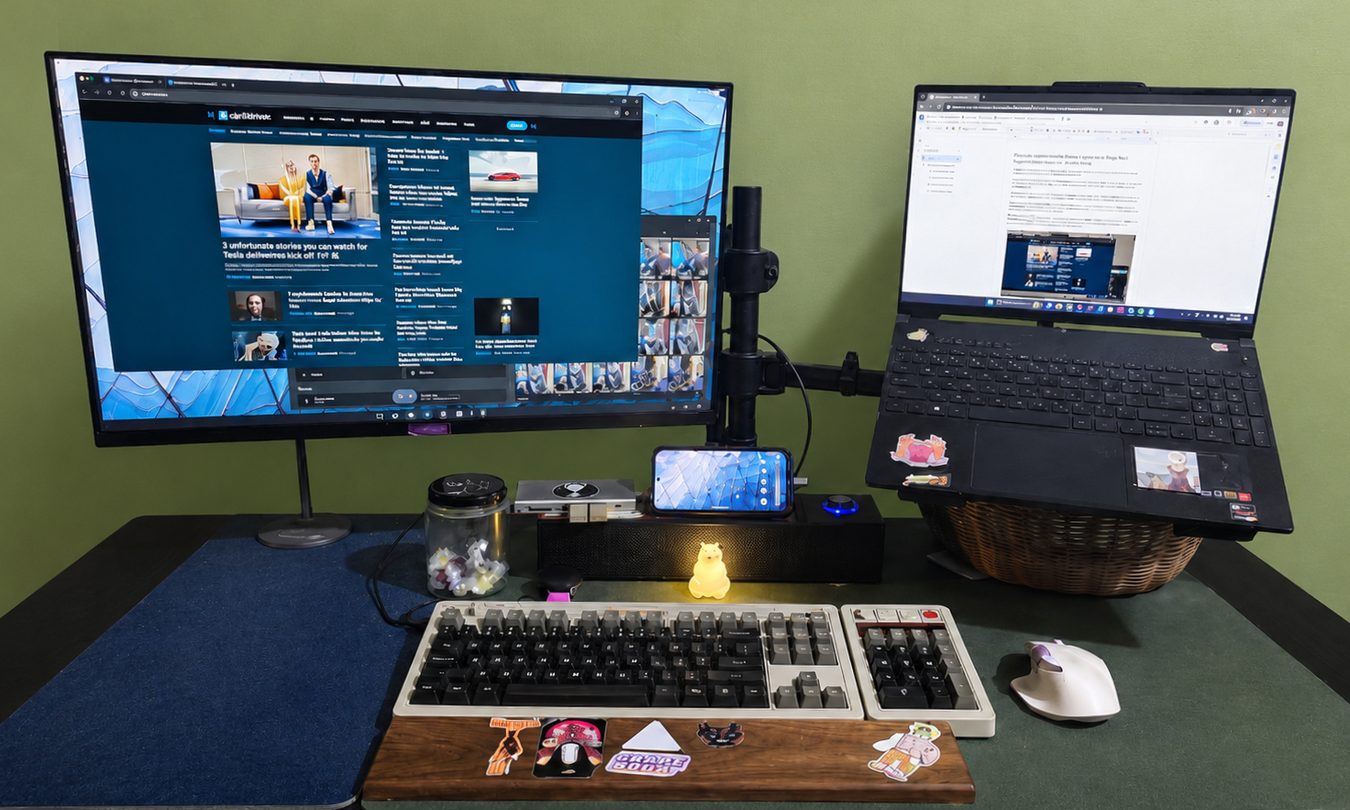
Android 17 desktop mode has a very simple pitch. Plug your phone into a monitor, add a keyboard and mouse, and watch the slab in your pocket pretend to be a computer. I wanted to give that pitch a fair shot, so I tried using it for an actual workday instead of a cute demo.

The goal was boring on purpose: write an article, edit it, build the page in WordPress, upload whatever needed uploading, and publish the thing without running back to my laptop like a coward.

Read more
As AI turbocharges digital abuse, UK agencies urge parents to limit who sees kids’ photos online
The National Crime Agency and Internet Watch Foundation are asking parents to tighten privacy settings as AI-generated abuse material rises.
Social Media

Parents who post pictures of their kids online are being told to rethink the habit. The UK's National Crime Agency and the Internet Watch Foundation have issued new guidance urging families to lock down their social media accounts, warning that publicly shared photos are increasingly being pulled and altered by AI tools to create child sexual abuse material.

The two organizations say most parents have no idea this is happening. Criminals no longer need to contact a child directly to generate such material. They can scrape an ordinary photo and run it through widely available nudify apps.

Read more