  1. Home
  2. Phones
  3. Android
  4. Apple
  5. Mobile
  6. Social Media
  7. News

Live Location lets you share your real-time whereabouts in Facebook Messenger

Add as a preferred source on Google

Facebook Messenger makes it easy to keep in touch with friends and family, but offers little in the way of finding them. But that is changing.

On Monday, Facebook began rolling out Live Location, a new Messenger feature that lets users share up-to-date location info with friends and family. For up to one hour, you can expose your real-time location to the chat participants of your choice. Contacts can track your progress when you’re on your way, or find your current location if you are meeting somewhere. They will also be able to see an estimate of how long it would take to get to your location by car.

Recommended Videos

According to Facebook, “How far away are you?” is one of the most used phrases on Messenger as people talk to friends and family. “Live Location is super helpful when trying to coordinate with friends, telling people how close you are when you’re on your way to an appointment or even sharing where you are with your roommate when you’re on your way home at night,” wrote product manager Selena Wang.
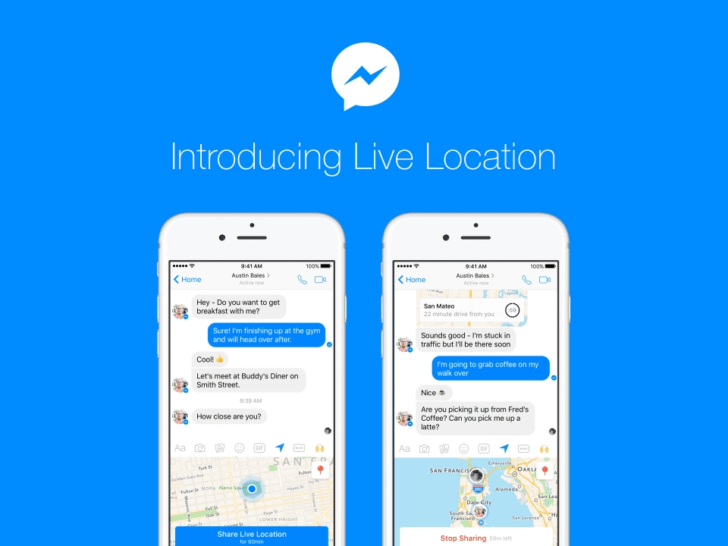
Image used with permission by copyright holder

Facebook said Live Location won’t impact battery life — “We put a lot of time and effort into […] minimizing battery consumption to the point you wouldn’t even have to think about it,” head of Messenger David Marcus told TechCrunch. You can turn Live Location off after it’s been activated — a countdown timer lets you know how much longer your location will be shared before you need to re-enable it.

As TechCrunch points out, it’s not Facebook’s first location-sharing rodeo. Prior to 2015, Messenger shared a momentary exact location with each message. But Facebook disabled the feature after a Harvard student demonstrated that it could be used to track a users’ location histories.

“Many of use make plans on Messenger that involve finding each other, or letting friends and loved ones know we’re on the way,” Marcus wrote in a blog post. “Sharing your location will also help some of you feel safer on the way home.”

The launch of Live Location comes on the heels of a new Google Maps location feature release last week: “Share location.” Users can broadcast their whereabouts for a set period of time (between 15 minutes and three days) or indefinitely, and pin a person’s location to their home screen for speedier access.

Kyle Wiggers
Kyle Wiggers is a writer, Web designer, and podcaster with an acute interest in all things tech. When not reviewing gadgets…
T-Mobile’s new financing plan sounds great until you realize what it’s preparing you for
T-Mobile's new financing plan smooths upfront costs while longer payments become the norm.
T-Mobile logo on iPhone

Every time a carrier says "no upfront cost," I brace myself for the asterisk buried in the fine print. T-Mobile's newest 36-month financing plan has one too, though it's dressed up quite nicely. 

T-Mobile, the second largest wireless carrier in the United States, just rolled out a financing option called EIP Flex 36. As the name suggests, it stretches device payments across three full years instead of the usual two. The real hook, however, is what it lets you skip at checkout. 

Read more
The OnePlus 16 could crank things up with a 200MP camera and a massive battery
The purported flagship could bring substantial upgrades across the board.
Person holding OnePlus 15.

Two fresh OnePlus 16 leaks just landed within days of each other. Together, they point to a flagship that could outlast its competition with its massive battery, and one that ships with genuinely better camera hardware than the OnePlus 15. 

So what's happening with the cameras?

Read more
RISION’s new pocket-sized cameras turns your phone into a nitfty thermal imaging tool
This tiny $119 camera gives your phone Predator vision
RISION Magic Pro in action

If you've ever had to look for any sort of heat leaks or hot wires, chances are that you've probably used a dedicated handheld camera. But RISION has just launched a tiny new camera tool to make the job easier (and more pocketable). It reminds me of the InfiRay we checked out a while back.

RISION has introduced the Magic and Magic Pro, two compact thermal cameras that plug directly into supported USB-C phones, tablets, and Windows computers. Each module weighs 24 grams, draws power from the connected device, and requires no separate battery. Support covers compatible iPhones, Android devices, and Windows PCs.

Read more