1. Home
  2. Emerging Tech
  3. Outdoors
  4. News

These beefy autonomous warehouse robots can carry up to 3,300 pounds at a time

Add as a preferred source on Google

Yes, they may look like a pair of particularly beefy contestants from Robot Wars, but the newly-announced Freight 500 and Freight 1500 are actually a pretty darn impressive duo of transportation robots — designed to ferry cargoes of up to 1,100 lbs (for the Freight 500) or up to 3,300 lbs (for its bigger brother) around warehouses. Just don’t get on their wrong side!

“Fetch Robotics creates Autonomous Mobile Robots (AMR) and the software that manages them for the warehouse and logistics industry,” Melonee Wise, CEO of Fetch Robotics, told Digital Trends. “Like their predecessor, Freight, [the Freight500 and the Freight1500] are designed to follow warehouse workers as they complete their tasks of picking items from warehouse shelves. Fetch robots can dynamically navigate a warehouse rather than following a fixed route, and contain sensors to avoid obstacles. The new robots address the full range of a warehouse’s needs for conveying everything from pieces to cases and pallets.”

Despite being able to ferry around hefty cargoes, the robots themselves are just 14 inches tall. They move using LiDAR sensors at the front and rear, as well as an RGBD camera, while battery life is a not-unimpressive 9 hours. Even when you do run out of battery, recharging to 90 percent takes only one hour — so your warehouse won’t grind to a halt for the rest of the day while they power up again. Get a few them working together and you should have no problem setting up a facility that can work 24/7.

Recommended Videos

Currently the two robots are having final touches made, before they roll for a pilot scheme in the “next three to four months.” After that, they’ll be generally available to the market.

At which point our application process to get the Freight1500 on the next series of Robot Wars can truly begin in earnest!

Luke Dormehl
I'm a UK-based tech writer covering Cool Tech at Digital Trends. I've also written for Fast Company, Wired, the Guardian…
A new AI model wants self-driving cars to think before they swerve
Forget guessing games, this self-driving AI actually shows its work.
Self driving car

Self-driving cars have gotten pretty good at driving. The harder problem is teaching them to drive safely in situations nobody planned for. We have heard horror stories of self-driving cars, behaving erratically in emergency situations, often times delaying first responders from reaching the scene.

A team at Seoul National University, led by professor Jun Won Choi from the Department of Electrical and Computer Engineering, thinks they have cracked part of that puzzle with a new AI model called SafeDrive. The research was recently selected as a highlight paper at CVPR 2026, a distinction that goes only to roughly 3% of all submissions.

Read more
An AirPods-sized mini lab could help catch disease markers in minutes
Meet VPodDuo, an AirPods-sized molecular testing gadget
VPodDuo Mini Medical Device

Home testing could eventually become a lot more convenient. Researchs at the at the University of Illinois Urbana-Champaign has developed the VPodDuo, a pocket-sized fluorescence reader designed to measure sensitive molecular tests outside a conventional laboratory.

Its housing is roughly comparable in size and shape to an AirPods charging case, while Bluetooth connectivity sends results directly to a smartphone. Meaning, you might not have to wait in line anymore.

Read more
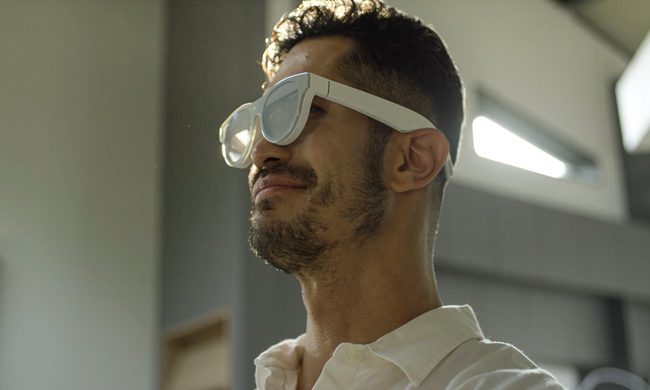
Your future AR glasses might finally stop making the real world look weird
Researchers have developed a new display technique that keeps virtual objects realistic without dimming the real world.
Samsung AR Glasses

One of the biggest promises of augmented reality is blending digital objects seamlessly into the real world. Ironically, today's AR glasses often make the real world harder to see. Researchers at the Shibaura Institute of Technology (SIT) in Japan, led by Assistant Professor Xiaodan Hu in collaboration with Dr. Yan Zhang and Professor Xubo Yang from Shanghai Jiao Tong University in China, and Professor Kiyoshi Kiyokawa from Japan's Nara Institute of Science and Technology, have developed a new AR display technique that aims to make virtual objects look realistic without reducing visibility of the real world. The study was published in IEEE Transactions on Visualization and Computer Graphics.

The biggest AR problem isn't virtual objects; it's everything around them

Read more