1. Home
  2. Emerging Tech
  3. News

Scientists have figured out the physics behind massive rogue waves in the ocean

Add as a preferred source on Google

Mathematicians and physicists who use their expertise to work out the science behind killer waves sounds a bit the kind of “movie scientist” job that could only exist in a Roland Emmerich blockbuster.

In fact, figuring out the math behind a particular type of freakish rogue wave, called the Draupner wave, is exactly what a team of scientists from the U.K., Australia, Belgium, and Italy has done in a new research project — which may just save lives one day.

Recommended Videos

“Forecasting rogue waves in the ocean is challenging and still an open mathematical and physical problem,” Dr. Davide Proment, a physicist from the U.K.’s University of East Anglia, who is a co-author on the paper, told Digital Trends. “There are some mathematical models that have let us make several improvements in the last few decades, but a full understanding of the mechanisms leading to rogue waves formation is still missing.”

Fortunately, they are here to help. Not only have they worked out the physics behind the problem in a way that could help us predict said waves, they have shown that they can be re-created in a laboratory wave machine.

Creating scaled-down waves in a wave machine isn’t new (heck, you probably did it in the bath as a kid!), but what is unique about this research is that the waves were able to be re-created in an annular tank using circular wind patterns. This is different to the mechanical paddles that are normally used to re-create waves in this setting. Such wind conditions are thankfully rare in the real world but do exist in places like Antarctica.

“To generate the waves we blew a constant wind and studied the growth and evolution of the waves during a two-hour time period,” Proment continued. “This type of measurement would be impossible in normal flume facilities. We measured the wave spectrum and studied its evolution over time. We also studied the probability of occurrence of waves higher than a certain value to understand how rogue waves, particularly high and steep compared to average waves, are likely to occur.”

It’s still early in the research process, but similar findings could one day allow us to take precautionary measures by predicting when such giant rogue may strike.

As for using the calculations to create a weaponized wave creator? You need some giant windmakers but we guess it’s theoretically possible. Which puts us firmly back in Roland Emmerich land.

Luke Dormehl
I'm a UK-based tech writer covering Cool Tech at Digital Trends. I've also written for Fast Company, Wired, the Guardian…
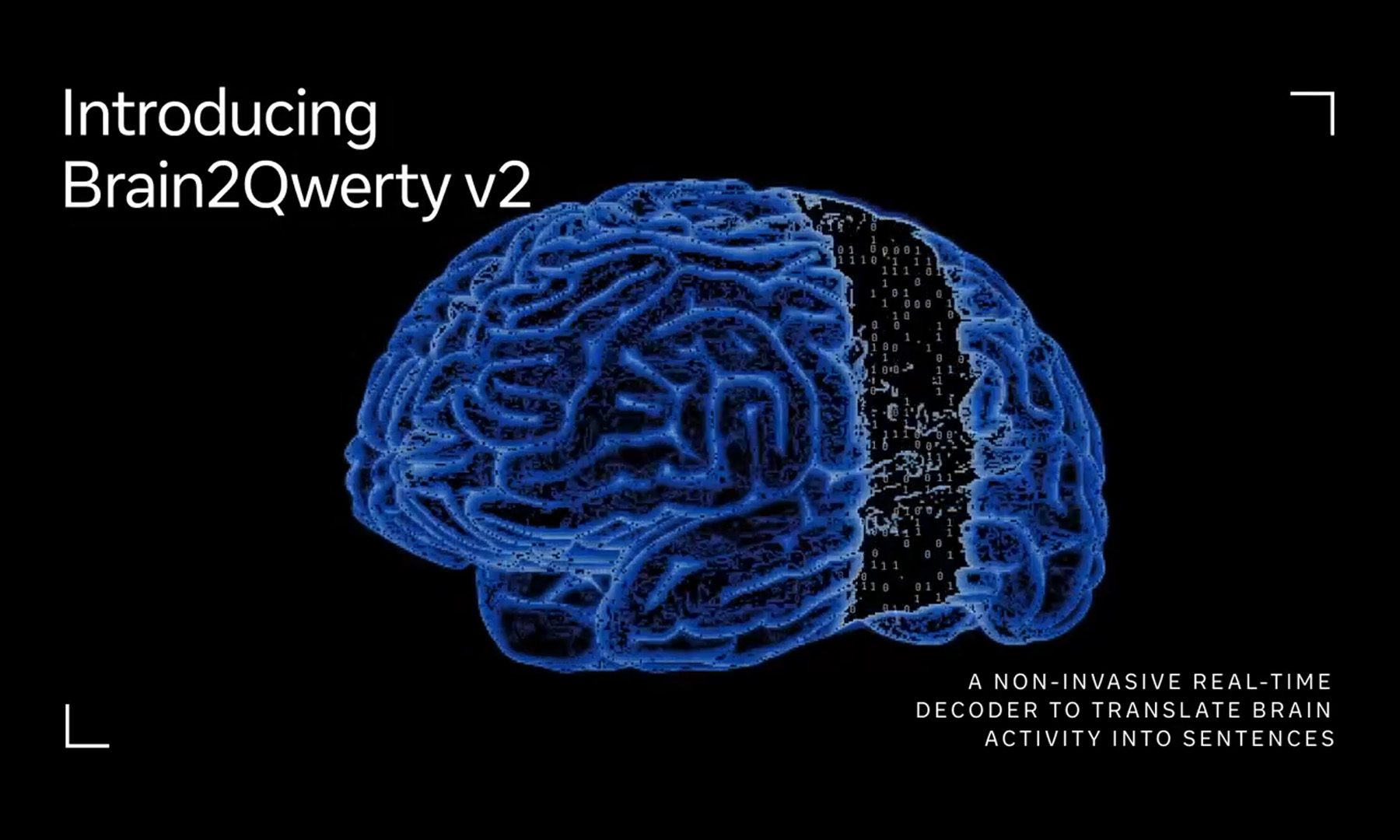
Meta’s Brain2Qwerty v2 turns thoughts into text, and it doesn’t need brain implants
The latest AI model decodes brain signals into coherent sentences using external scanners.
Meta Brain2Qwerty v2 Featured

Artificial intelligence is getting surprisingly good at understanding humans. Now, Meta wants it to understand our brains too. The company has unveiled Brain2Qwerty v2, an upgraded AI system that can translate brain activity into full sentences, all without requiring brain implants or surgery. The goal isn't mind reading for the masses. Instead, it's to help people who have lost the ability to speak communicate again.

How a Brain-powered keyboard works

Read more
AI chatbots can often feed into your delusions. Researchers say you should look for three signs
Experts warn that chatbot design choices can reinforce unhealthy beliefs in vulnerable users.
ChatGPT on a smartphone

Artificial intelligence chatbots have become incredibly good at sounding human. But a new review paper by psychiatrist Marc Augustin and fellow researchers Thomas A. Pollak and Helen Morrin, published in NPP—Digital Psychiatry and Neuroscience, argues that existing AI research points to an overlooked psychological risk. The paper, highlighted by The Wall Street Journal, reviews previous studies and proposes a framework explaining how three common chatbot behaviors can combine to reinforce delusional thinking in vulnerable users, creating what the authors call an "amplification spiral."

Researchers say these are the three warning signs

Read more
Lost access to your crypto wallet? Don’t Google your way out of it
Security researchers warn that fake recovery tools are becoming the latest trap for crypto owners.
Bitcoin crypto wallet featured

Forgetting the recovery phrase to a crypto wallet can be stressful enough. Unfortunately, that's exactly the moment scammers are waiting for. A new warning highlights a growing scam in which cybercriminals disguise malware as cryptocurrency recovery software, tricking desperate users into handing over far more than just access to their wallets.

The fake recovery tool that's actually malware

Read more