Until now, Microsoft has made it perfectly clear what each one of its Surface machines is meant to accomplish. The Surface Pro is the tablet that can replace your notebook. The Surface Book is the notebook that can replace your tablet. And the Surface Studio is the desktop PC that can turn your office into a creative studio.
Today’s introduction of the Surface Laptop isn’t so clear. While the machine is obviously Microsoft’s newest halo product, this time for the traditional notebook market, the company has raised more questions than answers by introducing it along with the education-focused Windows 10 S.
Windows 10 S and the Surface Laptop – For education, or not?
At first glance, Windows 10 S serves an obvious and timely purpose. It’s a version of Windows 10 that Microsoft can position as the educational alternative to Google’s lightweight Chromebook platform. Working with its partner OEMs, Microsoft can now offer solutions that combine extremely low-cost hardware with a version of Windows 10 that’s easier to manage, starts up faster, and comes bundled with other software like Minecraft: Education Edition, and Office 365 for Education.
Sounds great, right?
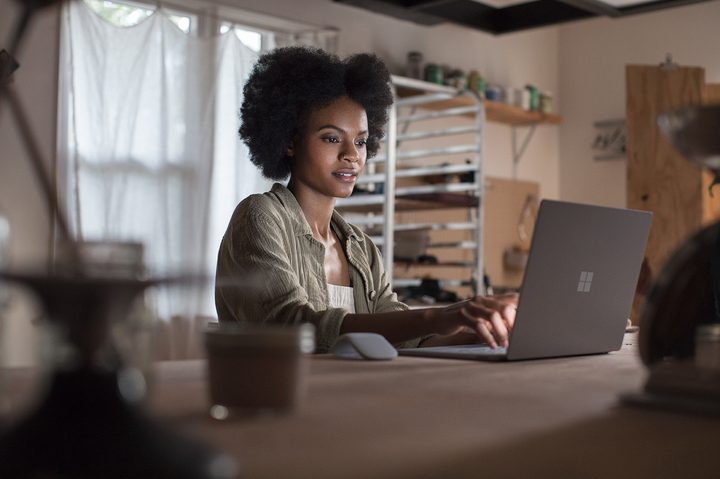
Yet the Surface Laptop flies in the face of that strategy. It’s certainly not an inexpensive machine, with a starting price of $999, that tops out at $2,199. That’s high-end notebook territory. In fact, it looks like a direct competitor to the Apple MacBook and MacBook Pro, not to mention Microsoft’s own Surface Book.
In short, the Surface Laptop is not a machine that schools are going to purchase in bulk to build into computers-on-wheels (COWs) and cart from classroom to classroom. School IT administrators aren’t likely to hand them over to students, who won’t care about staining the Alcantara fabric lining the keyboard deck, or cracking the 13.5-inch PixelSense 3:2 display.
And yet, according to Microsoft, the Surface Laptop was “Designed for Windows 10 S,” an operating system that by the company’s own admission is intended to offer less functionality in the name of better security and easier administration – not enhanced productivity and power.
Laptop, or Trojan horse?
A skeptical geek might look at Windows 10 S and assume that it’s the beginning of an effort to compel people to download all their apps from the Windows Store. Office 365 is making its way there right now, and it’s possible that the standalone version of Office could eventually disappear. Toss in the fact that Windows 10 S doesn’t allow users to change the default browser from Edge, and the future doesn’t look bright.
In fact, Windows 10 S starts to look like a Trojan horse. Its focus on education makes its limitations excusable, glossing over fundamental changes to how the operating system works. Yet the operating system is bundled into a high-end laptop that many people will desire. The hope, it seems, is that users will give Microsoft’s vision of a Store-centric, Edge-centric, Bing-centric Windows a second chance.
The company knows that it can’t simply pivot Windows all at once, so it’s instead sneaking in Windows 10 S under the pretense of a purpose-built Windows incarnation. Then, if Microsoft decides to shift other versions of Windows in the same direction, then the company can say it’s because people loved the Surface Laptop.
Of course, Microsoft could easily shift to Windows 10 Pro on the Surface Laptop without any fanfare, and write the change off to customer preference. It could also offer new configurations with an upcharge to Windows 10 Pro, leaving Windows 10 S as a budget option. These escape strategies would allow Microsoft to smooth over poor reception as nothing more than a misstep.
Even if that happens, however, it would be foolish to pass Windows 10 S off as a blip, an experiment, or a merely niche branch of mainstream Windows. While Microsoft talks about education in this light, it seems to be forming a shadowy plan to transition Windows into a tighter, more locked-down operating system — one where browser choice, search engine choice, and application choice are no longer up to user preference.
It’s a plan that would indeed make the operating system more secure and easier to use, but it’s also one that would have many howling “the sky is falling!” – and, perhaps, for good reason. Whatever its fate, Windows 10 S and the Surface Laptop have shown us Microsoft’s darkest desires.