1. Home
  2. Emerging Tech
  3. Cars
  4. News

Will the future of electric vehicles include instantly rechargeable batteries?

Add as a preferred source on Google

Thanks to a new technology from Purdue University researchers, we may in time be driving cars that are powered by an “instantly rechargeable” battery (called Ifbattery) that are considered safe, affordable, and environmentally friendly. Capable of recharging both electric and hybrid vehicle batteries, the process would be similar to that of refueling with gas, but instead of using fossil fuels, we’d be using electricity.

“Designing and building enough of these recharging stations requires massive infrastructure development, which means the energy distribution and storage system is being rebuilt at tremendous cost to accommodate the need for continual local battery recharge,” said Eric Nauman, co-founder of Ifbattery and a Purdue professor of mechanical engineering, basic medical sciences and biomedical engineering. “Ifbattery is developing an energy storage system that would enable drivers to fill up their electric or hybrid vehicles with fluid electrolytes to re-energize spent battery fluids much like refueling their gas tanks.”

Recommended Videos

Ifbattery depends on an energy storage system that lets drivers fill up on fluid electrolytes in order to re-energize used battery fluids. Spent electrolytes could be quickly dropped off at gas stations, “which would then be sent in bulk to solar farms, wind turbine installations, or hydroelectric plants for reconstitution or re-charging into the viable electrolyte and reused many times,” explained John Cushman, Purdue University distinguished professor of earth, atmospheric and planetary science, who led the research team responsible for the technology.

“Electric and hybrid vehicle sales are growing worldwide and the popularity of companies like Tesla is incredible, but there continue to be strong challenges for industry and consumers of electric or hybrid cars,” Cushman said. “The biggest challenge for industry is to extend the life of a battery’s charge and the infrastructure needed to actually charge the vehicle. The greatest hurdle for drivers is the time commitment to keeping their cars fully charged.”

But now, that hurdle may have been crossed, as this latest innovation could eliminate the time needed to recharge a car battery, and furthermore, reduce the need for potentially expensive recharging stations.

Next up for the Ifbattery team is finding additional financing, as the researchers hope to soon build large-scale prototypes and find manufacturing partners.

Lulu Chang
Fascinated by the effects of technology on human interaction, Lulu believes that if her parents can use your new app…
Yet another study says AI is bad for elections, and the rabbit hole gets worse
AI may be an election bomb waiting for someone to light the fuse
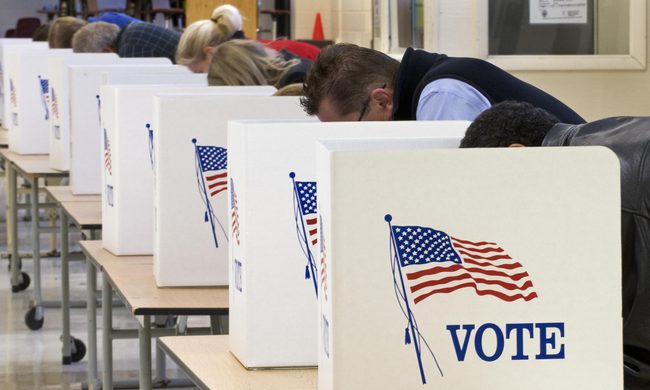
Voters cast their ballots on Election Day

Another election, another study has concluded that asking an AI chatbot for political guidance is a spectacularly bad idea. Research conducted during Hungary’s 2026 parliamentary election found that ChatGPT and Google Gemini offered not just inaccurate but also inconsistent and unreliable voting advice. The chatbots misclassified voter profiles, overlooked relevant parties, recommended parties absent from the ballot, and sometimes produced materially different answers when given the same information repeatedly.

AI keeps failing the voter test

Read more
Samsung’s humanoid robot ambitions are real, but factories come first
Samsung’s new robotics division has humanoids in its sights, although its immediate business is far more practical factory automation
Robot Touch Human Finger

Samsung wants a place in the humanoid race, but its new robotics push begins with machines built for factories rather than homes.

The CEO-led RX robotics division will initially focus on manufacturing robots. Samsung has separately identified humanoids as a priority, although it hasn’t announced a commercial model or explained where one fits into the division’s immediate plans.

Read more
The future of AI may depend on this one behind-the-scenes change
Running Claude on Android.

Whenever a new AI model arrives, it's easy to get caught up in the bells and whistles. We talk about how much smarter it is, how quickly it answers questions, or how realistic its images have become. But here's the thing: none of that matters much if the AI can't reliably work with the apps and services people use every day.

That's why an upcoming update to the Model Context Protocol (MCP) caught my attention. It isn't a new chatbot or a fancy AI model. In fact, most people will never even know it's happening. But it could quietly make the AI ecosystem a lot healthier. If you've never heard of MCP before, don't worry. Think of it as a shared language that lets AI assistants safely talk to apps like Gmail, Slack, calendars, databases, and countless other services. Instead of every company inventing its own way to make those connections, MCP gives everyone a common rulebook.

Read more