1. Home
  2. Wearables
  3. Emerging Tech
  4. News

Third Thumb is the 3D-printed prosthesis you didn’t know you needed until now

Add as a preferred source on Google

Want to look like a cyborg from some dystopian sci-fi movie about survivors in a post-apocalyptic nuclear wasteland? Then you will probably want to check out this awesome 3D-printing prosthetics project from Dani Clode, a graduate student at London’s Royal College of Art (RCA). Clode developed a functional prosthetic third thumb that is capable of carrying out an impressive range of motions designed to extend the wearer’s abilities.

“The Third Thumb is a 3D-printed thumb extension for your hand, controlled by your feet,” Clode told Digital Trends. “The Third Thumb investigates the relationship between the body and prosthetic technology in new ways. It is part tool, part experience, and part self-expression; a model by which we better understand human response to artificial extensions.”

Recommended Videos

The thumb’s 3D parts are connected using a Bowden cable system, similar to a bike brake, that is made of Teflon tubing and wire. “3D printing is the perfect medium for this project, as it enables quick prototyping, customized designs for various hand sizes, and one-off production,” Clode said.

Controllable Third Thumb lets wearers extend their natural abilities

The prosthesis’ motors are controlled via two pressure sensors retrofitted into the wearer’s shoes and receives its instructions via Bluetooth. Clode said she chose foot control for the project because she was inspired by the already strong connection between our hands and feet in various well-established products — such as driving a car, using a sewing machine, or playing the piano. The pressure sensors are designed to give plenty of control over the thumb, with one sensor controlling the flexion and extension, and the other controlling the thumb’s adduction and abduction. The results combine to create the kind of dynamic movement we would expect from, well, a regular thumb.

“The Third Thumb still needs more motor development before it could be commercialized,” Clode said. “The battery and motors are always the challenge with small wearables. I think it is a really unique product though, and it would be really interesting to develop it to that stage. The goal for the Third Thumb is to create a catalyst for society to consider human extension, framed in an approachable, accessible design. Success would be a widespread social engagement with The Third Thumb — from a jewelry designer to a falcon handler to a tattoo artist to a toddler. The more people who experience it, the better.”

Between this and some of the other awesome augmented human projects we have seen as of late, it seems the cyborg world really is no longer limited to science fiction.

Luke Dormehl
I'm a UK-based tech writer covering Cool Tech at Digital Trends. I've also written for Fast Company, Wired, the Guardian…
Qualcomm is set to ratchet up chip prices in September, and your next gadget upgrade could bear the brunt
The price hike could touch every Snapdragon-powered device category.
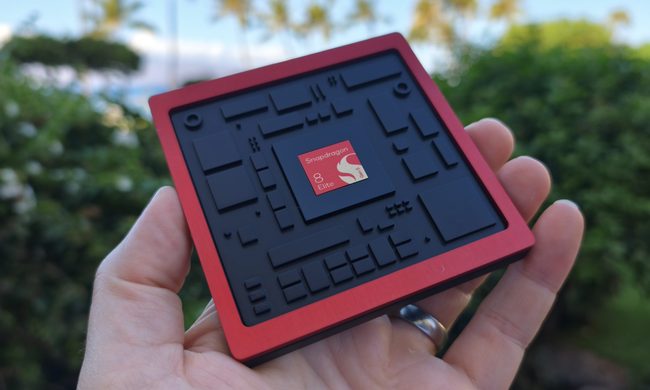
The new Qualcomm Snadragon 8 Elite Gen 5

I want you to sit with this for a second. Qualcomm, the company whose Snapdragon chips sit inside your Android phone and tablet, your Windows laptop, your Meta smart glasses, your Galaxy Watch, and your wireless earbuds, reportedly sent a letter to every major customer telling them prices are going up by double digits. 

The price hike will be in effect from September 1, 2026, a recent Bloomberg report claims. Essentially, all the companies placing their chip orders after that will pay a higher price. 

Read more
Slacked off all summer? Here are 3 fitness trackers that’ll help you stay accountable as you head back to school
Three trackers, three price points, three totally different approaches to keeping you honest about your own goals.
A person wearing the Whoop 5.0.

Summer break did what it usually does. Your sleep schedule drifted, workouts happened less often than you'd hoped, and by the time August rolled around, you were feeling it. You've got a plan to get back on track once the school year starts and your days have more structure, but you know how that usually goes. The first two weeks are solid, then the routine quietly slips.

A fitness tracker won't get you off your couch. What it will do is put a number in front of you every day, one that makes it obvious whether you stuck to your goal or slacked off. That small bit of visibility is often the difference between meaning to work out and actually doing it. Back-to-school season is a good time to buy in, since you're already resetting more than one part of your routine, and the overlap makes the habit more likely to stick. To keep the odds in your favor, here are three fitness trackers that can help you stay accountable and actually hit your goals.

Read more
Galaxy Watch 9 vs. Watch Series 11: Has Apple finally met its smartwatch match?
From AI-powered health coaching to outdoor fitness tracking, here's how Samsung's Galaxy Watch 9 stacks up against Apple's Watch Series 11.
Wristwatch, Arm, Body Part

These days, the real battleground between smartwatches is who can turn a wrist-worn, sensor-loaded device into something that resembles a personal fitness trainer, and this year's crop of flagship wearables takes that fight more seriously than ever. 

Samsung just refreshed its mainstream Galaxy Watch line with a new silicon and a batch of clinically-backed health tools, landing squarely on Apple's home turf of preventive wellness tracking. Apple, for its part, has spent the better part of a year letting its Series 11 sit as the reigning pick for anyone inside its ecosystem, propped up by a software catalog few rivals match feature-for-feature. 

Read more