1. Home
  2. Space
  3. Emerging Tech
  4. News

Compare the gravity on different planets with the Space Museum desk toy

Add as a preferred source on Google

Whether you view it as an educational tool or a geeky space-themed desk toy, there is something incredibly cool about Kristoph Krisjans’ latest Kickstarter campaign. Having previously created the “Moondrop” fidget toy to simulate how gravity affects objects on the moon, Krisjans is now casting his gravitational net a bit wider to let you compare gravitational forces on all eight planets in our solar system.

To do this, the so-called “Space Museum” tabletop display is composed of eight different, precisely machined planetary spheres of equal size, but different weights, intended to represent each planet’s gravity. The Earth unit acts as a kind of control, against which you can compare every other sphere.

Recommended Videos

Each sphere is made of the same high-grade aluminum (with the exception of the super heavy Jupiter ball, which is stainless steel), but different ones have differently sized hollows in the center so that they weigh the correct relative amounts. It’s a fun demonstration of just how much gravity fluctuates between planets — brought to life in a way that no textbook can quite manage.

While we haven’t yet been able to lay our hands on a Space Museum kit, the high-quality finish looks equally well thought out — with each laser-engraved sphere anodized a different color, based on planet photos from NASA to achieve the correct color tones. The spheres also come in a collector’s case inspired by the toned-acrylic glass used in astronaut helmet visors.

“I believe that whether you are a passionate space enthusiast or just want to discover more about outer space, Gravity Museum would create an exciting way to explore the universe,” Krisjans told Digital Trends. “It would also be a great way to present the science and space exploration to the young generation. It is much easier to excite a person by showing them the physical process than by telling the theory behind it.”

If you want to get hold of a Space Museum of your own, you can currently pre-order one on Kickstarter, with prices starting at $92. Shipping is set to take place in March — if you can … weight that long.

Luke Dormehl
I'm a UK-based tech writer covering Cool Tech at Digital Trends. I've also written for Fast Company, Wired, the Guardian…
Getting to Mars may require a pit stop in orbit, and NASA just tested the nozzle to make that happen
A gas pump nozzle for spacecraft sounds simple. It is not, and that's what makes this test worth paying attention to.
Architecture, Building, Factory

Getting a spacecraft to Mars or beyond requires an enormous amount of fuel, most of which has to be hauled from Earth, adding to the overall cost and weight of the spacecraft. NASA has been working on a different approach, one that could be more efficient and effective.

It wants to refuel a spacecraft in orbit before heading out for the mission. What’s even more interesting is that the space agency just finished testing a component that could make that possible: a cryocoupler.

Read more
Elon Musk’ Starlink could soon offer mobile services as a US carrier
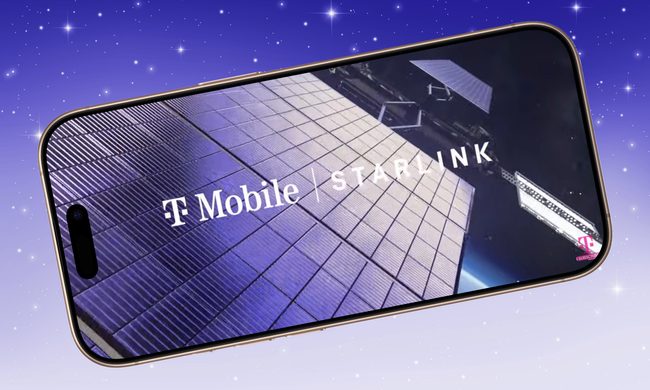
Showcase of T-Mobile Starlink service on an iPhone.

Elon Musk’s Starlink has already changed how millions of people access the internet, especially in places where traditional broadband struggles to reach. Now, the satellite internet service could be preparing for an even bigger leap — becoming your mobile carrier.

According to a Financial Times report, SpaceX has told investors it’s considering launching a retail Starlink mobile service in the US. Instead of simply partnering with wireless carriers, the company could begin selling mobile plans directly to consumers, putting it in direct competition with Verizon, AT&T, and T-Mobile.

Read more
Lightsails have hit another speed bump on the road to interstellar travel
The coolest interstellar travel idea may get betrayed by the light pushing it
LightSail in Earth orbit

Laser-powered lightsails are one of the coolest answers to spaceflight. It might not be as sci-fi-sounding as a warp drive, but now, its practicality has also come under question. Using lightsails, a spacecraft could unfurl an ultra-thin reflective sail and let a powerful laser push it toward another star, without relying on fuel.

The tech was simple and elegant--except it's also more complicated than it sounds. A new preprint from researchers Chao Shen and Jiaze Li of the Harbin Institute of Technology suggests that relativistic lightsails may run into a hidden propulsion problem once they start moving extremely fast.

Read more