1. Home
  2. Computing
  3. Mobile
  4. s

Qualcomm’s Snapdragon chips now power laptops, multi-lens cameras, more

Add as a preferred source on Google

For years, Qualcomm’s Snapdragon chips have powered some of the best smartphones on the market, but now they’re increasingly showing up in other products. PJ Jacobowitz, Qualcomm senior marketing manager, stopped by the Digital Trends booth at CES 2018 in Las Vegas to discuss some of the exciting new devices that the Snapdragon chipset is powering.

One of the more interesting products that Jacobowitz showed us was the one he called his personal favorite, the Light L16 camera, which has 16 lenses built in. Using Snapdragon, the 16 lenses all snap pictures at the same time, which are merged into one DSLR-quality image.

Recommended Videos

Qualcomm refers to this as “computational photography.” Working together, the lenses create a “depth map,” which lets you use depth-of-field effects like blurring the background similar to a DSLR. This also lets you re-focus the image after you’ve taken it, similar to the cameras in some recent smartphones.

“The way to get amazing, awesome image quality from a big image sensor is to break it into pieces,” Jacobowitz told Digital Trends. “So if you break it into pieces, you get smaller image sensors and smaller lenses that you can fit in a compact design.

Jacobowitz also showed us the Lenovo Miix 630, which was announced late last year and is the first Windows 10 laptop to be powered by a Snapdragon chip. Not only is the Miix 630 thin and light, but is also capable of up to 20 hours of video playback on a single charge. Jacobowitz says that Microsoft’s own testing indicates that a person using the laptop for web browsing and document editing could get up to a week on a single charge. Asus and HP also have Snapdragon-powered laptops in the works.

“I shouldn’t even say this, because you know, I shouldn’t tell the competitors this, but that’s how we get the awesome battery life,” Jacobowitz says. “It’s not just a CPU, it’s not just a GPU, it’s not just a DSP, it’s not just an ISP. We have all of these things, and the idea is that if you can spread all of that processing out to the right type of architecture, then you can get the best battery life for that exact process.”

Kris Wouk
Former Contributor
Kris Wouk is a tech writer, gadget reviewer, blogger, and whatever it's called when someone makes videos for the web. In his…
This new Mac malware won’t let you use your computer until you surrender your password
This Mac malware turns your own computer against you
AI Generated Image

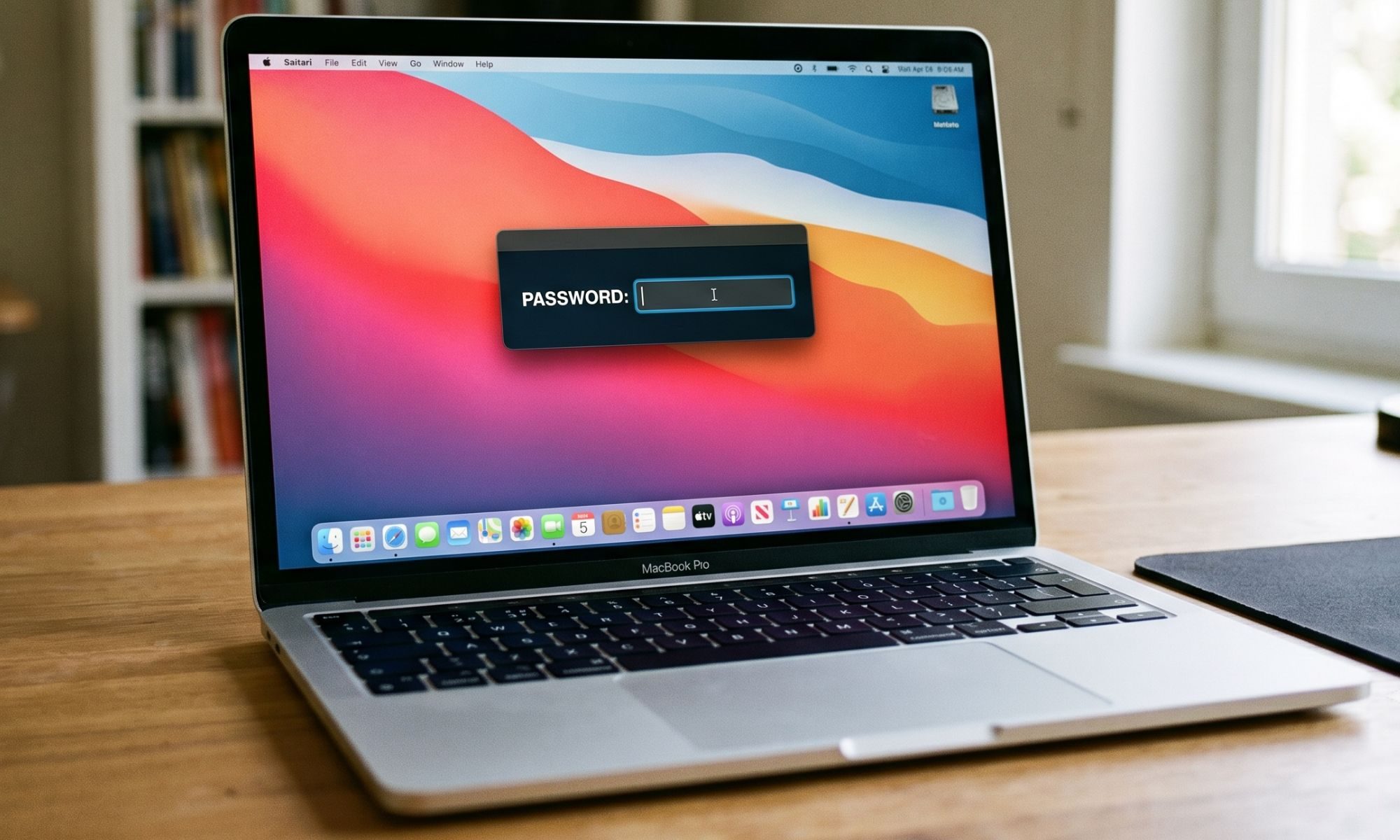
A newly discovered strain of macOS malware is taking social engineering to an unsettling new level. Instead of exploiting a software vulnerability or silently stealing information in the background, it simply refuses to let you use your Mac until you type in your login password.

Dubbed ClickLock, the malware repeatedly shuts down key macOS processes, disables notifications, displays convincing Apple password prompts, and effectively traps users in a loop that only ends when the correct password is entered. Once that happens, it doesn't just steal the password. It goes after browser data, cryptocurrency wallets, saved credentials, password managers, and much more.

Read more
1Password lets Claude inside your accounts without handing over the keys
Claude can now sign in on your behalf while your password stays hidden, though trusting it after login is a separate decision
1Password official

1Password is giving Claude a way into your online accounts without making your passwords part of the bargain. The new 1Password for Claude integration can fill login details while keeping the credentials hidden from Anthropic’s AI agent.

Available now on Mac, the feature kicks in when Claude reaches a sign-in page during a task. Claude requests a saved login, then you approve or deny it. If approved, 1Password submits the credentials through a separate encrypted channel. Passwords and one-time codes never enter Claude’s context or Anthropic’s systems.

Read more
New open-weight AI from China is toppling the best of OpenAI and Claude Fable
Moonshot’s 2.8-trillion-parameter Kimi K3 beats Fable 5 and GPT 5.6 Sol in select benchmarks
Art, Drawing, Plant

China's Moonshot AI has launched Kimi K3, a massive 2.8-trillion-parameter model built for coding, research, reasoning, and visual tasks. Moonshot admits K3 still trails Claude Fable 5 and GPT 5.6 Sol overall. Even so, its benchmark results put it surprisingly close to both, and it finishes ahead in several tests.

How close is Kimi K3 to the best closed models?

Read more