1. Home
  2. Emerging Tech
  3. News

‘Sea Hunter,’ a drone ship with no crew, just joined the U.S. Navy fleet

Add as a preferred source on Google

A prototype autonomous ship known as the Medium Displacement Unmanned Surface Vehicle (MDUSV) has officially been transferred to the U.S. Navy from the Defense Advanced Research Projects Agency (DARPA) after a two-year testing and evaluation program. Named “Sea Hunter,” the Office of Naval Research will continue to develop the vessel from this point forward.

Although there’s no specific timetable for when the Sea Hunter would join active naval operations, the statement from DARPA indicated that it could happen as early as this year. The anti-submarine warfare vessel could be the first of an entirely new class of warship.

Recommended Videos

“[Sea Hunter] represents a new vision of naval surface warfare that trades small numbers of very capable, high-value assets for large numbers of commoditized, simpler platforms that are more capable in the aggregate,” said Fred Kennedy of DARPA. “The U.S. military has talked about the strategic importance of replacing ‘king’ and ‘queen’ pieces on the maritime chessboard with lots of ‘pawns.’”

The collaboration between the Navy and DARPA began in 2014, with the ship designed and developed by Virginia-based defense company Leidos, and christened in April 2016. A rigorous series of open-water tests followed, including surveillance and mine counter-measures.

According to Newsweek, the ship got its name from the mission the Navy envisions for it — stalking foreign submarines at sea. It’s relatively cheap to build at $20 million, and it’s far less expensive to run than a similar manned vessel.

“This is an inflection point,” former Deputy Defense Secretary Robert Work said in an interview with Reuters in 2016. “This is the first time we’ve ever had a totally robotic, trans-oceanic-capable ship.”

“I would like to see unmanned flotillas operating in the western Pacific and the Persian Gulf within five years,” he added.

The Navy hopes that ships of the future will be able to stay at sea for months at a time and travel thousands of miles without any crew. The Sea Hunter is currently a surveillance platform and has no weapons onboard. It’s 127 feet long and can reach speed of 27 knots, using cameras and radar to track its location and spot other ships.

Work went on to emphasize that if robot ships like Sea Hunter were outfitted with weapons in the future, there would always be a human at the controls. “There’s no reason to be afraid of a ship like this,” he said.


Mark Austin
Former Digital Trends Contributor
Mark’s first encounter with high-tech was a TRS-80. He spent 20 years working for Nintendo and Xbox as a writer and…
Yet another study says AI is bad for elections, and the rabbit hole gets worse
AI may be an election bomb waiting for someone to light the fuse
Voters cast their ballots on Election Day

Another election, another study has concluded that asking an AI chatbot for political guidance is a spectacularly bad idea. Research conducted during Hungary’s 2026 parliamentary election found that ChatGPT and Google Gemini offered not just inaccurate but also inconsistent and unreliable voting advice. The chatbots misclassified voter profiles, overlooked relevant parties, recommended parties absent from the ballot, and sometimes produced materially different answers when given the same information repeatedly.

AI keeps failing the voter test

Read more
Samsung’s humanoid robot ambitions are real, but factories come first
Samsung’s new robotics division has humanoids in its sights, although its immediate business is far more practical factory automation
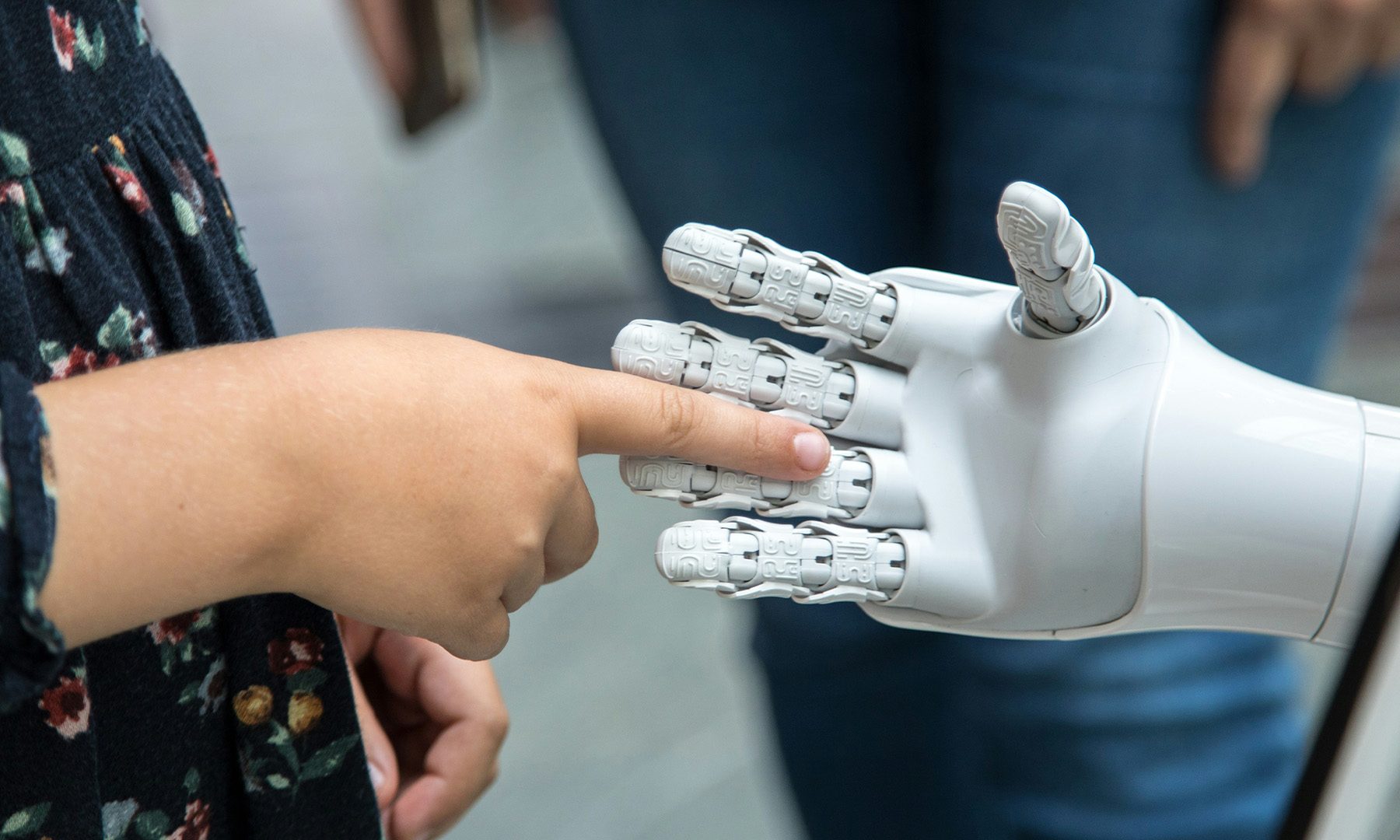
Robot Touch Human Finger

Samsung wants a place in the humanoid race, but its new robotics push begins with machines built for factories rather than homes.

The CEO-led RX robotics division will initially focus on manufacturing robots. Samsung has separately identified humanoids as a priority, although it hasn’t announced a commercial model or explained where one fits into the division’s immediate plans.

Read more
The future of AI may depend on this one behind-the-scenes change
Running Claude on Android.

Whenever a new AI model arrives, it's easy to get caught up in the bells and whistles. We talk about how much smarter it is, how quickly it answers questions, or how realistic its images have become. But here's the thing: none of that matters much if the AI can't reliably work with the apps and services people use every day.

That's why an upcoming update to the Model Context Protocol (MCP) caught my attention. It isn't a new chatbot or a fancy AI model. In fact, most people will never even know it's happening. But it could quietly make the AI ecosystem a lot healthier. If you've never heard of MCP before, don't worry. Think of it as a shared language that lets AI assistants safely talk to apps like Gmail, Slack, calendars, databases, and countless other services. Instead of every company inventing its own way to make those connections, MCP gives everyone a common rulebook.

Read more