1. Home
  2. Emerging Tech
  3. News

Astrophysicist says space junk, not radio signals, will lead us to aliens

Add as a preferred source on Google
Mike Mackinven/Getty Images

Spotting extraterrestrial life isn’t easy. Unless aliens show up hovering above major landmarks like they do in Independence Day, finding them depends on first finding other planets hypothetically capable of maintaining life, and then exploring them in more detail. Hector Socas-Navarro at Spain’s Canary Islands Institute of Astrophysics in Spain has another idea, however — and it’s all about searching for space satellites.

Recommended Videos

“The main problem in the search for extraterrestrial intelligence is that we don’t know what to look for,” Socas-Navarro told Digital Trends. “Scientists are very interested in ‘technomarkers,’ things that we could detect in other planets that would reveal the presence of a technological civilization.”

As he points out, this is a tough ask. Previous attempts to find “technomarkers” have focused either on technology that would be available to only the most advanced civilizations (think antimatter-based interstellar propulsion!) or ones which are virtually undetectable to us (such as global warming on other planets). Socas-Navarro’s approach aims to detect civilizations that are similar to ours, with the same technology that we have. It involves looking for satellites in geosynchronous orbit, forming something called the Clarke belt, a thin belt with a very precise diameter that is optimal for broadcast and relay communications satellites.

“Under certain conditions, a highly populated Clarke belt would be detectable in planets around other stars with our current telescopes,” Socas-Navarro continued. “Conversely, our own Clarke belt might at some point in the future be detectable from nearby stars. In the last decades, it has been growing at an exponential rate. If this rate continues, in the year 2200 we would be detectable by telescopes like our own. This is something that should be considered in the currently ongoing debate on whether humanity should send signals out into space.”

So what does Socas-Navarro propose? Namely, that our efforts to find extraterrestrial life should include training technology to seek out these instantly recognizable rings of satellites. “The really nice thing about this technomarker is that it’s free,” Socas-Navarro said. “It’s pretty much like getting a free lottery ticket. We currently have lots of projects, telescopes and satellites dedicated to the search for exoplanets, exomoons and their ring systems. The same data collected by these instruments is what we need to look for Clarke exobelts.”

Luke Dormehl
I'm a UK-based tech writer covering Cool Tech at Digital Trends. I've also written for Fast Company, Wired, the Guardian…
Polar is yet another AI browser, but it goes beyond just automating the mundane web chores
Polar wants to turn your browser into an AI-powered productivity tool
Polar AI browser

The AI browser race is entering a new phase. After spending much of 2025 trying to reinvent web search with built-in chatbots, startups are increasingly shifting their attention toward browser agents that can automate repetitive work instead of simply answering questions. The latest company to embrace that transition is Polar, a startup founded by former Perplexity engineer Kevin Zhang, which has raised $5.7 million in seed funding led by Madrona.

Unlike the first generation of AI browsers that targeted everyday consumers, Polar is designed specifically for knowledge workers. Its premise is straightforward: instead of replacing Google Search, the browser aims to eliminate repetitive tasks that professionals perform across dozens of browser tabs every day.

Read more
I use ChatGPT Pro everyday, and these 3 features keep me subscribed
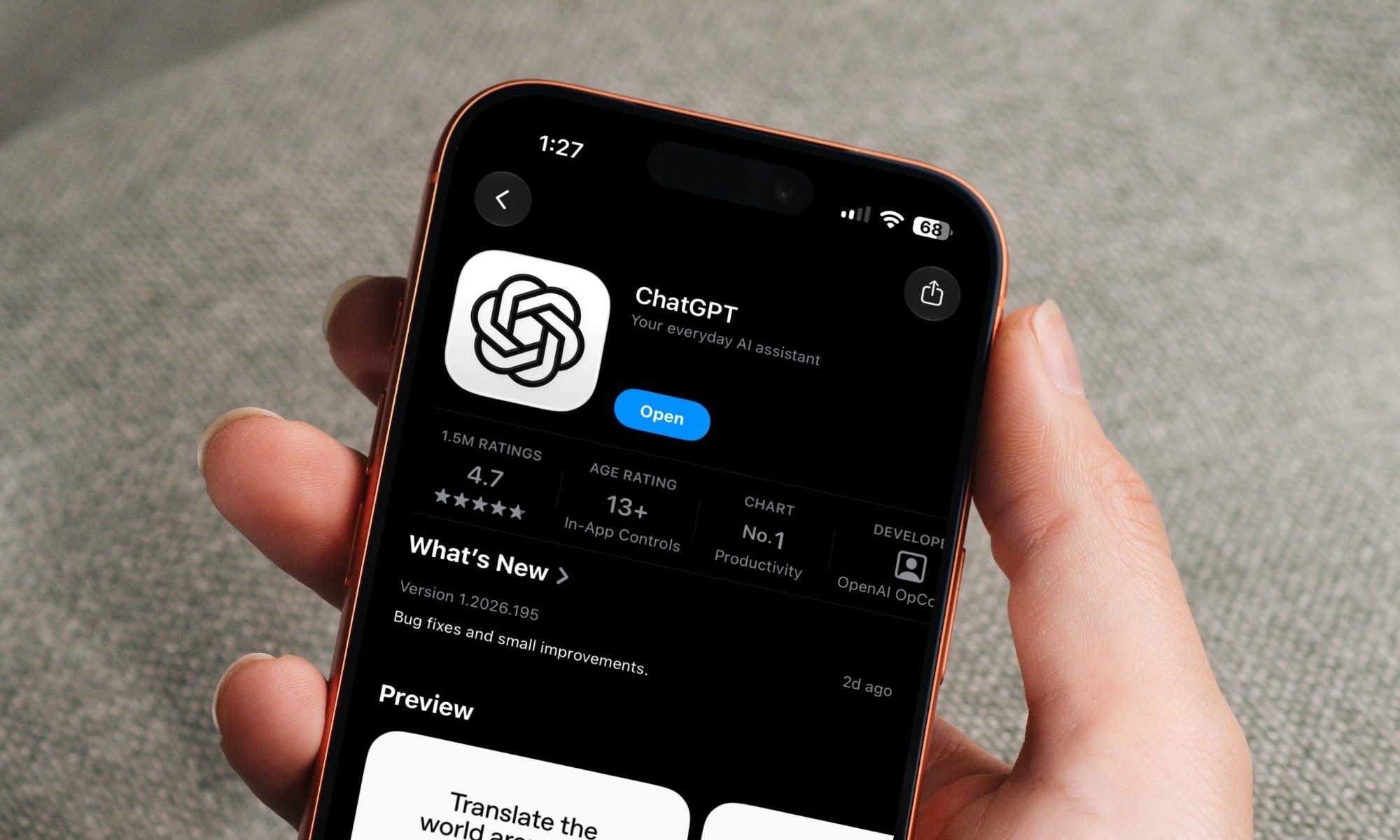
ChatGPT on iPhone

I've used ChatGPT for years, but for the longest time, I never felt the need to pay for it. Instead, I subscribed to Claude Pro because it fit my workflow better. Between regular chat and Cowork, it gave me everything I needed in one place, so paying for another AI subscription didn't make sense.

That changed when OpenAI introduced ChatGPT Work. I was curious enough to give ChatGPT Pro a proper shot, expecting to test one new feature and move on. Instead, I ended up using it far more than I expected. The more I relied on it in my day-to-day work, the more I realized it offered a few things I didn't want to give up. Those are the three features that have kept me happily subscribed ever since.

Read more
The music industry wants AI slop kicked off the charts, and it finally has a plan
Universal, Sony, and Warner are pushing global charts to block AI slop songs.
Spotify music player

I've caught myself bopping along to a new viral quite a few times, only to realize that it was created using artificial intelligence. Turns out the labels are just as fed up with this as I am.

So what exactly are labels asking for?

Read more