  1. Home
  2. Emerging Tech
  3. Virtual Reality
  4. News

A VR experience lets you ride a jetpack over the world’s most romantic city

Add as a preferred source on Google
Image used with permission by copyright holder

Nothing says 21st-century romance quite like taking your other half on a jetpack flyover of Paris, one of the world’s capital cities for all things love-related. Unfortunately, as of this writing, jetpacks are not widely available, so unless you happen to be a real-life Iron Man like SpaceX CEO Elon Musk, you are probably going to be out of luck. Fortunately, a Parisian attraction called FlyView is here to help.

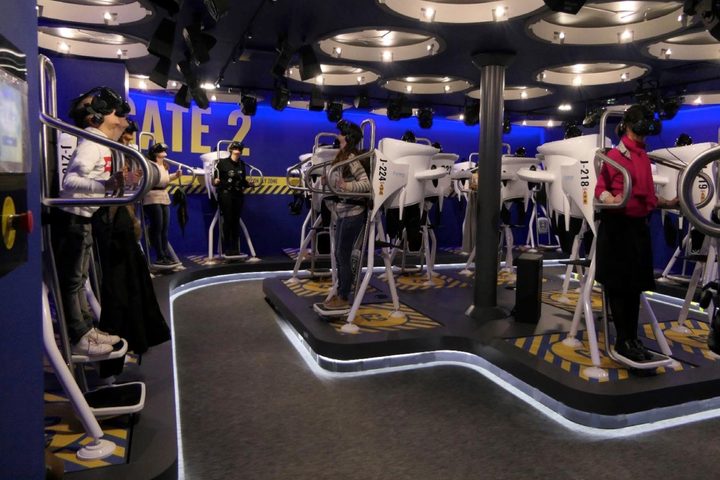
Using virtual reality and specially engineered ground-mounted jetpack units, FlyView promises interested parties an aerial tour of the French capital, complete with 360-degree views and a realistic haptics-aided flying sensation — but without the eye-watering bill that such a real life jetpack experience would undoubtedly come with.

Recommended Videos

In all, you will cover around 20 major Parisian landmarks, flying close by and at a low altitude. As you fly, the jetpack unit will lift, lower and swerve from side to side to offer the most realistic possible experience. The “ride” lasts a total of 13 minutes.

“Arnaud Houette, a professional engineer, is the inventor of the FlyView concept,” Sophie Lemonde, communications director for FlyView, told Digital Trends. “Inspired by his dream of flying and passion for historic sites, he [decided to use] virtual reality to make his dream come true.”
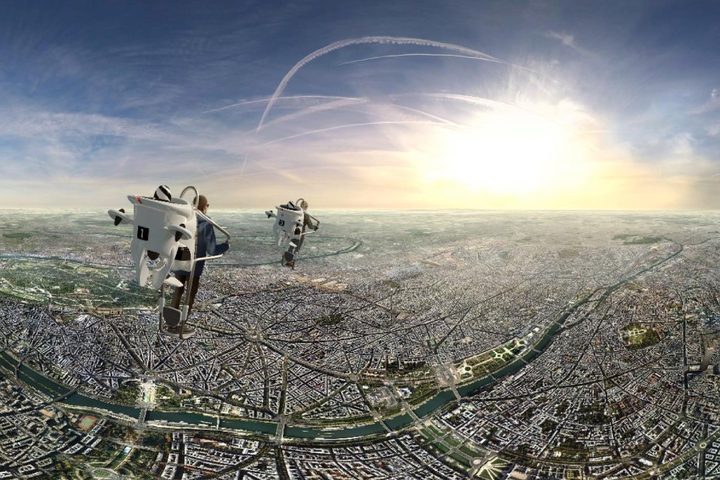
Image used with permission by copyright holder

The project officially kicked off in 2014. Since then, a team of more than 100 people have worked on the project, which had a total budget of around 7 million euros ($8.6 million). After all of its hard work, the FlyView Paris project finally opened its doors on March 31 with a grand unveiling ceremony. It is now open to the public seven days a week, with tickets available to book online for 15 euros ($18.50) per person. The venue has 50 jetpacks and HTC Vive headsets, making it one of the world’s largest virtual reality installations.

Lemonde notes that the views over Paris are real, not 3D reproductions, meaning that this is as close to the real thing as possible. The 360-degree footage was achieved using drone photography. “The jetpack was designed by our engineering team, based on real flying machine designs,” Lemonde continued.

Well, that has our summer vacation destination sorted then!

Luke Dormehl
I'm a UK-based tech writer covering Cool Tech at Digital Trends. I've also written for Fast Company, Wired, the Guardian…
Google just canceled its AI Studio mobile app, and it’s not all bad news
Logo, Symbol, Disk

Google AI Studio was on track to make its way to Android and iPhone, giving developers and AI enthusiasts a dedicated place to build prompts and experiment with Google's latest models from their phones.

That's no longer happening. In a post shared by the official Google AI Studio account on X, Google confirmed that it's canceling the standalone AI Studio mobile app before launch. The announcement comes despite the company saying nearly 800,000 people had already pre-ordered the app across iOS and Android.

Read more
Google Earth’s AI misadventure lasted only a day. It was a tale of dangerous ignorance.
Nuclear reactors, tanks, and historical destruction on a life-like satellite map? Yeah, that's bad.
Nano Banana AI image generator representation.

Technology behemoths are clearly not reading the room, or they are just moving faster than they should when it comes to AI deployment. Google has already stuffed its Gemini AI in every corner of its software stack, from Android to daily productivity tools like Gmail that are used by hundreds of millions of users every day. AI is everywhere. Not all of it is bad, mind you. But in a few places, it just feels forced.

In its latest AI-fication experiment, the company targeted Google Earth. The idea was to let the audience use its Nano Banana 2 AI image generator and make images that can be placed on the map view. On paper, it's a cool idea. What would the Colosseum of Rome look like in your urban neighborhood? Yeah, fun stuff like that.

Read more
Google’s new AI gives robots better balance, smarter hands, and teamwork capabilities
Google just made robots a lot less clumsy and a lot more helpful.
Gemini robotics 2.0

Google DeepMind just brought sci-fi robots closer to reality, and it is very exciting. Building on its original Gemini Robotics model, the company has introduced Gemini Robotics 2, an AI system designed to help robots think, move, and even work together. Unlike most robots today, which rely on pre-programmed routines or someone controlling them remotely, this new system lets robots figure things out on their own when situations get unpredictable.

Can robots finally handle whole-body tasks?

Read more