  1. Home
  2. Phones
  3. Business
  4. Mobile
  5. News

France is making its own WhatsApp clone in response to surveillance fears

Add as a preferred source on Google
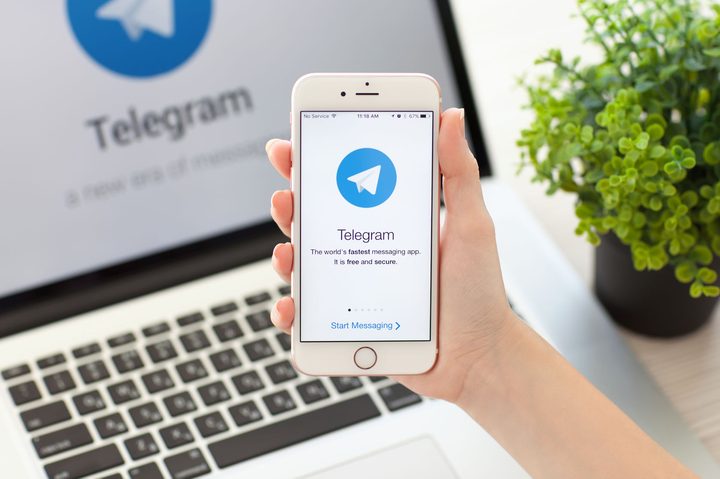
telegram
prykhodov/123rf.com

France is building its own alternative to WhatsApp for French government officials, after concerns that foreign agents could use other services to spy on communications.

The messaging app is being built using free-to-use code from the internet, and will be heavily encrypted. The data centers will be located in France itself, where the French government can assure their safety and take steps to bolster its defenses wherever needed. Around 20 French government officials are currently testing the app, according to a French spokeswoman, and the aim is to have use of the service mandatory for all government employees by the summer.

Recommended Videos

While a large portion of modern messaging apps use end-to-end encryption to secure conversations from outside agents, there has been a rising tide of opposition from governments who feel they should be allowed access to certain messages in order to better protect national interests. Brazil took on chat giant WhatsApp over encryption in 2016, while another chat service, Telegram, has recently been banned in Russia because of the developers’ refusal to allow access to chat logs.

This particular case is likely much more relevant to France’s interests, as President Emmanuel Macron is apparently very fond of the chat app. While encryption has stayed secure on most chat apps, it’s clear that France isn’t willing to bet its data safety on that status quo.

“We need to find a way to have an encrypted messaging service that is not encrypted by the United States or Russia,” the spokeswoman said. “You start thinking about the potential breaches that could happen, as we saw with Facebook, so we should take the lead.”

Also likely to be central to the development of the new app are the growing concerns of data safety following the Facebook-Cambridge Analytica scandal. WhatsApp has been owned by the social media giant since 2014, and the scandal has heavily impacted Facebook’s reputation for security. The data-based scandal became so serious, of course, that Facebook founder Mark Zuckerberg was summoned to testify before the U.S. Congress. WhatsApp also has a checkered past when it comes to data security, with hackers having accessed sensitive data, and having broken into private group conversations.

With data safety and security becoming increasingly relevant in our modern world, don’t expect France to be the last country to take these sorts of steps.

Mark Jansen
Former Mobile Evergreen Editor
Mark Jansen is an avid follower of everything that beeps, bloops, or makes pretty lights. He has a degree in Ancient &…
This new technology could make spotting fake products easier for everyone
Your smartphone could soon tell you if the product you bought is fake
The new system combines three technologies into a single printable label.

Counterfeit goods are becoming increasingly sophisticated, forcing brands to rely on expensive authentication systems that often require specialized scanners or proprietary hardware. Researchers now believe a smartphone could do much of that work instead. A team has developed a new printing system that creates responsive anti-counterfeit labels that are more durable, easier to mass-produce, and can be verified using nothing more than a phone. The research was published in the International Journal of Materials and Product Technology.

At first glance, the technology looks like another incremental improvement in product security. In reality, it addresses one of the biggest limitations of anti-counterfeit systems today: accessibility. If authentication only works with expensive equipment, it becomes difficult to deploy at scale. By enabling smartphone-based verification, the technology could make counterfeit detection practical for manufacturers, retailers, and even consumers.

Read more
Apple’s iPhone Air could serve as the blueprint for its 20th anniversary iPhone
Fresh leaks suggest Apple's 20th anniversary iPhone will combine an Air-inspired frame.
iPhone Air Featured

The iPhone Air is often dismissed as an experiment that didn’t achieve the same success as Apple’s other products.

However, a fresh leak suggests Apple may view the slim iPhone differently, treating its design language as something that could eventually make its way into the mainstream lineup.

Read more
Sunbird relaunches its iMessage app for Android, three years after a privacy scandal shut it down
Sunbird returns to Android with fixed encryption and an AI assistant on the way.
sunbird-imessage-app-relaunch-2026

Sunbird's blue bubble dream for Android users is making another attempt, and this time the company insists it's actually earned your trust. Sunbird Messaging, the app that lets Android users join iMessage conversations without the green bubble stigma, is now available on the Google Play Store after sitting dormant since 2023.

Back then, security researchers discovered the app was sending Apple ID credentials over unencrypted connections and quietly logging user messages through a debugging tool, despite Sunbird's public claims of full end-to-end encryption. The fallout forced both Sunbird and its Nothing Phone partnership to shut down almost overnight.

Read more