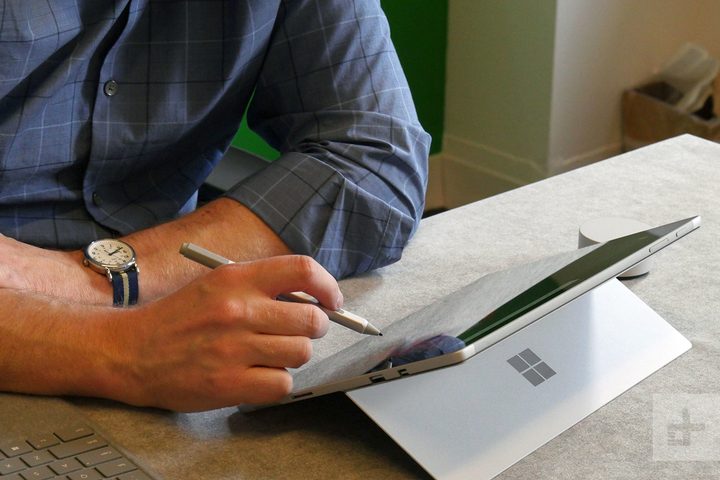
The Federal Communications Commission (FCC) has cleared the way for Microsoft to launch its rumored low-cost Surface Tablet in the United States. The publication of the Surface Tablet’s regulatory filing documents by the agency suggests that not only is a launch imminent, but also reveals some details about the slate that we did not know before. Microsoft requested that the FCC keep details about its Surface Tablet under “short-term confidentiality” until December 28, 2018, so we can expect the slate to launch before the year is over.
Microsoft’s documents with the FCC simply refers to the device as Model 1824 and describes it as a portable computing device, a term that Microsoft had used in the past to describe its mobile Surface products. And although it was previously speculated that Microsoft would switch to Qualcomm’s ARM-powered Snapdragon processor for the low-cost Surface Tablet, this might not be the case. FCC documents show that Model 1824 comes with a separate Wi-Fi/Bluetooth communications module by Qualcomm, suggesting that this new device will use a separate processor, likely an Intel-based one. If a Qualcomm Snapdragon processor had been used, these radios would have been integrated into the system-on-a-chip (SoC) design, negating the need for separate radio modules, WinFuture commented.
Microsoft had used both ARM-based and Intel’s low-powered x86 architecture on its low-cost Surface in the past. The Surface RT debuted with an ARM-based Nvidia Tegra processor, but it failed to take off since it was not capable of running the full version of Windows 8 at the time. For the Surface 3, Microsoft switched to a low-powered Intel processor, which brought full Windows 8.1 support to the hardware, but users complained about the sluggish performance of the processor compared to faster mainstream Intel Core i-series chipsets.
Prior to the release of Microsoft’s FCC filing, the Surface Tablet was believed to have switched back to an ARM-based design as part of Microsoft’s Always-Connected PC push with optional LTE connectivity. Even if the Surface Tablet ships with an Intel processor, battery life shouldn’t be a concern. It’s revealed that the battery that ships in the slate will be the same model from last generation’s Surface Pro 4, but with a slight difference in voltage.
Microsoft is expected to launch its low-cost Surface Tablet later this year, and the device could help Microsoft compete against Apple’s recently launched iPad and Google’s Chromebook devices in the education market. In addition to the Surface Tablet, Microsoft was also widely expected to launch a dual-screen portable computing device with a codename of Andromeda, but that device was recently reported to have been canceled at the last minute to follow the same fate as Microsoft’s Courier project from nearly ten years ago. Microsoft is also expected to refresh its more powerful Surface Pro detachable hybrid, which could arrive either later this year or early next year. Some reports suggest that Microsoft may update the Surface Pro this year, giving it a more modern processor from Intel, and refresh the design next year with a major overhaul.