  1. Home
  2. Emerging Tech
  3. News

A Japanese startup is planning an artificial shooting star show by 2020

Add as a preferred source on Google
Barcroft Media/Getty Images

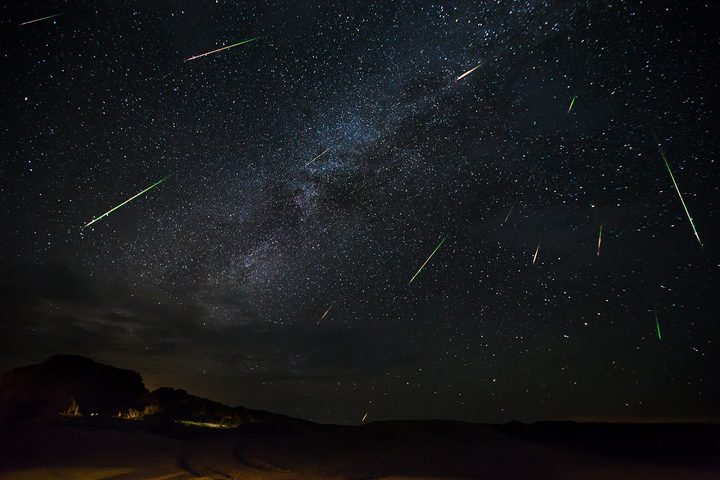
Who says you have to wait around for a meteor shower? Certainly not ALE Co., a Tokyo-based startup that wants you to wish upon a shooting star anytime you’d like. The company is looking to develop a system that would offer paying customers “shooting stars on demand,” and as per a report by Japan Times, the first man-made meteor shower in the history of the world could take place in just two years.

The system depends upon two satellites, both of which are currently being developed. The first should be launched into orbit in March 2019, while its sibling would take flight sometime next summer. Each satellite will carry around 400 tiny spheres, each of which contain a proprietary chemical formula that would mimic falling stars in the sky. Think of them, in some ways, as extraterrestrial fireworks. Each of the little spheres could be reused, which means that they could be repurposed for between 20 and 30 artificial shooting star shows.

Recommended Videos

The satellites purportedly have a lifespan of around 24 months, and would be programmed to send the tiny fireworks flying in the right place, speed, and direction in order to achieve visible illumination even over an extremely crowded metropolitan area (think Tokyo or New York City). And because they would be shot out in space, millions of viewers could be able to enjoy the show from their own homes, ALE claims.

“We are targeting the whole world, as our stockpile of shooting stars will be in space and can be delivered across the world,” ALE CEO Lena Okajami told reporters.

Should all systems continue to operate smoothly during these planning and production phases, both satellites could be in place by February 2020, and an initial test run could be ready to go later in the spring. That means we’ve less than two years to think of all of our most pressing desires and make as many wishes as possible.

The first test is slated to take place over Hiroshima, which was chosen thanks to its weather, landscape, and cultural background, the company said. It’s unclear exactly how much you’ll have to pay in order to order a meteor shower of your own. The initial tests have a budget of $20 million, which includes the cost of launching a pair of satellites.

Lulu Chang
Fascinated by the effects of technology on human interaction, Lulu believes that if her parents can use your new app…
A new AI model wants self-driving cars to think before they swerve
Forget guessing games, this self-driving AI actually shows its work.
Self driving car

Self-driving cars have gotten pretty good at driving. The harder problem is teaching them to drive safely in situations nobody planned for. We have heard horror stories of self-driving cars, behaving erratically in emergency situations, often times delaying first responders from reaching the scene.

A team at Seoul National University, led by professor Jun Won Choi from the Department of Electrical and Computer Engineering, thinks they have cracked part of that puzzle with a new AI model called SafeDrive. The research was recently selected as a highlight paper at CVPR 2026, a distinction that goes only to roughly 3% of all submissions.

Read more
An AirPods-sized mini lab could help catch disease markers in minutes
Meet VPodDuo, an AirPods-sized molecular testing gadget
VPodDuo Mini Medical Device

Home testing could eventually become a lot more convenient. Researchs at the at the University of Illinois Urbana-Champaign has developed the VPodDuo, a pocket-sized fluorescence reader designed to measure sensitive molecular tests outside a conventional laboratory.

Its housing is roughly comparable in size and shape to an AirPods charging case, while Bluetooth connectivity sends results directly to a smartphone. Meaning, you might not have to wait in line anymore.

Read more
Your future AR glasses might finally stop making the real world look weird
Researchers have developed a new display technique that keeps virtual objects realistic without dimming the real world.
Samsung AR Glasses

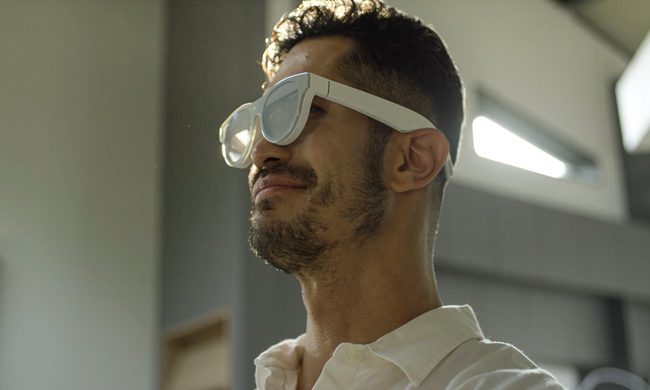
One of the biggest promises of augmented reality is blending digital objects seamlessly into the real world. Ironically, today's AR glasses often make the real world harder to see. Researchers at the Shibaura Institute of Technology (SIT) in Japan, led by Assistant Professor Xiaodan Hu in collaboration with Dr. Yan Zhang and Professor Xubo Yang from Shanghai Jiao Tong University in China, and Professor Kiyoshi Kiyokawa from Japan's Nara Institute of Science and Technology, have developed a new AR display technique that aims to make virtual objects look realistic without reducing visibility of the real world. The study was published in IEEE Transactions on Visualization and Computer Graphics.

The biggest AR problem isn't virtual objects; it's everything around them

Read more