1. Home
  2. Emerging Tech
  3. Mobile
  4. Wearables
  5. News

Sprayable antennas could usher in a new era of ultracompact wearable devices

Add as a preferred source on Google
Drexel’s MXene ‘Antenna Spray Paint’ Could Unlock the Potential of Smart Technology

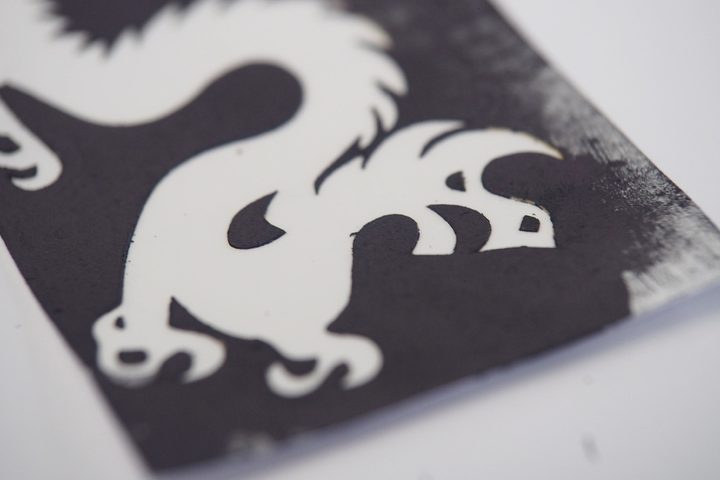
Researchers at Drexel University’s College of Engineering in Philadelphia have invented new spray-on antennas, which can be applied as easily as spray paint or bug spray. The sprayable antennas — which are so thin that they are referred to as being “two-dimensional” — perform as well as the mobile antennas used in modern devices such as smartphones and wireless routers. If commercialized, they could prove to be a game-changer in the growing field of smart devices, making it possible for devices to collect and transmit data in ways that are impossible today.

Recommended Videos

“These antennas are made of a novel two-dimensional material called MXenes that was first discovered at Drexel University in 2011,” Yury Gogotsi, director of Drexel Nanomaterials Institute and Professor of Materials Science and Engineering, told Digital Trends. “MXenes are 1-nanometer thick sheets of metal carbides. [A single] nanometer is about 100,000 times thinner than a sheet of paper. Titanium carbide 2D sheets are metallic conductive, and keep their conductivity even when the sheets are stacked over each other during fabrication, making it possible to fabricate transparent, flexible, and wearable antennas.”

While having comparable efficiency with conventional smartphone antennas, the sprayable antennas have a few notable advantages. For one thing, they occupy less space, are lighter, and, as noted, can even be transparent. They can also easily attach to objects with a simple airbrush, requiring no binder material or further processing in order to do so.
Drexel University

Babak Anasori, Research Assistant Professor at Drexel, noted that this is still early stages for the technology; telling us that this is “just the beginning” when it comes to rolling out the antennas.

“We believe with more engineering we can get to even thinner sizes while improving the performance,” Anasori said. “Also, we are planning to study the fundamentals and understand the mechanism of the transmission at such small thicknesses. In terms of commercialization, we have a patent on MXene antennas, and since the publication of the paper we have received [interest from industry.] We have no doubt that it can make it to the market.”

A paper describing the work, titled “2D titanium carbide (MXene) for wireless communication,” was recently published in the journal Science Advances.

Luke Dormehl
I'm a UK-based tech writer covering Cool Tech at Digital Trends. I've also written for Fast Company, Wired, the Guardian…
Remember Samsung’s Ballie home robot? It may finally be inching closer to reality
Leaked app wireframes give the strongest hint yet that Samsung's Ballie home robot, first shown at CES 2020, might still be headed toward an actual release.
Samsung Ballie robot in a room next to a dog feeder.

Samsung's rolling home robot has been the industry's longest-running "will it ever actually ship" joke, and I'll admit I'd mostly given up on it. Now, there's finally a glimmer of hope.

Samsung first unveiled Ballie as a concept at CES 2020. Then, it showed it as a significantly upgraded version four years later. However, the company never confirmed a release date or committed to releasing it at all. 

Read more
Polar is yet another AI browser, but it goes beyond just automating the mundane web chores
Polar wants to turn your browser into an AI-powered productivity tool
Polar AI browser

The AI browser race is entering a new phase. After spending much of 2025 trying to reinvent web search with built-in chatbots, startups are increasingly shifting their attention toward browser agents that can automate repetitive work instead of simply answering questions. The latest company to embrace that transition is Polar, a startup founded by former Perplexity engineer Kevin Zhang, which has raised $5.7 million in seed funding led by Madrona.

Unlike the first generation of AI browsers that targeted everyday consumers, Polar is designed specifically for knowledge workers. Its premise is straightforward: instead of replacing Google Search, the browser aims to eliminate repetitive tasks that professionals perform across dozens of browser tabs every day.

Read more
I use ChatGPT Pro everyday, and these 3 features keep me subscribed
ChatGPT on iPhone

I've used ChatGPT for years, but for the longest time, I never felt the need to pay for it. Instead, I subscribed to Claude Pro because it fit my workflow better. Between regular chat and Cowork, it gave me everything I needed in one place, so paying for another AI subscription didn't make sense.

That changed when OpenAI introduced ChatGPT Work. I was curious enough to give ChatGPT Pro a proper shot, expecting to test one new feature and move on. Instead, I ended up using it far more than I expected. The more I relied on it in my day-to-day work, the more I realized it offered a few things I didn't want to give up. Those are the three features that have kept me happily subscribed ever since.

Read more