1. Home
  2. Emerging Tech
  3. News

Creepy Christmas carol: 3D-printed robotic hand plays ‘Jingle Bells’ on a piano

Add as a preferred source on Google
JingleBellsOverlay

Nothing says it’s nearly Christmas quite like a 3D-printed robot hand busting out a festive classic on the piano. Fortunately, this year the tradition continues (or, let’s be honest, starts) courtesy of researchers from the U.K.’s University of Cambridge. Using a 3D printer, they have created a soft robot hand — attached to a robot arm — that’s able to play the piano in a variety of styles, including clipped “staccato” and smooth “legato” notes. And what better way to showcase it than with a rendition of Jingle Bells?

Recommended Videos

While this isn’t the first piano-playing robot we’ve covered, what makes this robot neat is that it can achieve this fairly complex action despite being pretty limited in its movement. For instance, the hand is unable to move its fingers independently. That’s in stark contrast to the real human hand, which is capable of incredibly fine-grained motions thanks to its various points of articulation. The fact that it is therefore able to carry out actions as complicated as playing musical phrases on the piano is a testament to what can be achieved through some enterprising design. When it comes to this robot hand and its attached robot arm, the movement really is all in the wrist.

FabricationandFlexibility

“Creating robots which can manipulate objects as well as humans can is really challenging,” Josie Hughes, a researcher in Cambridge’s department of engineering, told Digital Trends. “We have explored how the physical structure of the hands — the bones and soft ligaments — provides some intelligence which enables this. By developing methods of 3D-printing a hand structure with soft and rigid components, we can then just actuate the robot hand, such that we can explore the passive behaviors of the hand as it interacts with the environment. This is a far more scalable approach than other approaches to developing complex robot hands, where many motors and really complex control is needed.”

The 3D-printed hand is just the latest in a growing number of “soft robotics,” which differ in material from the more rigid robots we might more typically associate with the word.

“We now want to take this work further to investigate how we can exploit this mechanical complexity of the hand, and how we can use this to enable robots to perform highly complex tasks which robots currently can’t perform,” Hughes said “To advance the technology further we also want to include tactile sensing into the hand — the human hand has an incredible sense of touch — and we want to include this in a robot hand.”

A paper describing the work was recently published in the journal Science Robotics.

Luke Dormehl
I'm a UK-based tech writer covering Cool Tech at Digital Trends. I've also written for Fast Company, Wired, the Guardian…
Claude can now join your Slack channels and work alongside your team
Laptop running Claude Fable

For years, AI assistants have been siloed. You open ChatGPT, Claude, Gemini, or Copilot, type a prompt, get an answer, and move on. Anthropic's new Claude Tag feature takes a different approach. Instead of making employees jump into a separate AI chat every time they need help, it brings Claude directly to where many teams already spend their day: Slack.

Add Claude to a channel, grant it access to needed tools, and tag @Claude for help — whether analyzing data, writing reports, reviewing code, or investigating incidents. But Claude Tag isn't just another chatbot integration. Its key differentiator is that Anthropic positions it as a digital coworker for your team, enabling seamless collaboration where multiple users can jointly interact with the same AI within their work environment.

Read more
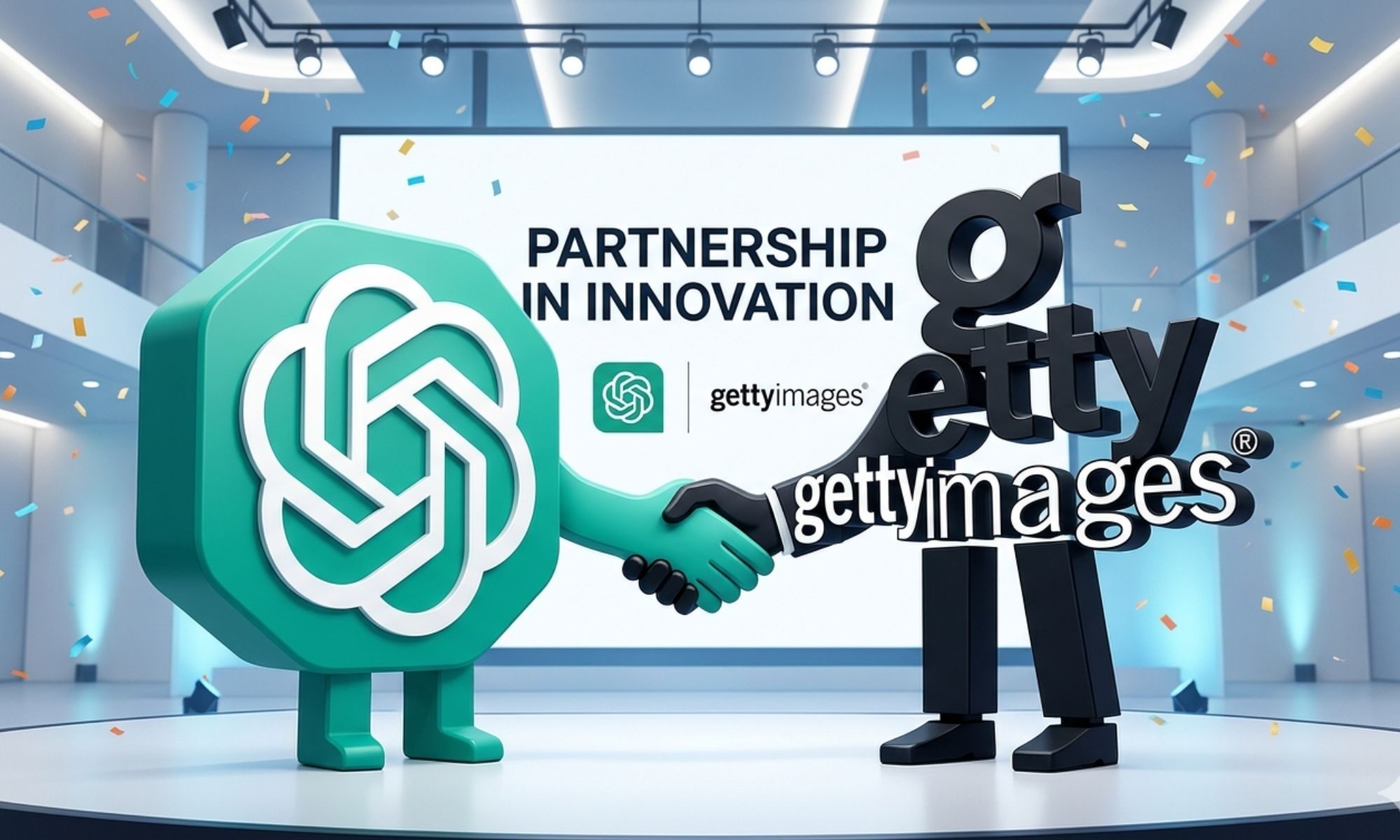
Getty Images accused AI of wholesale theft. It’s now an official ChatGPT image partner.
Advertisement, Shop, Clothing

The AI industry's most fascinating stories often come from unlikely alliances, and this is certainly one of them. Getty Images, a company that has spent years raising concerns about how AI models are trained and how creative work is used, is now officially partnering with OpenAI.

The new agreement will allow Getty Images' licensed content to appear across ChatGPT's search and discovery experiences. That means users may begin seeing Getty's professionally licensed photos and visual assets integrated into ChatGPT responses, adding more visual context to searches and AI-generated answers. Getty says the goal is to make AI-powered search more useful and trustworthy by relying on high-quality, licensed content rather than the murky sourcing practices that have sparked countless debates across the AI industry.

Read more
Timekettle’s new X1 Meeting Hub does real-time translation for 50 people and fits in your pocket
Fifty participants, five languages, one 199-gram hub, and no booth required.
Electronics, Screen, Computer Hardware

Professional conference interpretation setups are notoriously painful. Dedicated booths, trained interpreters, bulky hardware, and a bill at the end of every month that makes you rethink whether the meeting was even required in the first place. 

Timekettle wants to collapse all of that into a single hub that weighs 199 grams (less than modern flagship smartphones). The company just launched the X1 Meeting Interpreter Hub. 

Read more