  1. Home
  2. Computing
  3. News

Samsung permits peek at an eye-popping, 15-inch 4K OLED laptop display

Add as a preferred source on Google
Image used with permission by copyright holder

Laptops with bright and vibrant OLED displays were once a rarity, but at CES 2019, Lenovo and HP revived the technology by bringing it over to some of its latest products. And now Samsung is preparing for what is expected to be the new trend by providing a peek at its eye-popping 4K OLED panels that will likely power a coming wave of larger premium laptops from other manufacturers in this new year.

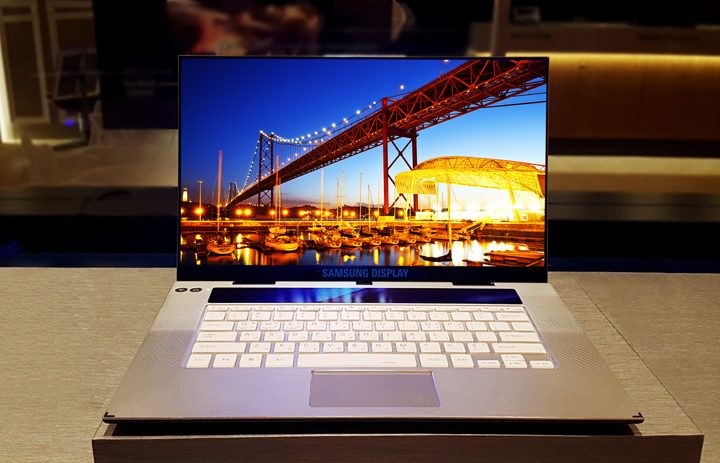
Roughly translated from Korean, Samsung is promising that its world’s first 15.6-inch OLED panels for laptops will offer up an astonishing brightness range of 0.0005 to 600 nits, and a spectrum of 34 million colors. With a total 4K resolution of 3,840 x 2,160, Samsung also boasts that the black that colors its panels can get up to 200 times darker and twice as bright as traditional LCD panels to maximize HDR for the best quality video and images.  It is expected that production on the new panels will start in February.

Recommended Videos

As seen in Samsung’s sample image above, not only will the 15.6-inch OLED panel offer up high brightness ranges and a broad color spectrum, it also will feature thin bezels. This is a change from current panels in other laptops like the Galaxy Book 2 which top out at 12 inches and are often flanked by thick bezels and limited to the typical 2K resolution.

“Samsung’s 15.6-inch OLED offers a display solution that is optimized for portable IT devices such as overwhelming HDR, excellent color reproduction, and high outdoor visibility, Consumers will enjoy a higher level of visual experience through OLED notebooks,” explains Samsung Display Marketing Director Yoon Jae-nam.

With OLED panels, individual pixels can be turned off when needed, leading to brighter image quality compared to the LCD panels seen on typical laptops and displays. Unfortunately, some laptop makers have also found that it can draw a lot of power, cause image retention issues, and can kick up prices for the end consumer, which is why OLED went missing for quite a while. It is still not certain which laptop makers will be using Samsung’s new panels but with HP unveiling a new Spectre x360 15 with AMOLED panel, and Dell promising to bring OLED over to its 15-inch notebooks, you can expect more soon.

Arif Bacchus
Arif Bacchus is a native New Yorker and a fan of all things technology. Arif works as a freelance writer at Digital Trends…
Gemini Notebook’s new Collections arrive just as Google turns it into a bigger workspace
Google is cleaning up notebook organization as the former NotebookLM expands across Gemini and Search
Gemini Notebook branding on a MacBook

Google has barely finished renaming NotebookLM, and it’s already addressing one of the headaches that comes with building a large research library.

Collections are rolling out to all Gemini Notebook users, giving them a way to group related notebooks while keeping everything visible under My Notebooks. The dashboard gets some structure without asking users to rearrange the library they’ve already built.

Read more
Samsung’s humanoid robot ambitions are real, but factories come first
Samsung’s new robotics division has humanoids in its sights, although its immediate business is far more practical factory automation
Robot Touch Human Finger

Samsung wants a place in the humanoid race, but its new robotics push begins with machines built for factories rather than homes.

The CEO-led RX robotics division will initially focus on manufacturing robots. Samsung has separately identified humanoids as a priority, although it hasn’t announced a commercial model or explained where one fits into the division’s immediate plans.

Read more
WhatsApp’s Liquid Glass redesign is finally coming to Mac after months of waiting
WhatsApp's Mac app is getting Apple's Liquid Glass-inspired makeover
WhatsApp

WhatsApp has been steadily adopting Apple's new design language across its apps, but Mac users have largely been left watching from the sidelines. That is finally beginning to change.

The messaging platform has started rolling out its Liquid Glass redesign for the WhatsApp Mac app, bringing the desktop experience much closer to what iPhone and iPad users have been seeing over the past few months. The update introduces a refreshed interface with redesigned navigation elements, updated menus, and a cleaner layout that aligns with Apple's latest software aesthetic. According to WABetaInfo, the rollout has begun through the latest Mac App Store update and is currently reaching a limited number of users.

Read more