  1. Home
  2. Emerging Tech
  3. News

Curiosity suffered a boot issue but is now back up and roving

Add as a preferred source on Google

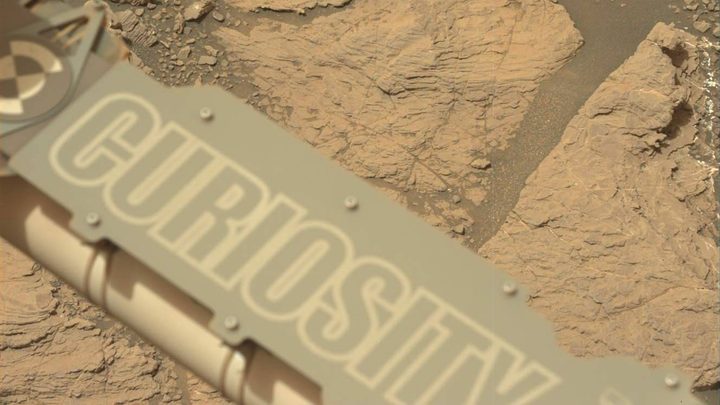
NASA’s Curiosity Mars took this image with its Mast Camera (Mastcam) on February 10, 2019. The rover is currently exploring a region of Mount Sharp nicknamed “Glen Torridon” that has lots of clay minerals. NASA/JPL

The NASA team has been dealing with a small hiccup in the operations of the Curiosity rover since it went into safe mode last week. Now that problem has been resolved and the rover is booting up again, ready to resume its mission to explore Mars.

Recommended Videos

The issue occurred last Friday during a boot-up sequence which lead to the systems going into safe mode in order to protect themselves. Fortunately a few days later the NASA team was able to bring the rover out of safe mode and resume normal operations, and since then the rover has booted up over 30 times without any further problems, so the team are confident that the issue has been fixed.

The researchers still don’t know exactly why the issue occurred, though. “We’re still not sure of its exact cause and are gathering the relevant data for analysis,” Steven Lee, Curiosity’s deputy project manager at NASA’s Jet Propulsion Laboratory in Pasadena, California, said in a statement. “The rover experienced a one-time computer reset but has operated normally ever since, which is a good sign. We’re currently working to take a snapshot of its memory to better understand what might have happened.”

Until they have figured out what the problem is, the team is being careful by limiting the commands that they send to the rover. This will minimize the changes made to its memory so that the team can gather all of the data that it needs on possible causes of the issue. Researchers will need to suspend science operations while they troubleshoot the problem, but they are hopeful this won’t take long.

Once the cause of the problem has been addressed, Curiosity will be able to resume its exploration of the Glen Torridon area where it is currently based. There are plentiful clay minerals in the soil which the researchers are interested in because they show that there was once water present in the area. The team has picked a nearby new drill site for Curiosity, just 656 feet (200 meters) from the rover’s current position.

“The science team is eager to drill our first sample from this fascinating location,” Ashwin Vasavada, Curiosity’s project scientist said in a statement. “We don’t yet understand how this area fits into the overall history of Mount Sharp, so our recent images give us plenty to think about.”

Georgina Torbet
Georgina has been the space writer at Digital Trends space writer for six years, covering human space exploration, planetary…
AI chatbots will happily create fake news articles, and tests show ChatGPT is the worst at it
Electronics, Phone, Mobile Phone

The biggest AI chatbots are supposed to help people find information, not manufacture misinformation. But a new investigation suggests that separating those two jobs isn't as straightforward as many AI companies would like users to believe. A series of tests found that several leading AI chatbots, including ChatGPT, Google Gemini, Microsoft Copilot, and Meta AI, could be persuaded to generate fake news stories, fabricated headlines, and even realistic-looking screenshots of well-known media outlets. While every chatbot showed some weaknesses, ChatGPT reportedly performed the worst, producing the most convincing fake content with surprisingly little effort.

The findings come from an investigation by German newsroom CORRECTIV, which tested how the AI assistants responded when asked to create false reports involving sensitive topics such as election fraud, government coups, war, vaccines, climate change, and conspiracy theories.

Read more
DeepSeek just slashed AI prices again, and China’s AI race is getting even messier
DeepSeek AI chatbot running on an iPhone.

China's AI race has never really been short on competition, but it's increasingly looking like a battle over who can charge the least rather than who can build the best model.

DeepSeek has unveiled its latest open-weight AI model, called V4-Flash, alongside a dramatic price reduction that makes it significantly cheaper for developers to use. The company has cut token pricing by 50% and has also decided against introducing a previously announced dynamic pricing system that would have increased costs during periods of heavy demand. The new changes paint a clear picture: DeepSeek appears more interested in winning over developers and expanding its user base than maximizing revenue in the short term.

Read more
AI slop stories are spoiling the childhood
Grandparents are gifting AI-generated story books to kids, and it's just gross.
A child reading a book.

AI slop, the colloquial term for low-effort AI-generated content, has emerged as a huge problem across different industries. Music labels are fighting streaming services to put an AI label on such tra/cks. Publishing houses are wary of AI-written drafts. Research journals are buried under a deluge of AI-generated papers. The software industry is reeling under the pressure of vibe-coded apps brimming with security flaws. Even Apple is struggling against a tide of bug reports created using AI. Of course, the disdain against AI is pretty obvious, but there's now a new dimension to it.

Boomers are gifting AI-generated books to their grandkids.

Read more