  1. Home
  2. Cars
  3. News

Smart shows us its wild side with an energetic Forease+ concept

Add as a preferred source on Google

Does the Smart brand have a future? Unconfirmed reports claim it will be axed in the coming years, but the firm boldly argued it’s alive and well by displaying a fun, energetic concept named Forease+ during the 2019 Geneva Auto Show. It’s a glimpse into what the future holds for Smart’s catalog of diminutive city cars, according to the firm.

Recommended Videos

Those following the Smart brand will immediately recognize the name. The Forease+ is a follow-up to the Forease concept introduced during the 2018 Paris Auto Show. Not a lot has changed since. While the original Forease made its debut as a convertible with no roof, the Forease+ receives a piece of orange fabric that protects the occupants from the elements when they’re zigzagging across a city. Orange accents on both ends of the concept and on the wheels contribute a touch of color when the roof is off.

The Forease+ is visibly based on the current, third-generation Fortwo that’s sold exclusively as an electric car in the United States. Most of the interior comes straight from the assembly line, including the touchscreen on the center console and the digital instrument cluster, but Smart cut out the top part of the steering wheel and replaced the central air vents with round screens. It also added leather upholstery to create a more upscale atmosphere.

While the concept’s body shows Smart’s wild side, everything under the sheet metal comes from the brand’s parts bin. It’s powered by an electric drivetrain made up of a 17.6-kWh lithium-ion battery pack and a compact electric motor that zaps the rear wheels with 80 horsepower and 118 pound-feet of torque. Range checks in at 58 miles; that’s not much, not when Hyundai offers an electric Kona with up to 258 miles of range, but the Fortwo is a city car at heart, not a long-distance cruiser.

Smart hasn’t indicated what the future holds for the Forease+ concept. If you’re thinking it looks too far-fetched to reach production, keep in mind the brand has surprised us with even more offbeat models in the past. In 2002, it released a limited-edition variant of the original Fortwo named Crossblade that had no doors and no windshield. That doesn’t guarantee it will pull a similar trick in 2019, but we wouldn’t rule it out entirely.

Ronan Glon
Ronan Glon is an American automotive and tech journalist based in southern France. As a long-time contributor to Digital…
This sleek Chinese EV pairs supercar styling with three AI brains
The Xpeng L03 is an AI supercomputer disguised as a stylish family SUV
Xpeng L03

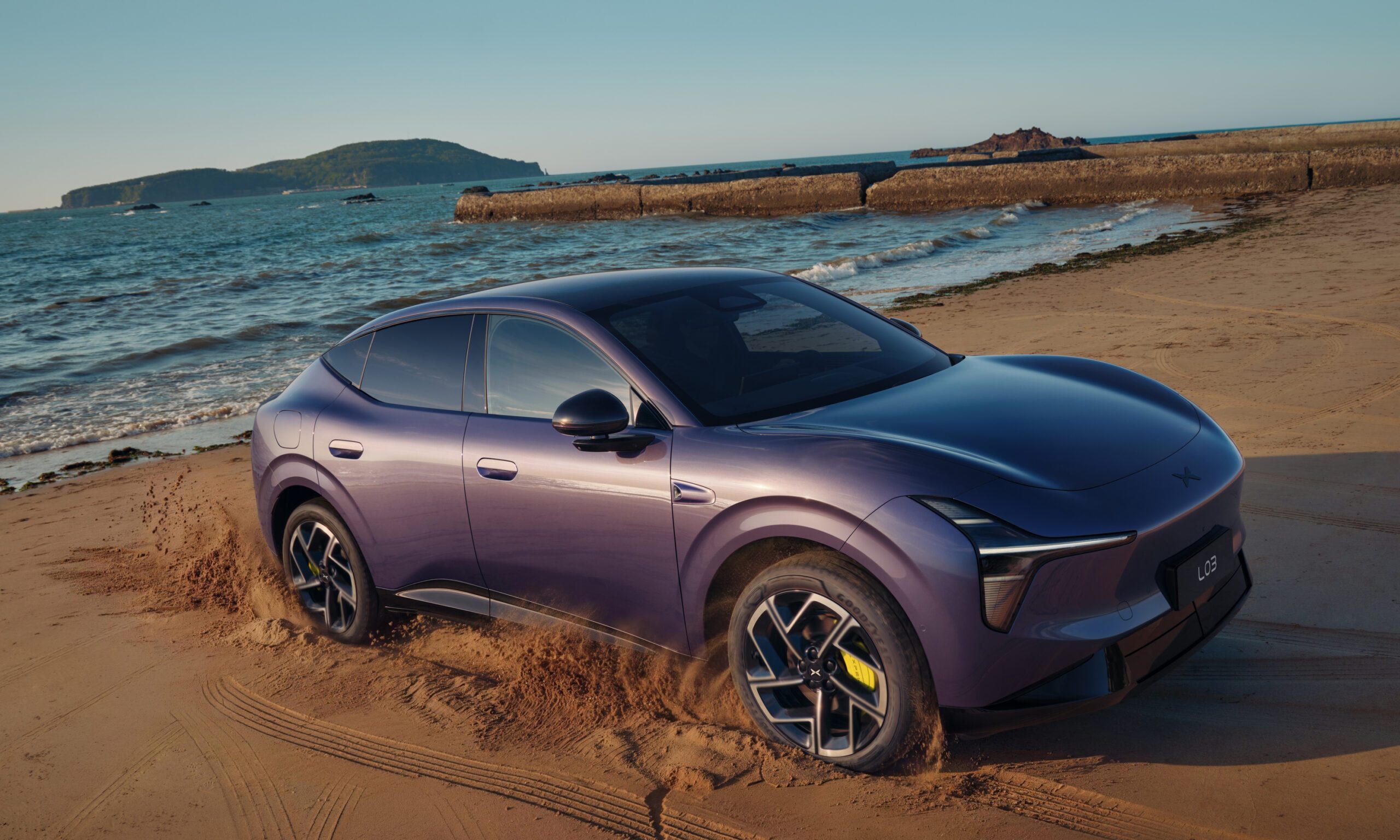
Xpeng’s latest electric vehicle carries enough processing power to make the term "smart car" actually sound more realistic than it actually is. The new Xpeng L03 debuted simultaneously in Europe and China on July 16, with the company presenting it across 65 markets. Available as a fully electric vehicle and an L03 Power X range-extender, the coupe-SUV is Xpeng’s most internationally focused model so far. Market-specific prices and sales dates remain unannounced.

Three AI chips and Google Maps built right in

Read more
A new sodium battery posts wild four-minute charging numbers, but don’t expect it in an EV yet
The breakthrough could improve fast charging and battery life, but the study hasn’t demonstrated those results in a production-sized pack
EV Charger

A new sodium-metal battery has posted a charging number that makes today’s EVs look painfully slow. In laboratory testing, the cell operated at a 15C rate, equivalent to completing a charge or discharge in roughly four minutes.

That doesn’t mean researchers plugged in an electric car and watched it fill up before the driver finished buying coffee. The result came from a small experimental cell using a new quasi-solid electrolyte, while the larger pouch-cell prototype delivered far less dramatic performance.

Read more
The Apple Car may be dead, but it became the foundation of Apple Intelligence
A decade of work on a canceled car project reportedly laid the groundwork for Apple Intelligence.
Apple Intelligence in Apple Car

The Apple Car may have never left the garage, but it apparently gave birth to Apple's AI ambitions. According to Bloomberg's Mark Gurman, Apple's canceled autonomous vehicle project, one that consumed more than a decade of work and over $10 billion before being scrapped in 2024, ended up laying the technological foundation for Apple Intelligence. In a rather ironic twist, one of Apple's most expensive failures may also become one of its most important long-term investments.

The Apple Car forced Apple to think like an AI company

Read more