  1. Home
  2. Emerging Tech
  3. News

That’s science! Mycologist colonizes marshmallow Peeps with fungi for Easter

Add as a preferred source on Google
Image used with permission by copyright holder

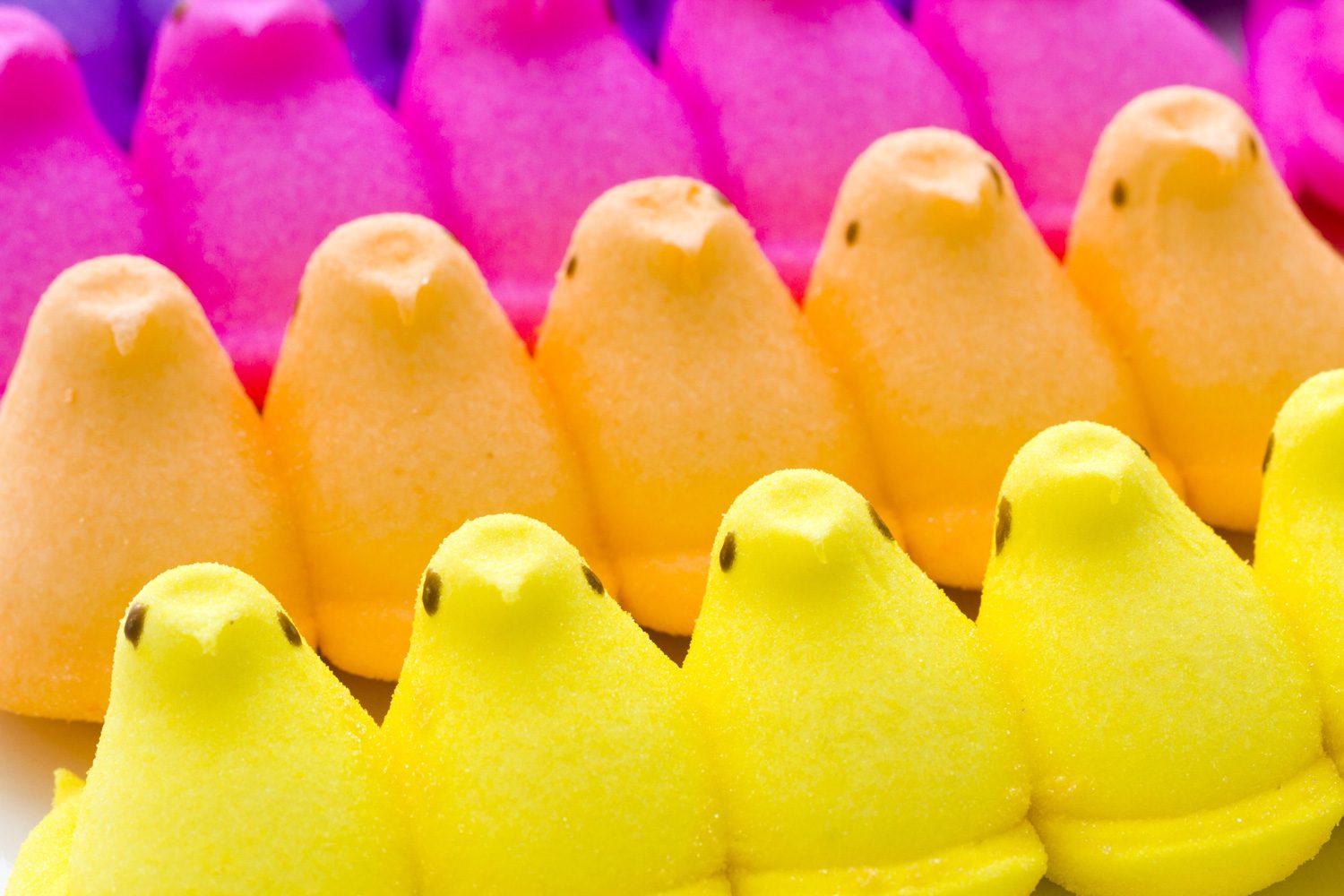
Easter is coming, and you know what that means — chocolate eggs, candy bunnies, and of course marshmallow Peeps. But a scientist from West Virginia University has his own plan for the sweet marshmallow treats this Easter season — he’s using Peeps for an experiment into the environmentally adaptive abilities of fungi.

Mycologist and Assistant Professor of Forest Pathology at West Virginia University Matthew Kasson wanted to see whether fungi can survive in extreme environments. He decided that the high levels of sugar and low levels of water in Peeps make them the ideal choice for the experiment. Fungi love sugar and corn syrup, but foods with a long shelf life, like Peeps, contain chemical preservatives such as potassium sorbate which inhibits the growth of microbes including fungi. So it is anyone’s guess how the fungi will fare.

Recommended Videos

https://twitter.com/kasson_wvu/status/1110265847019380743

To find out how the fungi do inside a sugary-sweet Peep, Kasson took a batch of bunny Peeps and made an incision in each one. He inserted samples of different fungi into all twelve Peeps, and then to test the effects of moisture he added a drop of sterile water to a random selection of the Peeps. Or, as Kasson put it, “I randomized a 500 micro-liter sterile water sub-treatment to the inoculation site for half of the study subjects.”

Now he will wait for two weeks before dissecting the Peeps and analyzing which of the fungal treatments have taken root in the challenging environment. The results should be ready just in time for Easter.

Kasson cheerfully acknowledges that this isn’t the most serious experiment of his career, but he hopes to use this opportunity to educate the public about the principles of fungal biology. “It might seem like, ‘Oh, you’re doing that deliberately to get clicks or something’,” he said to the New York Times. “But that’s the point. If what we’re doing on social media never connects with the general public, then why are we on there?”

He also revealed a sneak peak of the early results to the NYT, saying that penicillium, the family of fungi that produce penicillin, has already colonized the Peeps after just three days.

To check up on the experiment and to find out the results as they happen, you can follow the #fungalpeeps hashtag on Twitter.

Georgina Torbet
Georgina has been the space writer at Digital Trends space writer for six years, covering human space exploration, planetary…
That Claude chat you shared? Google may have seen it too
Public chat links were indexed by Google, potentially exposing sensitive information shared with the AI.
Claude AI on an iPhone.

If you've ever shared a Claude conversation using a public link, it might be worth checking your privacy settings. Over the weekend, users discovered that publicly shared Claude chats and Artifacts were appearing in Google Search and other search engines through queries such as site:claude.ai/share. The indexed pages reportedly included everything from resumes and business documents to API keys, health information, and other sensitive conversations that users likely never expected to become searchable.

How did this happen?

Read more
The AI-hooked younger generation is sourcing chatbot help even for in-person talks
From pickup lines to angry emails, here's how young adults are using AI to script their social lives, and why psychologists say it's a risky habit.
Person using ChatGPT on a MacBook.

I've definitely rehearsed a text message in my head before hitting send, especially when it's a long email with dozens of jargon and diplomatic language. However, when it comes to in-person talks, I’ve never even thought about outsourcing them to an AI chatbot.

Turns out an entire generation has handed the whole script to AI instead (via The Wall Street Journal).

Read more
Google Flow Music Spaces is becoming an all-in-one AI music studio
The latest update brings song editing, stem splitting, image generation, lyrics, and video creation into a single workspace.
Google Flow Music Featured

The company has announced a major update for Flow Music Spaces, bringing a suite of new AI-powered creative tools directly into collaborative workspaces. Instead of jumping between different apps or sessions, users can now generate and edit songs, split audio stems, create images, write lyrics, and even generate videos without leaving a Space.

What's new in Flow Music Spaces?

Read more