  1. Home
  2. Emerging Tech
  3. News

Scientists find organic matter from outer space in 3.3-billion-year-old rocks

Add as a preferred source on Google
Image used with permission by copyright holder

Scientists believe they have located organic matter that is extraterrestrial in origin, in 3.3 billion year old rocks in the Makhonjwa Mountains in South Africa. This offers support to the theory that organic chemicals from space arrived on our planet aboard a meteorite and created the building blocks for the first development on life.

Geologists investigated a region of the Makhonjwa Mountains called the Josefdal Chert, which contains a large deposit of ancient volcanic rock. The rock formed in layers, and beneath the surface are carbon-filled layers from which the researchers collected samples. They analyzed the samples using a technique called Electron paramagnetic resonance spectroscopy (EPR) which studies the spins of electrons to figure out the origin of the organic matter. The findings showed similar signals to those seen in meteorites containing carbon, suggest that some of the material originated from outside of Earth.

Recommended Videos

It’s actually expected to find materials on Earth that originate elsewhere, due to meteorites both large and small which impact Earth carrying organic carbon molecules. But the challenge for scientists is to puzzle out the origins of this ancient organic matter, which is hard as the sediment in which the organics are buried changes over time and any organic matter is fossilized.

“Many researchers believe that extraterrestrial input on early earth may have provided abundant sources of organic precursors for the emergency of life [approximately 3.5 to 3.8 billion years] ago,” the lead author of the paper, Didier Gourier of the Institut de Recherche de Chimie de Paris, wrote in a description of the group’s work last year.

“However, so far there is no direct evidence of such extraterrestrial organic supply because the organic matter buried in solidified sediments of primitive seas has undergone important modifications (temperature, pressure, time) giving a fossilized carbonaceous material… As a result, although carbonaceous matter is easy to detect in very old sedimentary rocks… its origin is much more difficult to determine.”

Now this first piece of evidence has arrived, and we get a glimpse of how conditions on our planet might have been billions of years ago.

The research is published in the journal Geochimica et Cosmochimica Acta.

Georgina Torbet
Georgina has been the space writer at Digital Trends space writer for six years, covering human space exploration, planetary…
Claude can now join your Slack channels and work alongside your team
Laptop running Claude Fable

For years, AI assistants have been siloed. You open ChatGPT, Claude, Gemini, or Copilot, type a prompt, get an answer, and move on. Anthropic's new Claude Tag feature takes a different approach. Instead of making employees jump into a separate AI chat every time they need help, it brings Claude directly to where many teams already spend their day: Slack.

Add Claude to a channel, grant it access to needed tools, and tag @Claude for help — whether analyzing data, writing reports, reviewing code, or investigating incidents. But Claude Tag isn't just another chatbot integration. Its key differentiator is that Anthropic positions it as a digital coworker for your team, enabling seamless collaboration where multiple users can jointly interact with the same AI within their work environment.

Read more
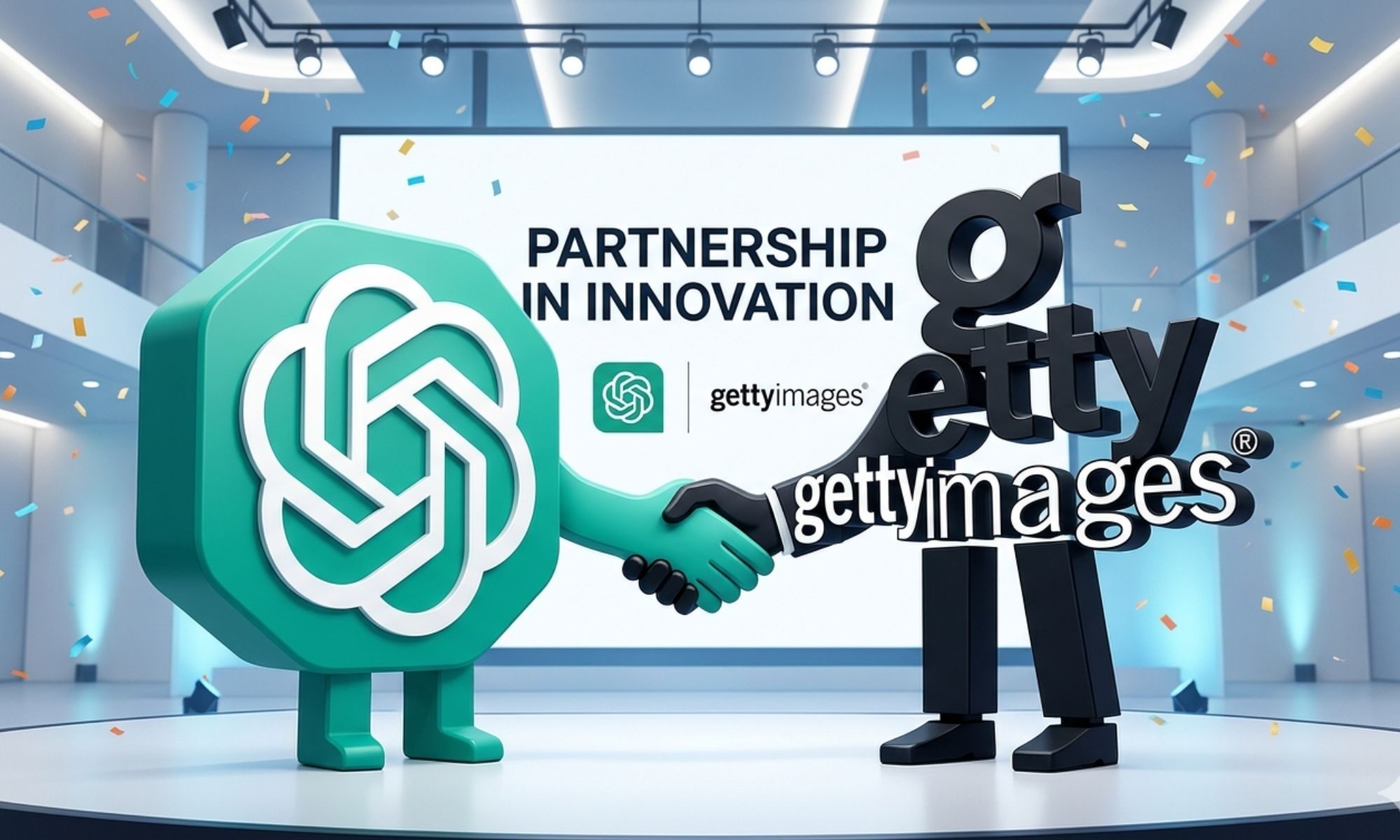
Getty Images accused AI of wholesale theft. It’s now an official ChatGPT image partner.
Advertisement, Shop, Clothing

The AI industry's most fascinating stories often come from unlikely alliances, and this is certainly one of them. Getty Images, a company that has spent years raising concerns about how AI models are trained and how creative work is used, is now officially partnering with OpenAI.

The new agreement will allow Getty Images' licensed content to appear across ChatGPT's search and discovery experiences. That means users may begin seeing Getty's professionally licensed photos and visual assets integrated into ChatGPT responses, adding more visual context to searches and AI-generated answers. Getty says the goal is to make AI-powered search more useful and trustworthy by relying on high-quality, licensed content rather than the murky sourcing practices that have sparked countless debates across the AI industry.

Read more
Timekettle’s new X1 Meeting Hub does real-time translation for 50 people and fits in your pocket
Fifty participants, five languages, one 199-gram hub, and no booth required.
Electronics, Screen, Computer Hardware

Professional conference interpretation setups are notoriously painful. Dedicated booths, trained interpreters, bulky hardware, and a bill at the end of every month that makes you rethink whether the meeting was even required in the first place. 

Timekettle wants to collapse all of that into a single hub that weighs 199 grams (less than modern flagship smartphones). The company just launched the X1 Meeting Interpreter Hub. 

Read more