  1. Home
  2. Computing
  3. Apple
  4. News

Someone shelled out $470,000 for an Apple-1 housed in a leather briefcase

Add as a preferred source on Google

Apple products are known for their priciness, but the kind of sums that its first computers continue to fetch at auction is something else altogether.

Recommended Videos

The latest bidding event involving an Apple-1 computer — the machine that effectively marked the birth of the Apple empire — was organized this month by Christie’s of London.

The super-basic PC, which was built by Apple c0founders Steve Jobs and Steve Wozniak in the Palo Alto garage of Jobs’ family home in 1976, went under the hammer last week for a hefty 371,260 British pounds (around $470,000). The buyer’s identity hasn’t been revealed.

The original Apple-1 computers, of which around 200 were built, comprised little more than a motherboard. In other words, there was no casing, keyboard, or monitor. The one at the recent Christie’s auction was a little different, however, as a previous owner had housed it inside a leather briefcase, giving it the look of an early laptop. Well, sort of.

The Apple-1 originally sold for $666.66, the odd price tag apparently the idea of Wozniak who had a thing about repeating digits, though it also offered a half-decent markup on the $500 wholesale price.

The Apple-1 wasn’t around for long, though. By the end of 1977, the more advanced Apple II hit the market, ending sales of the debut edition.

“After Jobs and Wozniak officially discontinued the Apple-1 in October 1977, they offered discounts and trade-ins to encourage all Apple-1 owners to return their machines,” Christie’s said in its auction notes. While many of these were destroyed, the Apple-1 Registry website suggests that just short of 70 Apple-1 computers still exist.

Christie’s added: “What had begun as the attempt by two techie friends to design and build a microprocessor became the first personal computer and launched Apple Computer Company, later Apple Inc., the perennially pioneering company that defined and redefined its industry — and changed the lives of its millions of customers — to become one of the world’s largest corporations.”

This month’s lot also included an Apple photo slide of the original Apple logo created and drawn by Apple co-founder Ronald Wayne after Apple was incorporated in 1977, a Panasonic RQ-309DS cassette recorder, documents linked to Apple’s early days, and original magazine articles about the Apple-1.

Before last week’s auction, Christie’s predicted the Apple-1 would sell for as much as $630,000, so it was a little off with its estimate. While $470,000 is still a significant amount, it’s far less than the $905,000 that the Henry Ford organization shelled out for another Apple-1 in a 2014 auction.

Trevor Mogg
Contributing Editor
Not so many moons ago, Trevor moved from one tea-loving island nation that drives on the left (Britain) to another (Japan)…
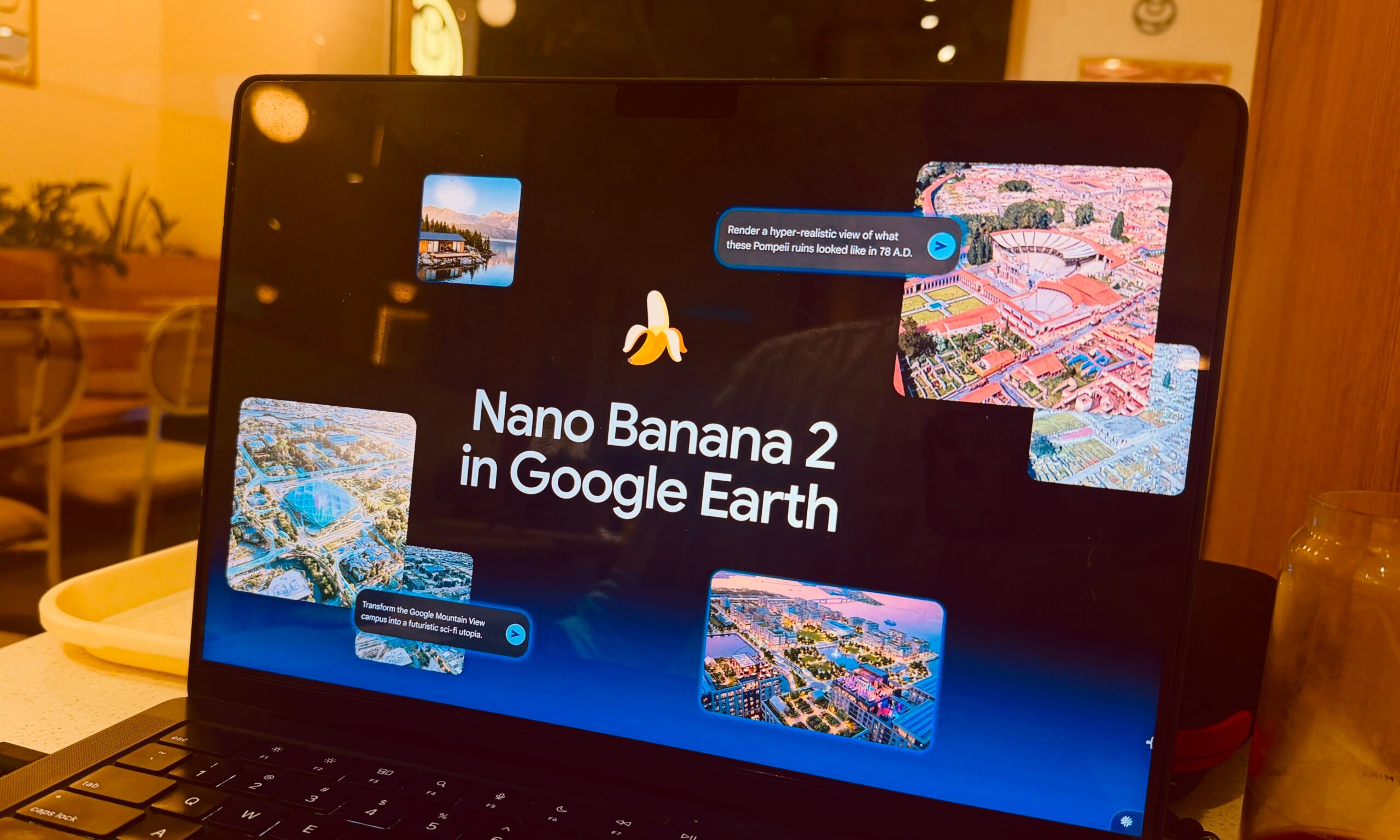
Google Earth’s AI misadventure lasted only a day. It was a tale of dangerous ignorance.
Nuclear reactors, tanks, and historical destruction on a life-like satellite map? Yeah, that's bad.
Nano Banana AI image generator representation.

Technology behemoths are clearly not reading the room, or they are just moving faster than they should when it comes to AI deployment. Google has already stuffed its Gemini AI in every corner of its software stack, from Android to daily productivity tools like Gmail that are used by hundreds of millions of users every day. AI is everywhere. Not all of it is bad, mind you. But in a few places, it just feels forced.

In its latest AI-fication experiment, the company targeted Google Earth. The idea was to let the audience use its Nano Banana 2 AI image generator and make images that can be placed on the map view. On paper, it's a cool idea. What would the Colosseum of Rome look like in your urban neighborhood? Yeah, fun stuff like that.

Read more
AMD is apparently gearing up to raise GPU prices right after Nvidia’s steep hike
AMD has reportedly told AIB partners about a price hike that goes into effect in. August.
AMD RX 7800

AMD is next in line to raise the asking price of its Radeon GPUs, merely days after the news of a similar hike coming for Nvidia graphics cards started making waves. As per ChannelGate on Weibo (h/t VideoCardz), AMD has informed its board partners that the price of GPU and memory bundles will go up by at least 10% in August.

Is a similar price hike coming for standalone graphics cards? I won't be surprised if that happens. The situation is so bad that AMD is planning to bring back graphics cards with 4GB of onboard memory. AMD just introduced the RX 9050 GPU, which costs $279. Notably, it's just $20 less than the RX 9060 XT that offers double the graphics memory.

Read more
Microsoft will make Windows work well with just 8GB RAM. We desperately need it
The dream of a reliable and affordable Windows laptop hinges on the next milestone at Microsoft.
Surface laptop on wooden table

The year 2026 has marked a huge course correction for Microsoft after years of frustrating users with plenty of confusing processes, unoptimized UI elements, and just the generous bloatware that can bring any Windows system to a crawl. Microsoft has finally shifted into a new phase. From fixing the right-click behavior to speeding up the Search system, the company has fixed plenty of papercuts.

The next major milestone is making Windows 11 run smoothly on Windows PCs with just 8GB of RAM. That directly means entry-level and budget laptops will at least get the basics right, even if that means sacrificing the on-device AI bells and whistles. Let's face it. The increasingly AI-first approach to computing on a Windows 11 machine is a little too taxing on the hardware at hand.

Read more