  1. Home
  2. Emerging Tech
  3. News

The U.S. military is using solar-powered balloons to spy on parts of the Midwest

Add as a preferred source on Google

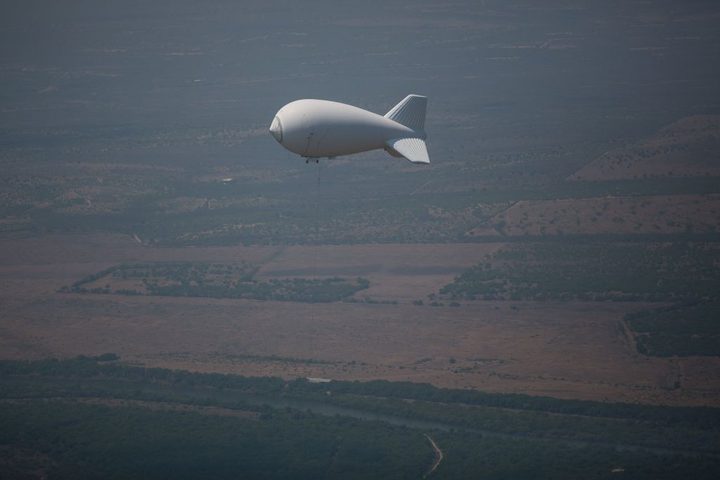
Surveillance Balloon
The U.S. military is using surveillance balloons like this one to spy on the Midwest. Image used with permission by copyright holder

The U.S. military is using balloons to monitor activity across six states in the Midwest. The 25 solar-powered balloons are reportedly being used to monitor portions of Iowa, Minnesota, Missouri, and Wisconsin.

Recommended Videos

The military filed a Special Temporary Authorization for the balloons with the FCC this week, according to the Guardian. The purpose of the balloons according to that filing is to “conduct high altitude MESH networking tests over South Dakota to provide a persistent surveillance system to locate and deter narcotic trafficking and homeland security threats.”

The filing was made “Sierra Nevada Corporation” which is an aerospace and defense company. The balloons are being launched from South Dakota, according to the Guardian.

The balloons are capable of tracking multiple individuals or vehicles during the day or night. They’re also already recording, so should an event happen in an area being surveilled by the balloons, they’ll be able to essentially rewind the tape and see what occurred as well as where any potential suspects might have traveled.

Tests with the balloons reportedly began in July and will continue through September. Presumably, if they’re successful they might continue after that September stop date or be deployed elsewhere. The balloons travel at height of up to 65,000 feet and can adjust their location if need be to get a better view of a particular person or area or to deal with weather conditions.

The fact that we’re all being watched shouldn’t come as a huge surprise, although the fact that the surveillance is coming from giant un-manned solar-powered balloons is certainly a bit different.

The U.S. government also isn’t the biggest offender when it comes to invading privacy.  For instance, last year we wrote about new video surveillance systems in India that are using AI to detect crimes in process as well as predict a crime before it happens.

The notion of predicting crime before it happens is particularly troublesome in that it is identifying individuals and in a way accusing them of criminal behavior even though at the time they haven’t done anything.

We’ve reached out to the military for a comment on why this tech is being used specifically in the Midwest and will update this story if and when we hear back.

Emily Price
Former Digital Trends Contributor
Emily is a freelance writer based in San Francisco. Her book "Productivity Hacks: 500+ Easy Ways to Accomplish More at…
A new AI model wants self-driving cars to think before they swerve
Forget guessing games, this self-driving AI actually shows its work.
Self driving car

Self-driving cars have gotten pretty good at driving. The harder problem is teaching them to drive safely in situations nobody planned for. We have heard horror stories of self-driving cars, behaving erratically in emergency situations, often times delaying first responders from reaching the scene.

A team at Seoul National University, led by professor Jun Won Choi from the Department of Electrical and Computer Engineering, thinks they have cracked part of that puzzle with a new AI model called SafeDrive. The research was recently selected as a highlight paper at CVPR 2026, a distinction that goes only to roughly 3% of all submissions.

Read more
An AirPods-sized mini lab could help catch disease markers in minutes
Meet VPodDuo, an AirPods-sized molecular testing gadget
VPodDuo Mini Medical Device

Home testing could eventually become a lot more convenient. Researchs at the at the University of Illinois Urbana-Champaign has developed the VPodDuo, a pocket-sized fluorescence reader designed to measure sensitive molecular tests outside a conventional laboratory.

Its housing is roughly comparable in size and shape to an AirPods charging case, while Bluetooth connectivity sends results directly to a smartphone. Meaning, you might not have to wait in line anymore.

Read more
Your future AR glasses might finally stop making the real world look weird
Researchers have developed a new display technique that keeps virtual objects realistic without dimming the real world.
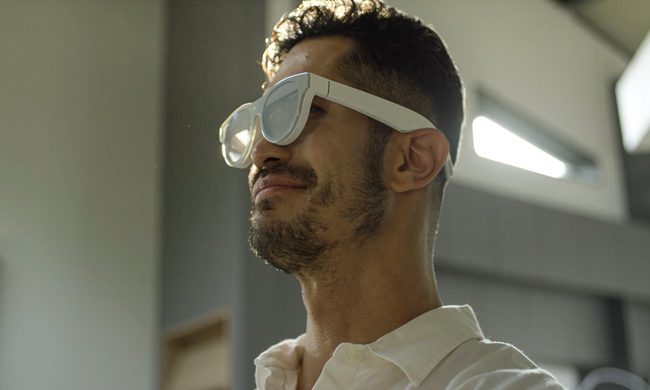
Samsung AR Glasses

One of the biggest promises of augmented reality is blending digital objects seamlessly into the real world. Ironically, today's AR glasses often make the real world harder to see. Researchers at the Shibaura Institute of Technology (SIT) in Japan, led by Assistant Professor Xiaodan Hu in collaboration with Dr. Yan Zhang and Professor Xubo Yang from Shanghai Jiao Tong University in China, and Professor Kiyoshi Kiyokawa from Japan's Nara Institute of Science and Technology, have developed a new AR display technique that aims to make virtual objects look realistic without reducing visibility of the real world. The study was published in IEEE Transactions on Visualization and Computer Graphics.

The biggest AR problem isn't virtual objects; it's everything around them

Read more